Crochet Step by Step: A Beginner's Guide to Your First Project
Learn to crochet a simple square washcloth, from the slip knot to the final weave-in.
The first stitch you learn in crochet is the one that holds everything else together: the slip knot.
You hold the hook in your right hand, the yarn in your left. That is the first thing to get comfortable with. There is no right way to hold them, only the way that does not make your hands ache after ten minutes.
This guide walks you through a real project, a cotton washcloth. It uses two stitches only, chain and single crochet. By the end you will know how to read a simple pattern, fix a dropped stitch, and finish the edges so they do not curl.
Crochet step by step means learning a few basic stitches and building them in rows. Start with a slip knot, then chain, then single crochet. Follow the steps here and you will have a finished square washcloth in about two hours.
What you need
Worsted weight cotton yarn
About 100 yards. Choose a light color so you can see your stitches.
Size H-8 (5 mm) crochet hook
If your yarn label suggests a different size, use that instead.
Yarn needle
A large-eyed needle for weaving in ends.
Scissors
Any pair that cuts yarn cleanly.
What yarn and hook should you use?
For your first project, choose a smooth, light-colored yarn. A worsted weight cotton, like Lion Brand Kitchen Cotton, shows your stitches clearly. Dark yarn hides them, and fuzzy yarn makes it hard to see where the hook goes.
Pair that with a size H-8 (5 mm) hook. That size matches worsted weight yarn and gives you a fabric that is not too stiff and not too loose. If your yarn label suggests a different hook, go with the label.
Cotton has no stretch, which is why it is perfect for a washcloth. Acrylic is cheaper and softer, but it can stretch out of shape when wet. Use cotton for this project.
If you already have a skein of worsted weight acrylic, use it to practice. The washcloth will still work, it just will not absorb water as well.
How do you make a slip knot and chain?
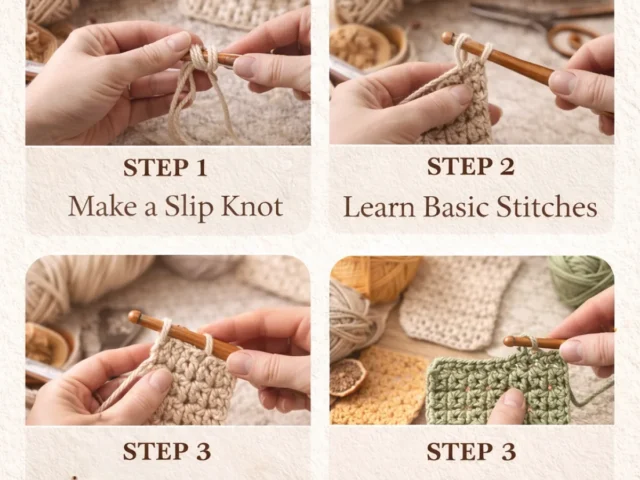
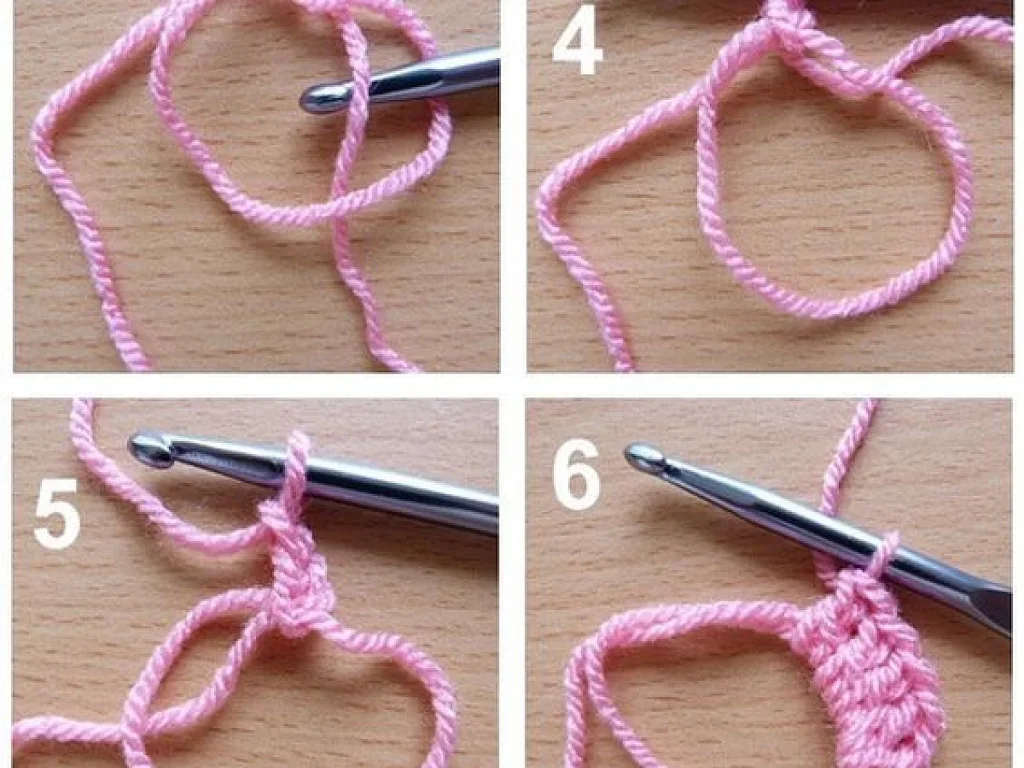
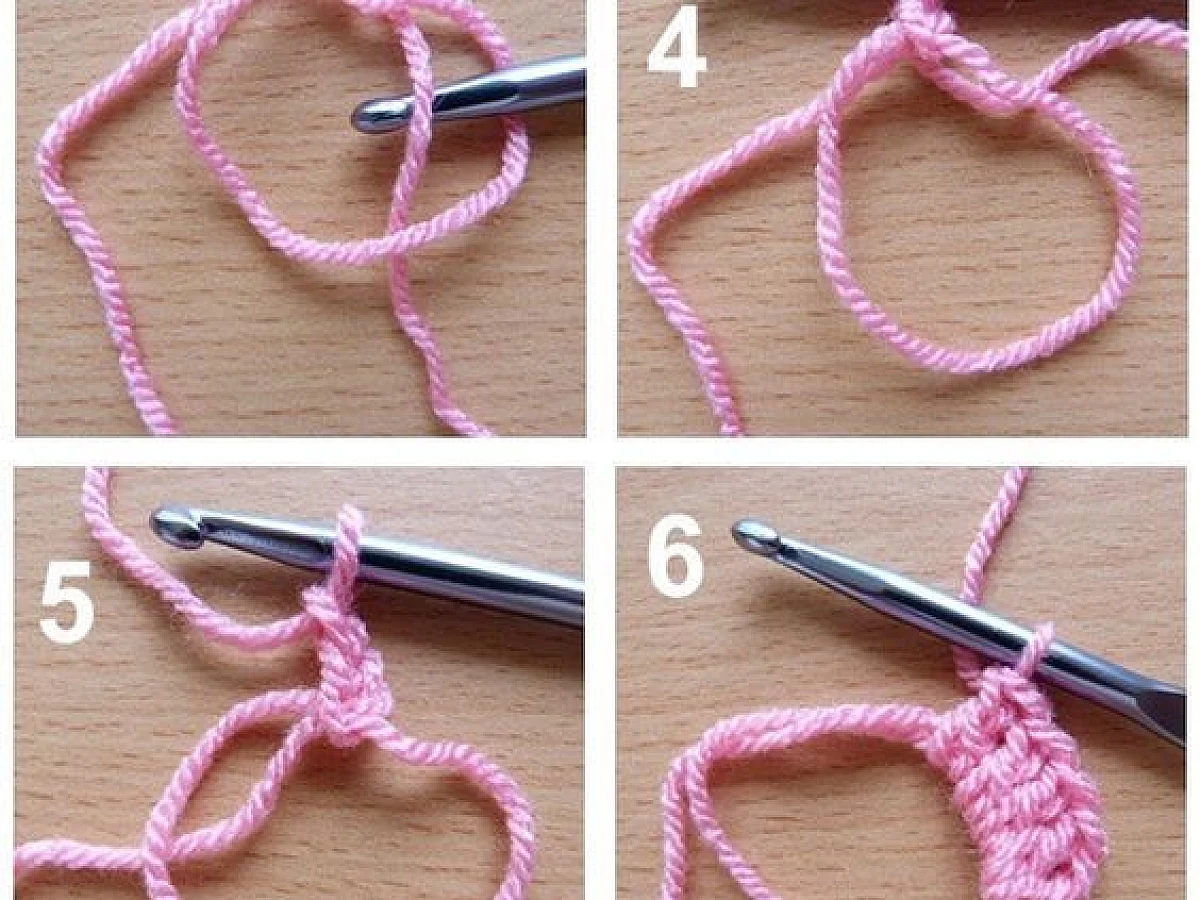
Make a loop with the yarn, leaving a tail about six inches long. Pull a loop of yarn through it, and slip that loop onto your hook. Pull the tail to tighten, but not so tight that the loop cannot slide on the hook.
Now you chain. Yarn over, which means wrap the yarn from back to front over the hook. Pull that loop through the loop on your hook. That is one chain. Repeat until you have 26 chains.
Count each chain as a V shape on the front. Do not count the slip knot. If you lose count, pull it out and start again. It is faster than guessing.
Keep your tension even by holding the yarn with your left hand, wrapping it once around your pinky, then over your index finger. That gives you a steady feed.
How do you work the first row of single crochet?
Skip the first chain from your hook. That chain does not count as a stitch. Insert your hook into the second chain, into the top loop only.
Yarn over and pull up a loop. You now have two loops on your hook. Yarn over again and pull through both loops. That is one single crochet.
Repeat in each chain across. At the end, you should have 25 single crochets. Count them by looking at the V shapes at the top of the row.
If your row looks shorter than it should, you probably skipped the first chain. Check the count before going on.
How do you start the next row and keep the edges straight?
Turn your work so the last stitch is now on your right. Chain one. That chain is your turning chain. It does not count as a stitch.
Work a single crochet into the very first stitch of the row. That is the one right below the turning chain. Many beginners miss it and lose a stitch.
Continue across. At the end, work the last single crochet into the top of the turning chain from the row below. That keeps the edge straight.
Place a stitch marker in the first stitch of each row. It saves you from counting every time.
How do you know when the washcloth is done?
Keep working rows until the piece is almost square. For a 26-chain start, that is about 30 rows. The fabric will measure roughly 8 by 8 inches.
To finish, cut the yarn leaving a six-inch tail. Yarn over and pull through the loop on your hook. Pull the tail tight. That is your fastening off.
If the edges start to curve inward, you are dropping stitches. If they flare out, you are adding stitches. Count each row until the rhythm feels natural.
How do you weave in the ends?
Thread the tail onto a yarn needle. Weave it through the back of several stitches in one direction, then double back through a few stitches in the other. Trim the excess close to the fabric.
Do the same with the tail from the beginning. That is all there is to it. Your washcloth is ready to use.
Weaving in the ends securely keeps the washcloth from unraveling in the wash.
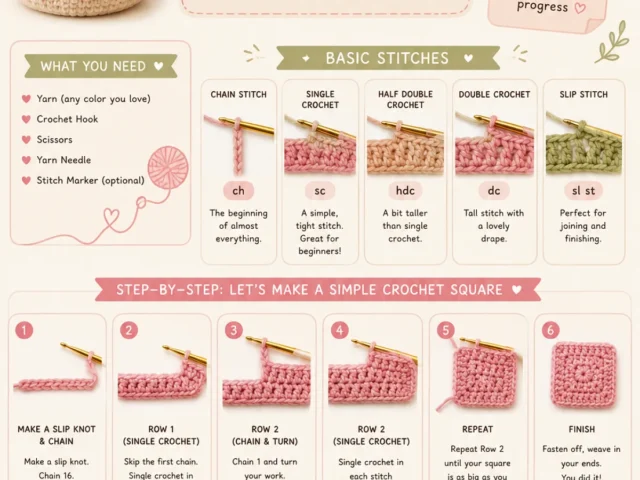
Step
Make a slip knot
Loop the yarn around your fingers, pull a loop through, and place it on your hook. Tighten gently.
Chain 26
Yarn over and pull through the loop on your hook. Repeat 25 more times.
Single crochet in the second chain from the hook
Insert hook, yarn over, pull up a loop, yarn over, pull through both. Repeat in each chain.
Chain 1 and turn
At the end of the row, chain one, then turn your work.
Single crochet in each stitch across
Work into the first stitch, then each stitch to the end.
Repeat rows until square
Work about 30 rows total, counting as you go.
Fasten off and weave in ends
Cut the yarn, pull through the loop, and weave the tail through the back of stitches.
Ways to change it
Use a bigger hook and thicker yarn
This makes a larger, drapier washcloth or a hand towel. Adjust the starting chain to your desired width.
Add a border
Work a round of single crochet around the whole edge to give it a finished look.
Try a different stitch
Once you are comfortable with single crochet, try half double crochet or double crochet for a different texture.
Make a matching set
Use the same pattern to create a set of washcloths in different colors.
The short version
- The slip knot is the foundation of every crochet project.
- Chain stitches are the building blocks of rows.
- Single crochet is the simplest stitch and creates a dense fabric.
- Counting stitches every row keeps your edges straight.
- A turning chain does not count as a stitch in single crochet.
- Cotton yarn is ideal for washcloths because it absorbs water.
- Weaving in ends securely prevents unraveling.
Questions people ask
Why does my crochet edge curl?
Curling usually means you are dropping or adding stitches. Count each row and make sure you work into the first and last stitch.
How do I fix a mistake in crochet?
If you notice a mistake, gently pull out the stitches back to the error, then rework them. It is easier than trying to patch it.
What is the best yarn for a beginner?
A smooth, light-colored worsted weight yarn is best. Cotton or a cotton blend is ideal for washcloths, but acrylic is fine for practice.
How do I keep my tension even?
Practice holding the yarn consistently. Wrap it around your pinky and over your index finger to control the flow.
Start your first washcloth now
You have everything you need to make your first crochet project. The washcloth is simple, useful, and forgiving. Once you finish it, you will have the basics to move on to scarves, blankets, or anything else you fancy. Stitch with ease.