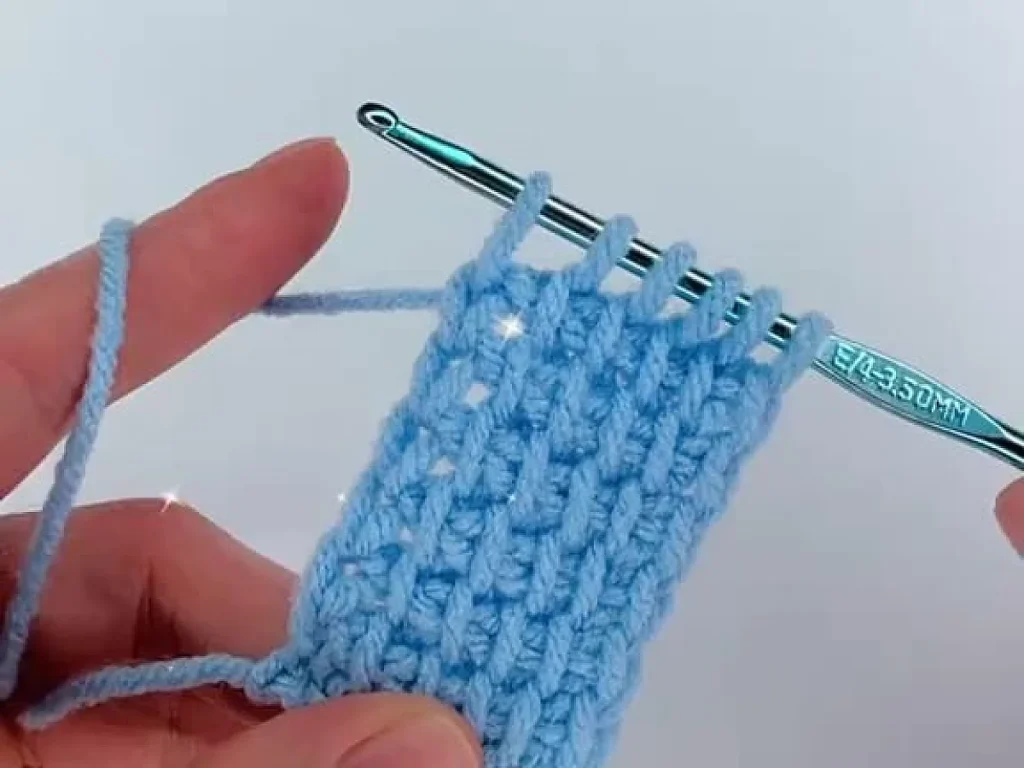
How to Crochet for Beginners: A Step-by-Step Guide
Learn the basic crochet stitches and make your first simple project in about an hour.
Crochet starts with a slip knot and a loop on your hook, and the whole craft builds from that one simple foundation.
If you've ever wanted to make your own scarf, blanket, or hat, crochet is one of the easiest fiber crafts to learn. You only need two things: a hook and some yarn. Within an hour, you can be making real stitches.
This guide walks you through the basics: choosing supplies, making a slip knot, crocheting a foundation chain, and working single and double crochet. We'll also cover common mistakes and how to fix them, plus a simple practice project to build your confidence.
Crochet is a craft where you use a hook to pull loops of yarn through other loops to make fabric. You start with a slip knot, make a foundation chain, and then work stitches like single crochet and double crochet into that chain to create rows.
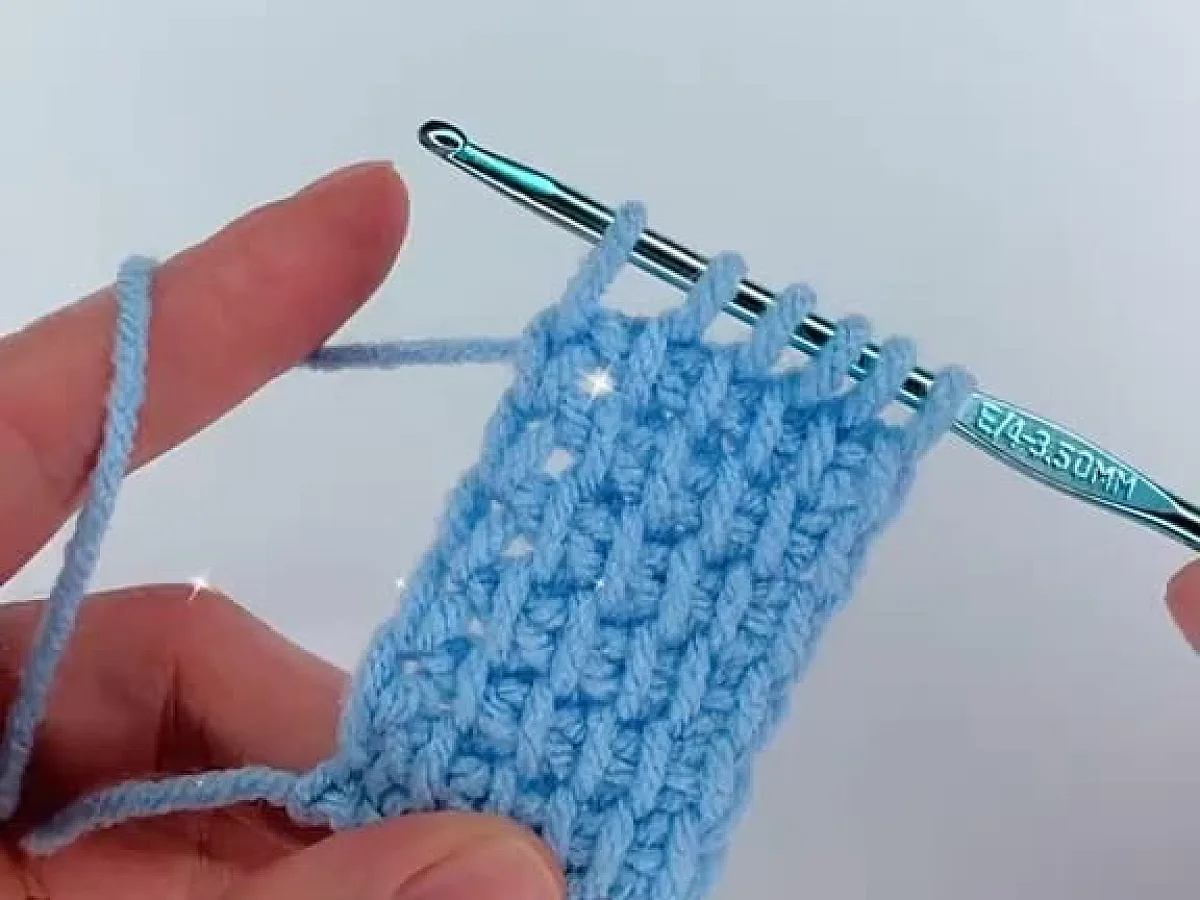
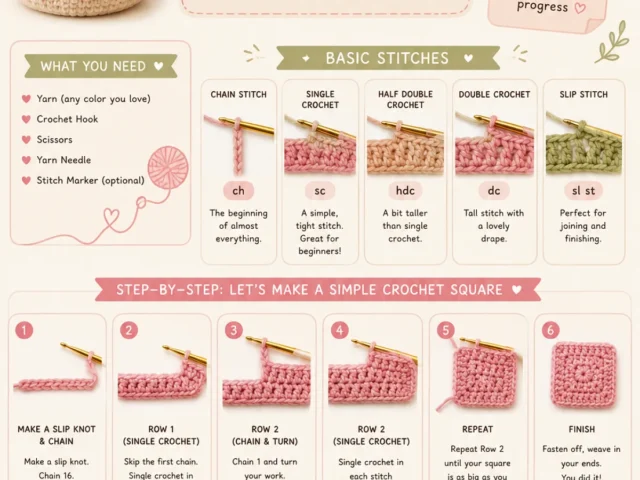
What You Need
Yarn
Choose a worsted weight (4) yarn in a light color. A smooth cotton or acrylic blend works well. You'll need about 50 to 100 yards for a small practice square.
Crochet hook
A 5.5 mm (US I-9) aluminum hook is a good all-purpose size. It's inexpensive, about $3 to $6, and easy to find at craft stores.
Scissors
Any small scissors will do. You'll use them to cut the yarn at the end.
Yarn needle (optional)
A blunt-tip yarn needle helps weave in ends. You can also use a crochet hook to pull ends through stitches.
What Supplies Do You Need to Start Crocheting?
For your first project, choose a smooth, light-colored yarn in a medium weight, like worsted (weight 4). A skein costs about $3 to $5. Avoid dark or fuzzy yarns because they make it hard to see your stitches.
You'll also need a crochet hook. For worsted weight yarn, a 5.5 mm (US I-9) aluminum hook is a good choice. It's comfortable to hold and glides through the yarn easily.
- Yarn: worsted weight, light color, smooth texture
- Hook: 5.5 mm (US I-9) or similar size
- Scissors: for cutting yarn
- Yarn needle: for weaving in ends (optional, but helpful)
If you're left-handed, you can hold the hook in your left hand and work from left to right. The steps are the same, just mirrored.
How to Hold the Hook and Yarn
Hold the hook like you would hold a pencil, with your thumb and index finger near the flat thumb rest. Your other fingers support the handle.
Wrap the yarn over your non-dominant hand, between your index and middle fingers, and let it flow through your palm. This is called the yarn hand. It controls tension so your stitches stay even.
Practice making a few loops without worrying about stitches. The goal is to find a grip that feels relaxed, not tight.
Step-by-Step: How to Make a Slip Knot and Foundation Chain
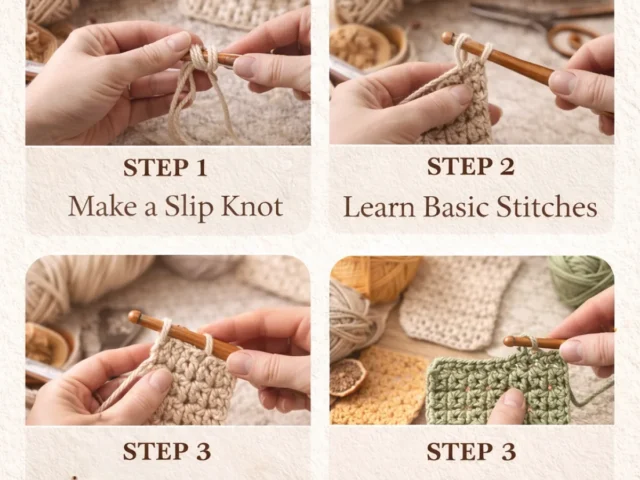
The slip knot is the first loop on your hook. Make a loop with the yarn, pull another loop through it, and slide it onto the hook. Pull the tail to tighten it gently.
To make a foundation chain, yarn over (wrap the yarn over the hook from back to front), then pull that loop through the loop on your hook. That's one chain stitch. Repeat to make a chain of the length you need.
Count your chains as you go. It's easy to lose track, and a stitch marker or a piece of scrap yarn every ten chains can help.
How to Crochet Single Crochet (sc)
Single crochet is the shortest and most basic stitch. Insert your hook into the second chain from the hook (or into the next stitch in a row). Yarn over and pull up a loop. You now have two loops on your hook. Yarn over again and pull through both loops. That's one single crochet.
At the end of a row, chain one and turn your work. Then work single crochet into the top of each stitch from the previous row.
If your edges are wavy or getting wider, you might be adding extra stitches at the ends. Count your stitches at the end of each row to check.
How to Crochet Double Crochet (dc)
Double crochet is taller than single crochet and works up faster. Yarn over, insert your hook into the fourth chain from the hook (or the next stitch). Yarn over and pull up a loop. You now have three loops on your hook. Yarn over and pull through two loops, yarn over and pull through the remaining two loops. That's one double crochet.
At the end of a row, chain three (this counts as your first double crochet) and turn.
Double crochet fabric has a more open, drapey feel than single crochet. It's great for blankets and shawls.
How to Finish Off and Weave in Ends
When you're done, cut the yarn leaving a tail about 6 inches (15 cm) long. Pull the tail through the last loop on your hook and tighten to secure it.
Thread the tail onto a yarn needle and weave it back and forth through the wrong side of your work for about 2 inches (5 cm). Then trim the excess.
Weaving in ends prevents your work from unraveling. It takes a minute but it's worth it.
Steps
Make a slip knot
Loop the yarn around your fingers, pull a loop through, and place it on the hook. Tighten gently.
Make a foundation chain
Yarn over and pull through the loop on your hook. Repeat until you have a chain of about 20 stitches.
Practice single crochet
Insert hook into second chain from hook, yarn over, pull up a loop, yarn over, pull through both loops. At the end of the row, chain 1 and turn.
Practice double crochet
Yarn over, insert hook into fourth chain from hook, yarn over, pull up a loop, yarn over, pull through two loops, yarn over, pull through two loops. At the end of the row, chain 3 and turn.
Make a small square
Work rows of single or double crochet until your piece is about 6 inches (15 cm) square. Count your stitches each row to keep them even.
Finish and weave in ends
Cut yarn, pull through last loop, and weave in the ends with a yarn needle.
Ways to Change It
Use a larger hook
Try an 8 mm hook with the same yarn to make looser, drapier fabric. Good for beginners to see stitches more clearly.
Try cotton yarn
Cotton has less stretch than acrylic, making it a bit stiffer but great for dishcloths and summer wear.
Work in the round
Once you're comfortable with rows, try making a small coaster by working in a spiral. This opens the door to hats and bags.
Add a border
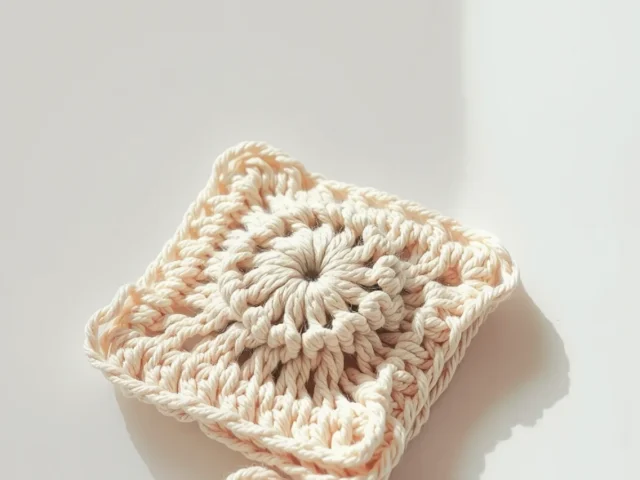
Finish your square with a round of single crochet to give it a neat edge. This is a common way to join granny squares.
Key Takeaways
- Use a light-colored, smooth worsted weight yarn to see your stitches easily.
- The slip knot is the foundation of every crochet project; make sure it slides on the hook but isn't too tight.
- The foundation chain determines the width of your work, so count carefully.
- Single crochet is the shortest stitch; double crochet is taller and works up faster.
- At the end of each row, you chain one (for single) or three (for double) before turning.
- If your edges are wavy, you're likely adding extra stitches; count each row to keep the number consistent.
- Weave in your ends to stop the yarn from unraveling.
Questions People Ask
What is the easiest crochet stitch for a beginner?
The single crochet is the easiest stitch because it's short and simple. You only need to know how to make a chain and pull loops through.
How long does it take to learn crochet?
Most people can learn the basic stitches in about an hour. You'll feel more comfortable after a few practice sessions.
What size hook should I use for beginners?
A 5.5 mm (US I-9) hook is a great starting size because it matches worsted weight yarn, which is common and easy to work with.
Why is my crochet getting wider?
You might be accidentally adding extra stitches at the ends of rows. Count your stitches at the end of each row to see if the number has changed.
Can I crochet with my fingers if I don't have a hook?
Yes, finger crochet works for very thick yarn, but it's slow and not practical for most projects. A hook is worth the few dollars.
Pick up a hook and try your first chain
Crochet is a skill that grows with practice. Start with a simple square, get comfortable with the rhythm of the stitches, and soon you'll be ready for scarves and blankets. The most important step is the first one, so grab some yarn and give it a go. Happy hooking!