Crochet Gauge Tips: Get the Right Fit Every Time
Learn to measure gauge, fix mismatches, and crochet garments that actually fit.
You spent hours on a sweater, and it came out two sizes too big.
Gauge is the number of stitches and rows per inch. It's the difference between a sweater that fits and one that pools at your wrists. The good news: you can control it. The bad news: most people skip the swatch and pay for it later.
This guide walks you through measuring gauge, fixing mismatches, and adjusting patterns. You'll learn why gauge matters, how to swatch properly, and what to do when your numbers don't match.
Gauge is the number of stitches and rows per inch. You control it with hook size and tension. Checking a swatch before you start saves you from disappointment.
What you need
Yarn
The same yarn you'll use for the project. Check the label for weight and fiber.
Crochet hook
The hook size recommended in the pattern, plus a few sizes up and down for testing.
Ruler or tape measure
A flat ruler works best. A tape measure can bend and give inaccurate readings.
Scissors
For cutting yarn and trimming swatch edges.
Notebook and pen
To record your gauge measurements and hook sizes.
Why Gauge Matters
Gauge tells you how big your stitches are. If your stitches are bigger than the pattern assumes, your finished piece will be bigger too. A difference of even one stitch per inch can add several inches to a sweater.
Patterns list a gauge, like 16 stitches and 20 rows over 4 inches. That's the designer's stitch size. Your job is to match it, or adjust your hook size until you do.
Skipping the swatch is tempting, but it's the number one reason crochet garments don't fit. A swatch takes twenty minutes. A ruined sweater takes hours to frog.
Always swatch in the same yarn and hook you plan to use. A different yarn or hook changes the gauge.
How to Swatch Correctly
Make a swatch at least 6 inches square. This gives you room to measure away from the edges, which are often uneven. Use the stitch pattern from your project, not just single crochet.
Work the same number of stitches and rows as the pattern gauge, but add a few extra on each side. For example, if the gauge is 16 stitches over 4 inches, chain about 20 and work about 24 rows.
Block your swatch the same way you'll block the finished piece. Some yarns grow when wet, and that changes the gauge. Measure after blocking.
Use a flat ruler, not a tape measure. Tape measures can bend and give you a wrong reading.
Measuring Your Gauge
Lay your swatch flat on a table. Place a ruler horizontally across the middle, and count how many stitches fit in 4 inches. Do the same vertically for rows.
Write down the numbers. Compare them to the pattern gauge. If you have more stitches per inch, your stitches are too small. If you have fewer, they're too big.
Measure in two or three places to be sure. The edges can be deceiving, so count in the center.
Count half stitches too. If you get 15.5 stitches in 4 inches, that's still useful information.
Fixing a Mismatch
If your gauge is too small, go up a hook size. If it's too big, go down. Each hook size changes the gauge by about half a stitch per inch, but it varies.
Work another swatch with the new hook. Don't guess. Keep changing hooks until your numbers match the pattern.
Sometimes your tension is the culprit, not the hook. If you crochet tightly, you might need a larger hook. If you crochet loosely, a smaller one.
Write the hook size and your gauge on the pattern. You'll thank yourself later.
When You Can't Match Gauge
Sometimes you can't get the exact gauge. The yarn might be different, or your tension is unusual. If you're off by a little, you can adjust the pattern size.
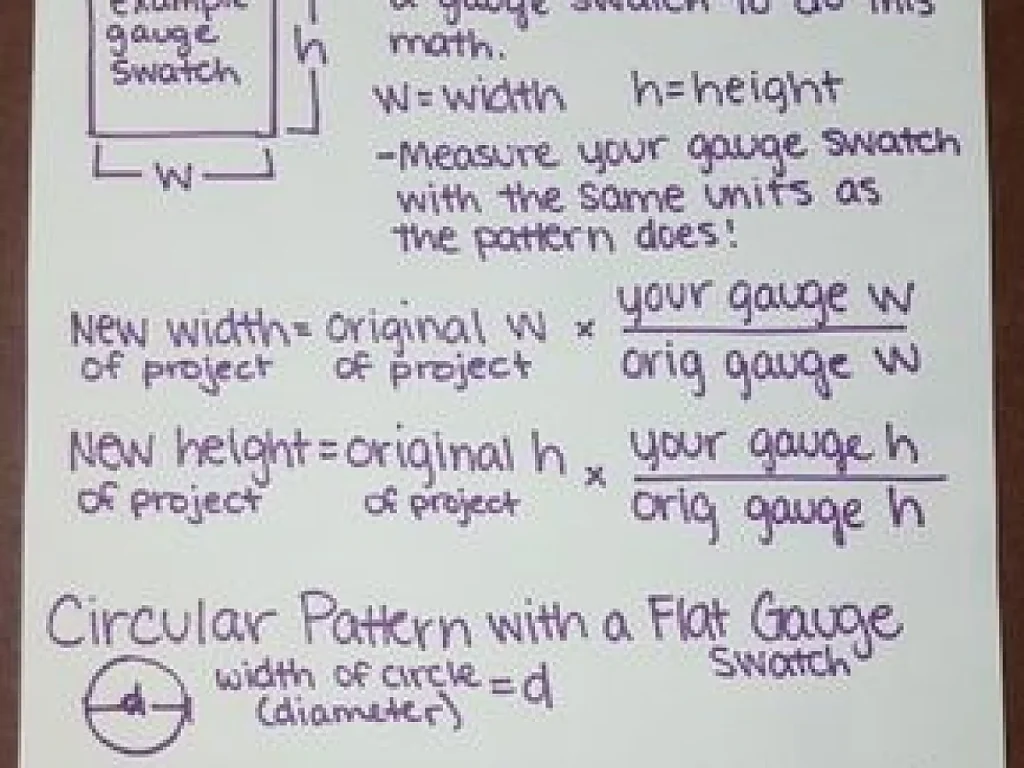
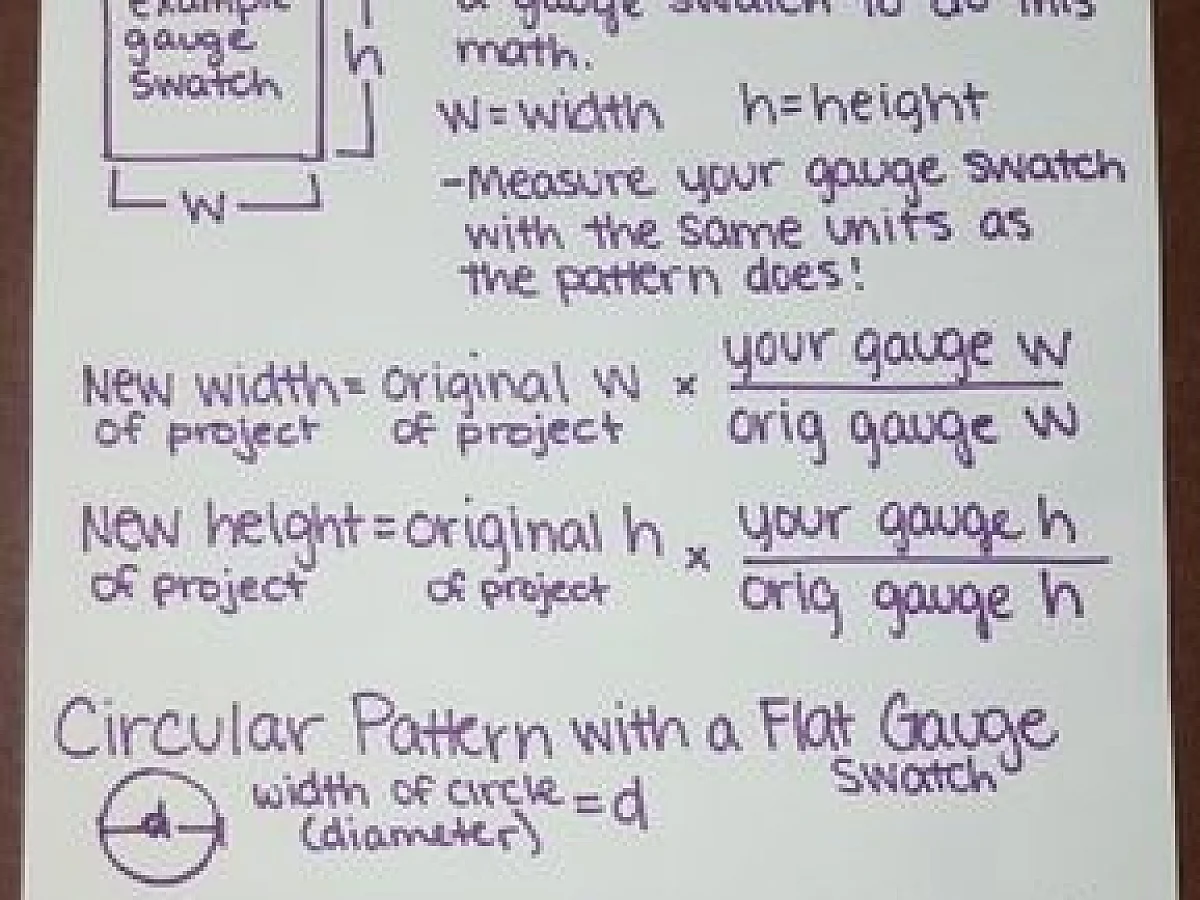
For garments, calculate the difference. If your gauge is 15 stitches per 4 inches and the pattern calls for 16, your stitches are larger. Multiply the pattern's stitch count by your gauge divided by the pattern gauge to find your new stitch count.
This is easier with patterns that give stitch counts per size. If the pattern doesn't, you can still adjust by measuring as you go.
For accessories like hats, you can often adjust the stitch count in multiples of the pattern repeat.
Gauge for Different Projects
Gauge matters most for garments and anything that needs to fit. For scarves and blankets, it's less critical, but it still affects how much yarn you use.
For amigurumi, a tight gauge is important to keep stuffing from showing. You might use a smaller hook than the yarn label suggests.
Always check the pattern gauge before you start. It's the only way to know if your project will turn out the right size.
If you're between sizes, choose the smaller hook for a denser fabric that holds its shape.
Step
Make a Swatch
Chain enough stitches to make a 6-inch square. Work in the pattern stitch for about 6 inches. Add a few extra stitches on each side for measuring.
Block the Swatch
Wash or wet the swatch and let it dry flat. This mimics how the finished piece will behave. Some yarns stretch or shrink.
Measure Stitches
Place a ruler horizontally across the middle of the swatch. Count the stitches in 4 inches. Write the number down.
Measure Rows
Place the ruler vertically and count the rows in 4 inches. Write that number down too.
Compare to Pattern
Check your numbers against the pattern gauge. If they match, you're ready to start. If not, change hook size and swatch again.
Ways to change it
Different hook material
Metal hooks are slippery, wood hooks are grippy. Your gauge can change with the hook material.
Tension adjustment
Try holding the yarn tighter or looser. Sometimes you can match gauge without changing hooks.
Yarn substitution
If you use a different yarn, you'll likely need a different hook size. Check the yarn label for a recommended gauge.
Pattern size adjustment
If you can't match gauge, you can make a different size of the pattern that will fit you with your gauge.
The short version
- Gauge is the number of stitches and rows per inch.
- Always swatch before starting a garment.
- Swatch in the same yarn and stitch pattern as your project.
- Block your swatch before measuring.
- Change hook size to adjust gauge.
- Record your gauge on the pattern for future reference.
- Gauge matters most for fitted items, less for blankets.
Questions people ask
What if my gauge is off by half a stitch?
Half a stitch per inch can add up. Try a different hook size, or adjust your tension. Sometimes just relaxing or tightening your yarn hold makes a difference.
Can I skip the swatch for a scarf?
Yes, for a scarf gauge isn't critical. But it still affects how much yarn you use. If you're making a garment, don't skip it.
Why does blocking change my gauge?
Blocking relaxes the fibers. Some yarns stretch when wet, which can increase your stitch size. That's why you should block your swatch the same way you'll block the finished piece.
How do I adjust a pattern if my gauge is different?
You can calculate a new stitch count. Multiply the pattern's stitch count by your gauge divided by the pattern gauge. For example, if the pattern gauge is 16 st/4" and yours is 14, multiply by 14/16 = 0.875.
Swatch before you stitch
Gauge is a simple tool that saves you from heartache. Take the time to swatch, measure, and adjust. Your finished pieces will fit better and look more professional. Stitch with ease.