Double Crochet Step by Step
Work a double crochet stitch in six moves, count your turning chain correctly, and fix the gaps and lean that trip up most beginners.
A double crochet is about twice as tall as a single crochet, and it is the stitch that makes a blanket grow fast enough that you can see progress in one sitting.
A double crochet is about twice as tall as a single crochet, and it is the stitch that makes a blanket grow fast enough that you can see progress in one sitting.
The stitch is six moves long. Most people get the first four right on the first try and then lose the rhythm on the last two. This guide walks through each move, then covers the turning chain, the stitch count, and the three mistakes that show up in almost every beginner swatch.
Yarn over, insert the hook into the stitch, pull up a loop, yarn over, pull through two loops, yarn over again, pull through the last two loops. That is one double crochet. The tricky part is not the stitch itself but the turning chain at the start of each row, which is where the gaps and the slanted edges come from.
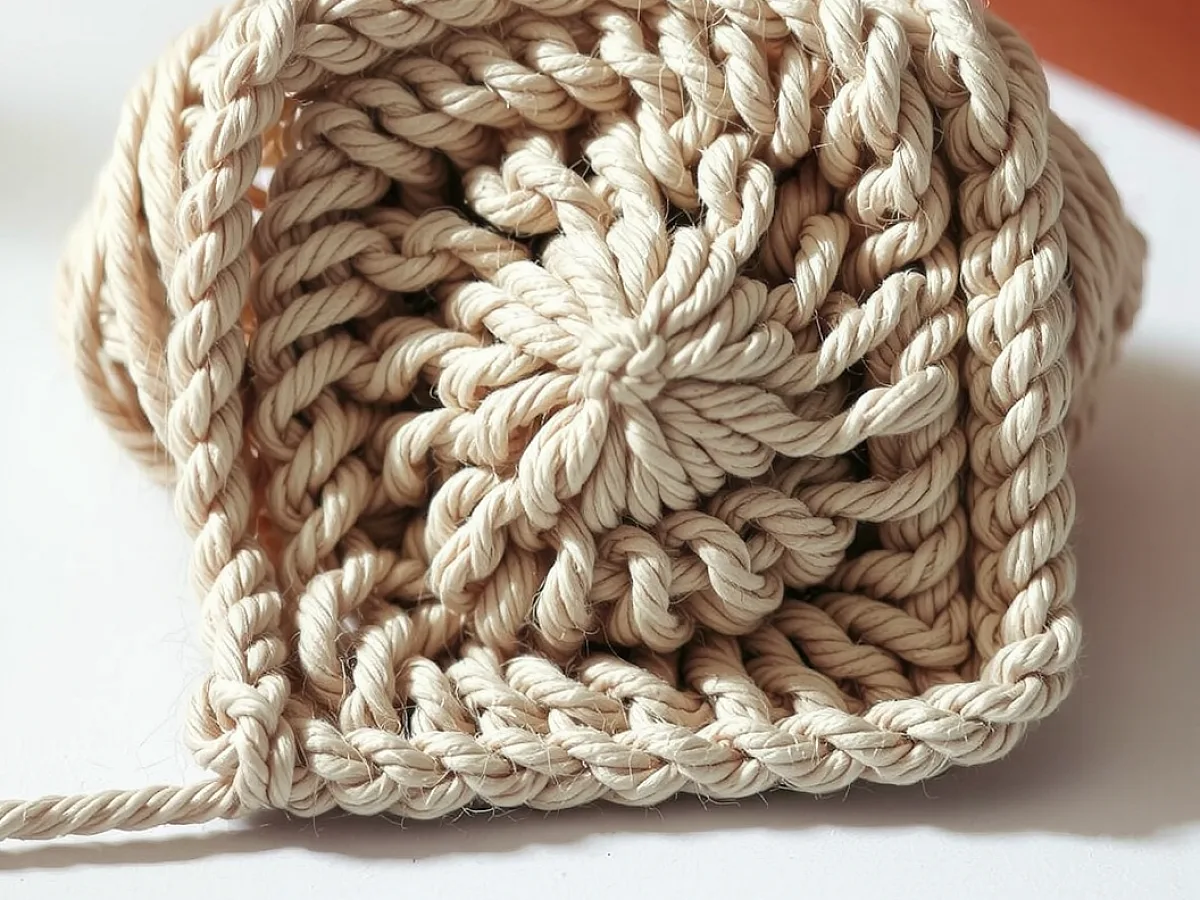
What you need
Worsted weight yarn
About 20 g of a smooth light color for practice. Dark or fuzzy yarn hides the loops while you learn.
5.0 mm hook
Use 5.5 mm if your hands are tight, or 4.0 mm with double knitting weight yarn.
Tapestry needle
A blunt needle with a large eye for weaving in the ends.
Removable stitch markers
For marking every tenth stitch and the first stitch of each row.
Tape measure
For checking gauge over 10 cm (4 in) before you commit to a larger piece.
What a double crochet actually is
In US terms, a double crochet is a tall stitch built from two pull-throughs. In UK and Australian patterns the same stitch is called a treble, so read the abbreviation list before you start. A US double crochet is written dc. A UK treble is written tr.
Each double crochet is roughly twice the height of a single crochet and about one and a half times the height of a half double crochet. That height is why it works well for blankets, scarves, and anything you want to finish in a reasonable number of evenings.
The stitch has a small horizontal bar near the top, two vertical legs below it, and a V shape at the base. Those parts matter later, because they tell you where to put the hook on the next row.
If your pattern says treble and you are used to US terms, check the abbreviation key first. Working a US treble where a US double was meant adds a full stitch of height to every row.
Double crochet step by step
Work the stitch into an existing row of chain or stitches. Keep your tension loose enough that the hook slides without tugging. If the hook fights you, go up one hook size rather than pulling harder.
- Yarn over: wrap the yarn from back to front over the hook once.
- Insert the hook: push it through the next stitch, front to back, under both top loops.
- Pull up a loop: catch the yarn and draw it through the stitch. You now have three loops on the hook.
- Yarn over and pull through two: wrap once more, then draw the hook through the first two loops only. Two loops remain.
- Yarn over and pull through two again: wrap once more and draw through the last two loops. One loop remains on the hook.
- Look at the stitch you just made: one post, one top V. That is one double crochet.
Say the moves out loud while you learn: over, in, up, two, two. The rhythm matters more than speed.
The turning chain, and why your edges lean
At the start of a new row you make a turning chain. For double crochet, that chain is three. The chain stands in for the first stitch of the row, because it is about the same height as one double crochet.
The trouble is that the chain is thinner than a real stitch, so the edge of the row looks a little open. That is normal. On the next row, work your last stitch into the top chain of that turning chain, not into the space beside it. Skip that step and each row loses one stitch.
If your edges slant inward, you are probably skipping the turning chain. If they fan outward, you are probably adding an extra stitch at the end. Count your stitches at the end of every row for the first ten rows. After that your eye can usually tell.
Count out loud in groups of ten and mark every tenth stitch with a removable marker. It saves a lot of ripping back.
Stitch count, gauge, and what to do when the size is wrong
A double crochet fabric works up at roughly 12 to 14 stitches and 7 to 8 rows to 10 cm (4 in) with worsted weight yarn and a 5.0 mm hook. That is a starting point, not a rule. Your hands change the number more than the pattern does.
Gauge only matters when the finished size matters. For a scarf or a blanket, a slightly different gauge just means a slightly different size. For a hat or a garment, it decides whether the thing fits at all.
Make a swatch at least 12 cm (5 in) square, then measure the middle 10 cm (4 in). If you have more stitches than the pattern asks for, go up one hook size. If you have fewer, go down one. Change the hook, not your hands.
Wash and dry the swatch the way you plan to wash the finished piece. Some cotton yarns shrink about 5 percent on the first wash, and a hat that fits before washing may not fit after.
Supplies for a first double crochet swatch
You do not need much to learn this stitch. A smooth light-colored yarn shows the loops better than a dark fuzzy one, and a metal hook slides faster than bamboo while you are learning the motion.
- Worsted weight yarn, about 20 g for a practice swatch
- 5.0 mm hook, or 5.5 mm if your hands are tight
- Tapestry needle for weaving in ends
- Removable stitch markers for counting
- Tape measure for checking gauge
Substitution note: if worsted feels bulky in your hands, double knitting weight with a 4.0 mm hook works the same way and is easier to see. If you only have bulky yarn, use a 6.5 mm hook and expect a looser, floppier fabric.
Common mistakes and how to fix them
Three problems come up again and again. Each one has a clear cause, and none of them mean you are bad at this.
The first is a row that gets shorter. You are almost certainly missing the last stitch, which sits in the turning chain. Count at the end of the row and compare with the row below.
The second is a hole at the start of the row. That gap is the turning chain being thinner than a stitch. You can hide it by working the first double crochet into the very first stitch instead of the second, or by using a standing double crochet that replaces the chain entirely.
The third is a tight, curling fabric. Your stitches are too short and too dense. Go up one hook size and relax your grip. Curling at the edges of a double crochet swatch is normal in the first few rows and usually settles by row five.
If you have ripped back more than twice on the same row, put it down for ten minutes. Tension problems are usually tired hands, not technique.
Ways to use and vary the stitch
Once the basic stitch feels automatic, small changes give you very different fabrics. Try one at a time so you can see what each change does.
- Taller stitch: yarn over twice before inserting the hook for a treble, which is about one third taller than a double.
- Shorter stitch: skip the first yarn over for a half double crochet, which sits between single and double in height.
- Looser fabric: go up one hook size for drape, good for shawls and lightweight blankets.
- Tighter fabric: go down one hook size for bags and baskets that need to hold their shape.
- Color changes: change color on the last pull-through of the stitch, so the new color appears in the top of that stitch.
- Joined rounds: slip stitch to the top of the turning chain to close each round, useful for hats and granny squares.
For a first blanket, work rows of double crochet with a chain two turning chain instead of three. The edge is slightly tighter and easier to keep straight.
Finishing and caring for double crochet work
Fasten off by cutting the yarn about 15 cm (6 in) from the last loop, pulling the tail through, and tightening. Weave the tail through the backs of six to eight stitches, then back the other way for three more. That reversal is what keeps the end from working loose in the wash.
Blocking makes a real difference with double crochet. Pin the piece to the measurements you want, mist it with cool water until damp, and let it dry flat for a full day. Acrylic yarns respond better to steam than to soaking.
Wash finished pieces by hand in cool water with a mild soap, squeeze rather than wring, and dry flat in the shade. Hanging a wet double crochet blanket stretches the stitches and the edges will not come back.
A care tip for wearing: double crochet fabric drapes and stretches with body heat, so a scarf or cardigan worked in this stitch can grow about one size over a season. Store folded, not hung, and it will hold its shape far longer.
Stitch with ease.
Keep one small swatch from every project with a note of the yarn and hook. It makes matching a repair later much easier.
Step
Yarn over
Wrap the yarn from back to front over the hook once. The wrap should sit in the throat of the hook, not on the handle.
Insert the hook
Push the hook through the next stitch, front to back, under both top loops. You should feel it slide, not scrape.
Pull up a loop
Catch the yarn and draw it through the stitch. Three loops sit on the hook now. If you have two, you missed the yarn over.
Yarn over and pull through two
Wrap once more and draw the hook through the first two loops only. Two loops remain.
Yarn over and pull through two again
Wrap once more and pull through the last two loops. One loop remains, and one double crochet is complete.
Check and continue
Look at the top of the stitch for a single V shape. Work the next double crochet into the next stitch along the row.
Ways to change it
Half double crochet
Skip the first yarn over. The stitch is shorter and denser, good for hats and washcloths.
Treble crochet
Yarn over twice before inserting the hook. Taller and airier, good for lacy shawls.
Bigger hook
One size up gives a looser, drapier fabric for blankets and scarves.
Smaller hook
One size down gives a firmer fabric that holds shape, good for bags and baskets.
Joined rounds
Close each round with a slip stitch into the turning chain for hats and granny squares.
Two-color rows
Change color on the last pull-through of a stitch so the new color shows in the top of that stitch.
The short version
- A double crochet is six moves: yarn over, insert, pull up, pull through two, pull through two, done.
- In UK and Australian patterns the same stitch is called a treble, so check the abbreviation key.
- The turning chain for double crochet is three chains and it counts as the first stitch of the row.
- Worsted weight yarn with a 5.0 mm hook works up at roughly 12 to 14 stitches to 10 cm (4 in).
- Rows that shrink are almost always missing the last stitch in the turning chain.
- Blocking and flat drying keep double crochet edges straight and stop the fabric stretching out of shape.
Questions people ask
How many chains do I need for a double crochet foundation?
Chain any number, then add three for the turning chain. The first double crochet goes into the fourth chain from the hook, which skips the three chains that stand in for the first stitch.
Why does my double crochet row keep getting shorter?
You are most likely skipping the last stitch, which sits in the top of the turning chain. Count the stitches at the end of every row and compare with the row below until the habit sticks.
Is double crochet the same as treble crochet?
In US terms, no. A US double crochet is a UK treble. A US treble is taller and needs two yarn overs before you insert the hook. Always check the abbreviation key in the pattern.
How do I stop the gap at the start of each row?
The gap comes from the turning chain being thinner than a real stitch. Work your first double crochet into the very first stitch instead of the second, or use a standing double crochet in place of the chain.
What hook size should a beginner use for double crochet?
Start with a 5.0 mm hook and worsted weight yarn. If the hook drags or your fabric curls tightly, go up to 5.5 mm before changing anything else.
Pick up your hook and work one row of ten double crochet stitches
Work ten double crochet stitches into a chain, count them, and turn. Do that five times and the motion stops feeling like six separate steps. From there, the stitch count and the turning chain are the only things left to watch.