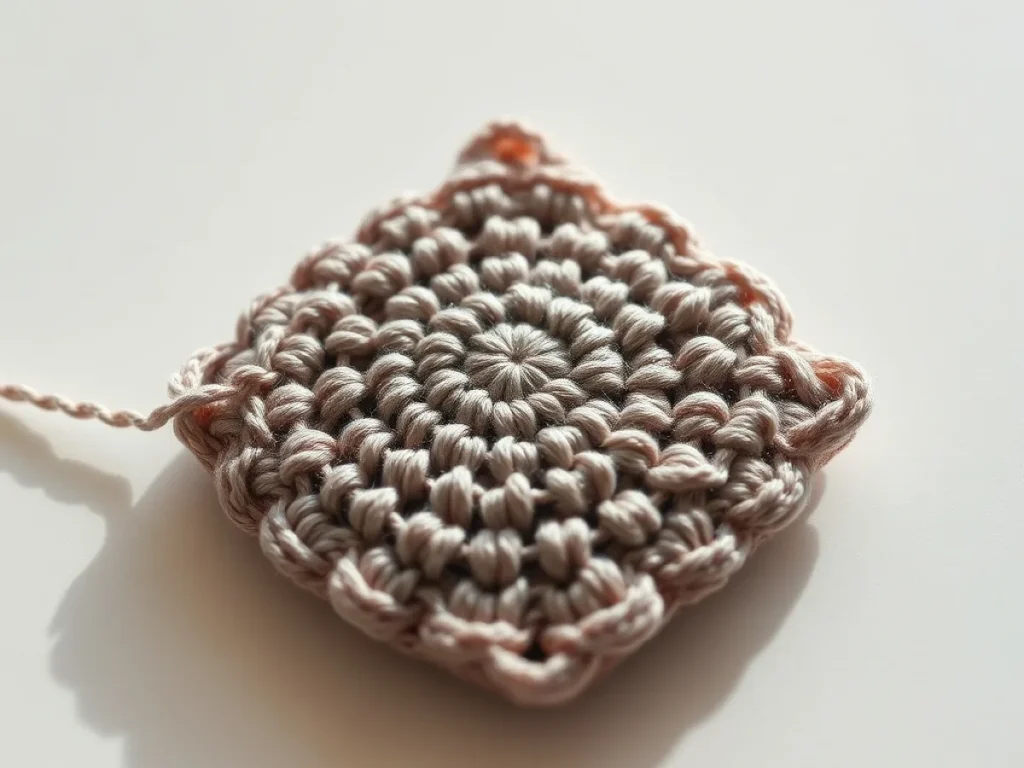
Learning to Crochet? A Beginner's Guide to Basic Stitches
By the end, you'll know how to hold your hook and yarn, make a slip knot and chain, and work five basic stitches.
Learning to crochet starts with one loop and one simple stitch.
Crochet is a craft that turns a ball of yarn into fabric using one hook. You make loops and pull them through each other. That's the whole idea.
This guide walks you through the first steps. You'll learn what supplies to get, how to hold everything, and how to make six basic stitches. No previous experience needed.
You can learn the basics in an afternoon. Start with a slip knot, then a chain, then single crochet. Practice each stitch until your edges look even. Most people need about an hour to get comfortable with the first two stitches.
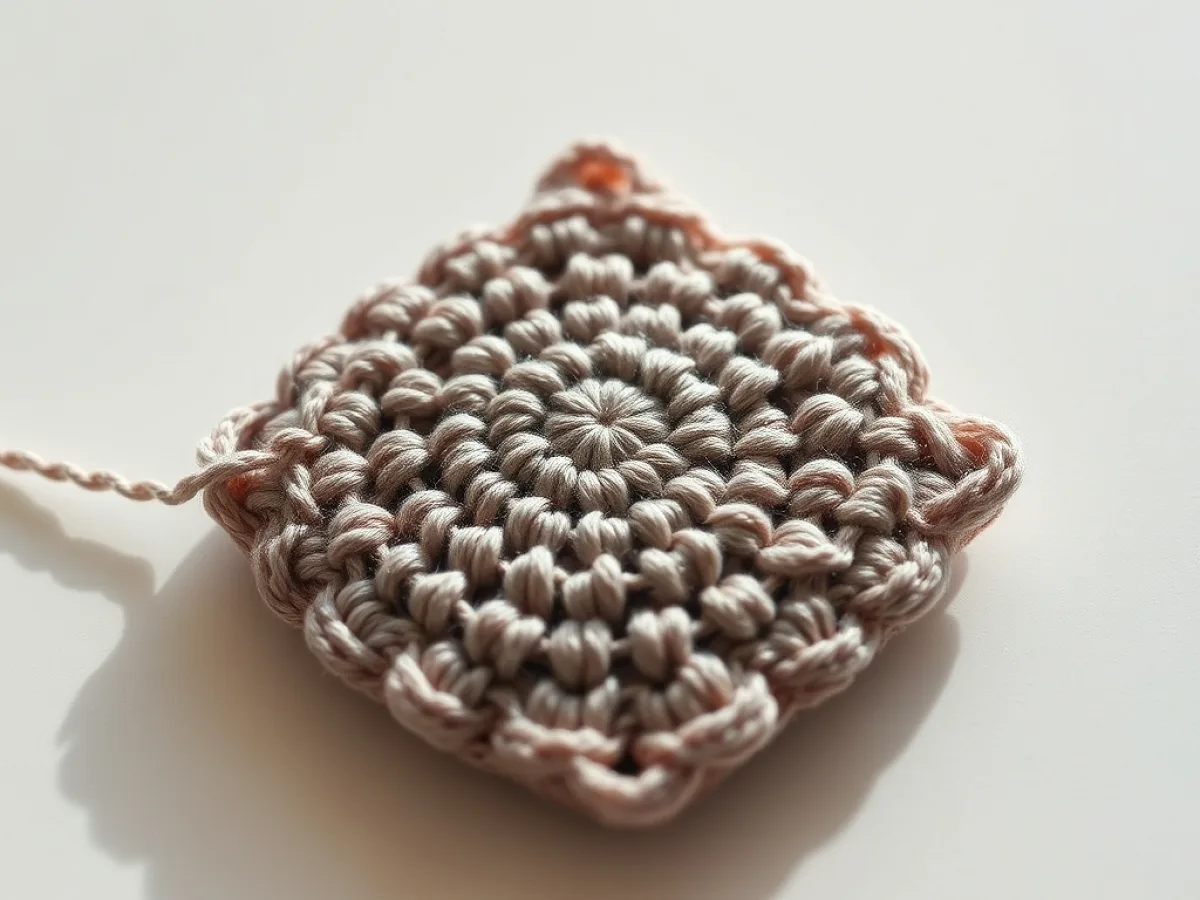
What you need
Worsted weight yarn
A light color is best. One skein is enough for practice. Acrylic is cheap and easy to find.
Crochet hook
Size H-8 (5.0 mm) or I-9 (5.5 mm). Metal hooks glide better for beginners.
Scissors
Any small pair will do. Keep them with your project.
Yarn needle
A blunt-tip needle for weaving in ends. Look for one with a large eye.
What you'll need to start crocheting
Before you make your first stitch, gather a few things. You don't need much. A hook, some yarn, and a pair of scissors will get you going.
The hook size should match your yarn. For worsted weight yarn, a 5.0 mm (H-8) hook is a good starting point. If the hook feels too small or too large for the yarn, adjust.
- Worsted weight yarn (also called medium weight, #4) in a light color so you can see your stitches.
- A crochet hook in size H-8 (5.0 mm) or I-9 (5.5 mm).
- Scissors or yarn snips.
- A yarn needle for weaving in ends later.
- A row counter or a piece of paper to keep track of rows.
Avoid dark or fuzzy yarns at first. They make it hard to see where to put your hook.
How to hold the hook and yarn
Hold the hook in your dominant hand, like a pencil or a knife. Both ways work. Try each and see which feels natural.
Your other hand controls the yarn. Loop the yarn over your index finger and under your pinky to keep tension. You want the yarn to glide, not pull tight.
If your yarn keeps slipping, wrap it once more around your pinky. If your hand cramps, loosen your grip.
The slip knot and chain stitch
Every crochet project starts with a slip knot on your hook. Make a loop, then pull the yarn through to create a knot that slides. Tighten it on the hook, but not too tight.
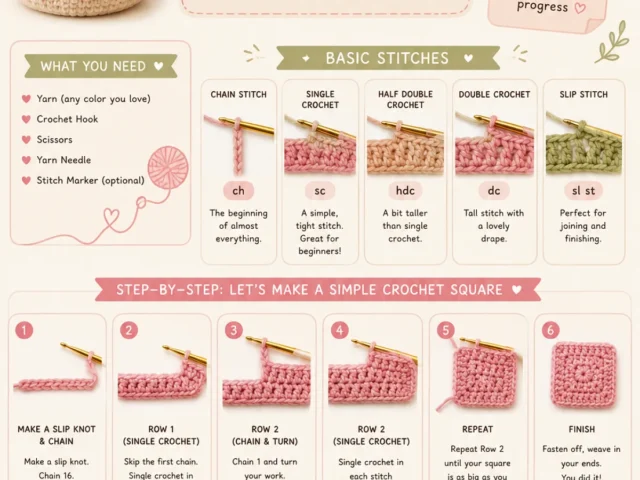
The chain stitch (abbreviated ch) is the foundation. Yarn over, pull through the loop on your hook. That's one chain. Repeat for as many as you need.
Count your chains as you go. It's easy to lose track. The loop on your hook never counts as a chain.
Single crochet: your first real stitch
Single crochet (sc) is the stitch most beginners learn first. It makes a dense, sturdy fabric. You'll use it for hats, blankets, and amigurumi.
To make a single crochet, insert your hook into the next chain, yarn over, pull up a loop, yarn over again, and pull through both loops. That's it.
If your stitch count keeps growing, you might be adding a stitch at the end of the row. Count after every row.
Half double crochet, double crochet, and treble crochet
Once you know single crochet, the taller stitches are easy. They all start the same way: yarn over before you insert your hook.
Half double crochet (hdc) is one yarn over, then pull through all three loops. Double crochet (dc) is yarn over, pull through two loops, then yarn over and pull through the last two. Treble crochet (tr) is yarn over twice, then pull through two loops three times.
- Half double crochet (hdc): Yarn over, insert hook, pull up a loop, yarn over, pull through all three loops.
- Double crochet (dc): Yarn over, insert hook, pull up a loop, yarn over and pull through two loops, yarn over and pull through two loops again.
- Treble crochet (tr): Yarn over twice, insert hook, pull up a loop, yarn over and pull through two loops three times.
Taller stitches make a looser fabric. If your project looks too holey, go down a hook size.
Slip stitch and joining rounds
The slip stitch (sl st) is the shortest stitch. It doesn't add height. You use it to join rounds, move across a row without adding height, or finish off.
To make a slip stitch, insert your hook, yarn over, and pull through both the stitch and the loop on your hook. That's it. It's almost like tying a knot.
When joining a round, work the slip stitch into the first stitch of the round, not the chain. This keeps your join neat.
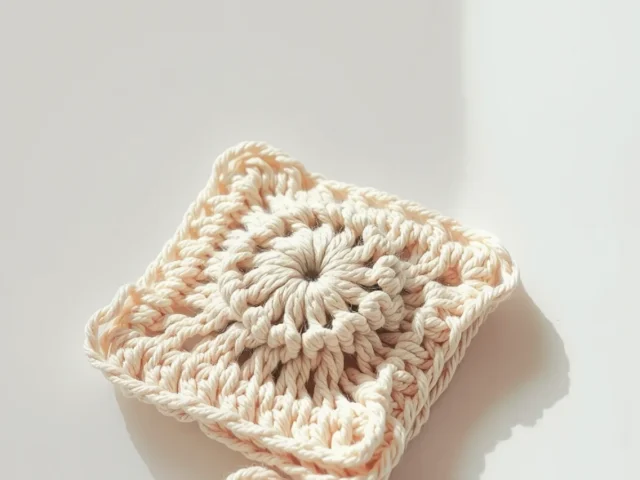
Practice project: a simple coasters
Make a coaster to practice your stitches. It's small and quick. You'll need worsted weight yarn and an H-8 hook.
Chain 15. Row 1: single crochet in the second chain from hook and in each chain across. You should have 14 stitches. Chain 1, turn. Row 2: single crochet in each stitch across. Repeat row 2 until your coaster is square, about 14 rows. Fasten off and weave in ends.
If your coaster curves, your tension is too tight. Try relaxing your grip or using a larger hook.
Common mistakes and how to fix them
Your first rows might look uneven. That's normal. Most beginners add or lose stitches at the ends of rows. Count your stitches after each row to catch it early.
Another common problem is tight tension. If your stitches are hard to work into, you're pulling the yarn too tight. Loosen your grip and let the yarn flow.
- Adding stitches: You might be working into the turning chain. Skip it unless the pattern says otherwise.
- Losing stitches: You might be skipping the first stitch. Always work into the first stitch unless told not to.
- Twisted foundation chain: Make sure your chain isn't twisted before you start row 1.
If you're frustrated, put it down and come back later. Crochet is a skill. It takes practice.
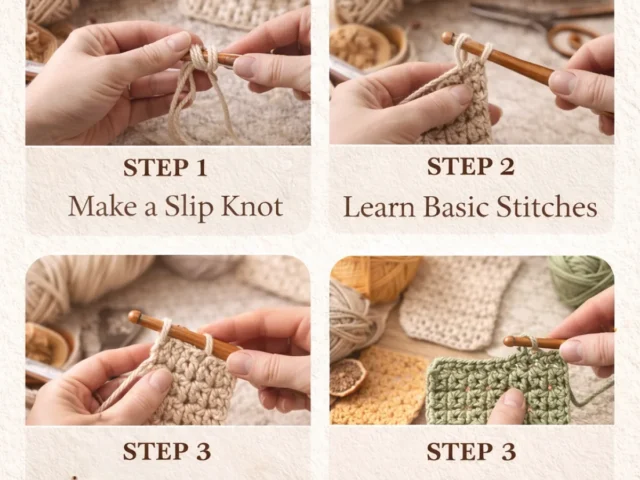
Step
Make a slip knot
Loop the yarn and pull the tail through to create a knot. Slide it onto your hook. It should move easily.
Chain 10 to 15 stitches
Yarn over and pull through the loop on your hook. Repeat. Count as you go. Keep chains loose.
Work single crochet into each chain
Insert hook into the second chain from hook. Yarn over, pull up a loop, yarn over, pull through both loops. Repeat across.
Turn and work row 2
Chain 1, turn your work. Single crochet into the first stitch and each stitch across. Count your stitches.
Practice taller stitches
Try half double, double, and treble crochet on a new swatch. Notice how the fabric changes.
Weave in ends
Cut yarn leaving a 6-inch tail. Thread it onto a yarn needle and weave through the back of your work.
Ways to change it
Use a larger hook
If your stitches are tight, go up one hook size. The fabric will be looser and easier to work.
Try cotton yarn
Cotton doesn't stretch and shows stitch definition clearly. It's good for coasters and washcloths.
Make a longer project
Once you're comfortable, chain 30 instead of 15 and keep going for a scarf.
Switch to a bigger yarn
Bulky weight yarn with a K-10.5 (6.5 mm) hook works up faster and is easier to see.
The short version
- Start with worsted weight yarn and an H-8 hook.
- The slip knot and chain are the foundation of every project.
- Single crochet is the first stitch to learn.
- Taller stitches like double crochet create a looser fabric.
- Count your stitches after each row to avoid mistakes.
- Tension affects how your fabric looks and feels.
- Practice a small coaster to build muscle memory.
Questions people ask
How long does it take to learn to crochet?
Most people can learn the basic stitches in an afternoon. You'll need about an hour to get comfortable with the chain and single crochet. Becoming fluent takes a few practice sessions.
What is the easiest crochet stitch for beginners?
Single crochet is the easiest. It uses one loop and one yarn over. Once you know it, the taller stitches are simple variations.
Do I need special yarn to learn crochet?
No. Worsted weight acrylic yarn in a light color is fine. Avoid dark or fuzzy yarns at first because they hide your stitches.
Why does my crochet work curve or ruffle?
Curving usually means your tension is too tight or you're adding stitches. Ruffling means too many stitches. Count your stitches and adjust your hook size.
How do I hold the yarn for crochet?
Loop the yarn over your index finger and under your pinky. Keep a light tension so the yarn slides easily. There's no single right way, so experiment.
Grab your hook and make your first chain
Learning to crochet is a skill you build one stitch at a time. Start with a slip knot, practice your chain, and work a few rows of single crochet. Before long, your hands will know what to do. Happy hooking!