Vintage Crochet Patterns: A Gentle Guide to Reading and Recreating Them
Learn to read the old abbreviations, adjust for modern yarn, and stitch a doily or afghan that looks like it came from a 1940s pattern book.
A 1940s pattern might call for 'No. 30 thread' and a steel hook that looks like a sewing needle, but with a few simple swaps you can make it work today.
There is something special about opening a vintage crochet pattern. The paper is thin, the print is small, and the photographs are black and white. But the designs are often more detailed and delicate than anything in a modern magazine.
The challenge is that the language has changed. Yarn names, hook sizes, and even basic stitches go by different labels. This guide walks you through the common hurdles and shows you how to turn a dusty pattern into a finished piece you can be proud of.
You can absolutely crochet vintage patterns today. The key is understanding the old yarn weights, hook sizes, and abbreviations, then making simple substitutions to match modern materials.
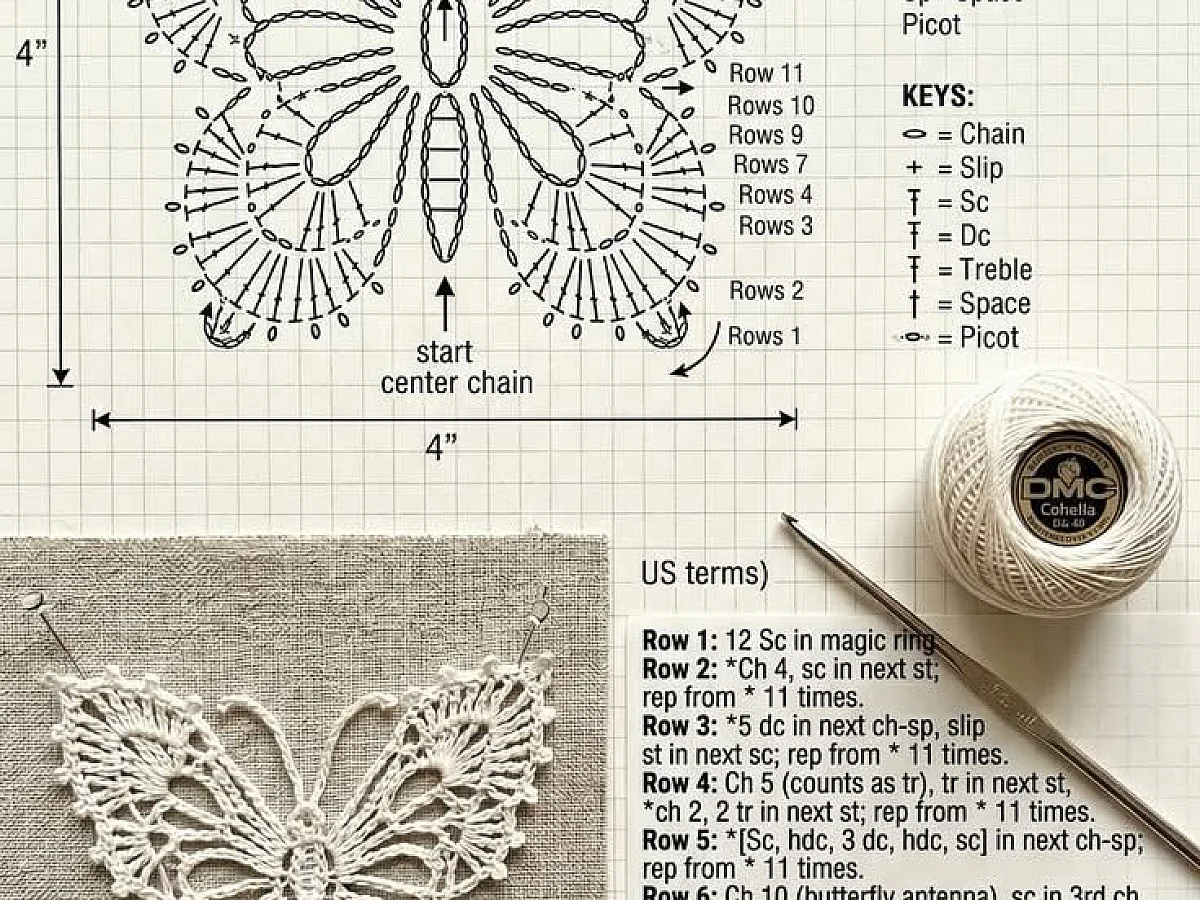
What you need
Vintage pattern
A physical booklet or a scanned PDF. Look for one with a clear chart or written instructions.
Yarn or thread
Choose a modern equivalent. For doilies, size 10 crochet thread works for most vintage patterns. For garments, worsted weight yarn is a safe match.
Crochet hook
Steel hooks for thread work, sizes 1.5 mm to 2.0 mm. For worsted yarn, a 5.0 mm hook.
Stitch markers
Use them to mark the start of rounds and to keep your place.
Blocking mat and pins
You need these to shape the finished piece. A foam mat and stainless steel pins work well.
What Makes a Pattern Vintage?
Most crocheters call a pattern vintage if it was published before the 1970s. The 1940s and 1950s are the golden age for doilies, bedspreads, and lightweight shawls. Patterns from the 1960s start to use chunkier yarns and simpler shapes.
Older patterns assume you know basic techniques like joining rounds invisibly or working in the back loop only. They rarely explain a stitch twice. If you are comfortable with chain, single, double, and treble, you can handle most of them.
Check the copyright page or the cover for a date. If there is no date, look for the price – patterns that cost 10 or 15 cents are usually from the 1940s or 1950s.
Understanding Old Yarn Weights and Hooks
Vintage patterns often call for 'crochet cotton' in sizes like No. 10, No. 20, or No. 30. The higher the number, the finer the thread. No. 10 is about the same as modern size 10 crochet thread, which you can find in most craft stores.
For hook size, older patterns use a letter system that has changed. A 'steel hook No. 7' might be a 1.65 mm today. The best approach is to make a small swatch and adjust until the fabric looks like the photo – firm but not stiff, with the stitches clearly defined.
If the pattern calls for 'knitting worsted weight' yarn, that is close to today's worsted weight (category 4). You can use any modern worsted yarn and a 5.0 mm hook, and you will be in the right ballpark.
When substituting yarn, match the fiber as closely as you can. Cotton thread for cotton thread, wool for wool. A different fiber can change the drape and the size.
Decoding Old Abbreviations and Terms
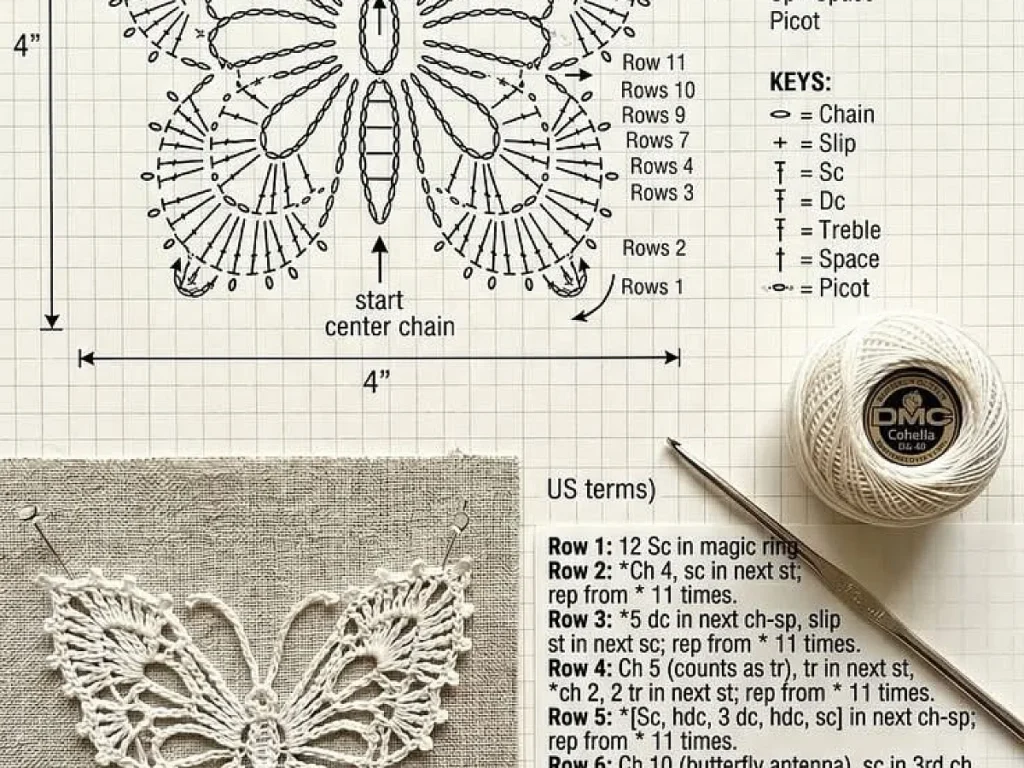
The biggest hurdle is the abbreviations. In the 1940s, 'sc' meant single crochet just like today, but 'dc' sometimes meant double crochet and sometimes meant 'double loop' – you have to read the pattern carefully.
A common one is 'tr' for treble, which was often called 'triple' back then. And 'ch' always means chain, but 'ch st' might mean 'chain stitch' or 'chain space.' Look for a key at the beginning of the pattern. If there is none, search for the pattern name online – another crocheter has probably decoded it.
Also, older patterns use 'rnd' for round and 'rep' for repeat. They might say 'work even' instead of 'work in established pattern.' These are easy to pick up once you know they exist.
Photocopy the pattern and write the modern abbreviations in the margin. That way you keep the original intact and you have a clean copy to mark up.
How to Adjust Gauge for a Modern Fit
Gauge is the number of stitches and rows per inch. Vintage patterns often give gauge in a way that is hard to match, like '4 sts and 3 rows = 1 inch' on a size 8 steel hook. But you do not need to match it exactly unless the item must fit a specific size, like a garment.
For doilies and afghans, the finished size can vary by an inch or two without a problem. The important thing is that the stitch pattern looks right. If your swatch is too loose, drop a hook size. If it is too tight, go up a hook size.
For a garment like a cardigan, you do need the right gauge. Measure your swatch, and if it is off by more than 10 percent, change your hook. Blocking can also help – many vintage patterns block to size, so a slightly small swatch can be stretched during blocking.
Always block your swatch before measuring. Steam or wet-block it the same way you will block the finished piece. This gives you the true gauge.
Working with Fine Thread and Steel Hooks
Fine thread and steel hooks take practice. The hook is thin, and the thread can split easily. Work in good light and take breaks to rest your hands.
One trick is to use a hook with a comfortable grip. You can buy a silicone handle that fits over the steel hook, or you can wrap it with a bit of tape. This keeps your fingers from cramping.
If you are new to thread crochet, start with a No. 10 thread and a 1.65 mm hook. It is easier to see the stitches than with No. 30. After a few rows, you will get the rhythm.
When you finish a row, count your stitches. It is much easier to fix a mistake right away than to rip out several rows later.
Common Mistakes and How to Fix Them
The most common mistake is working into the wrong loop. Many vintage patterns assume you work under both loops unless the pattern says otherwise. If your fabric looks ribbed, you might be working into the back loop only.
Another issue is losing count in the middle of a round. Use stitch markers at the beginning of each round. It takes ten seconds and saves a lot of frustration.
If you find a mistake a few rows back, do not rip out the whole piece. You can often 'drop down' the stitch and fix it with a crochet hook, but if that feels too complicated, it is okay to start over. The yarn does not mind.
When you have to rip out, wind the yarn into a loose ball. It will be less tangled and easier to reuse.
Blocking and Caring for Your Vintage Piece
Blocking is what turns a lumpy doily into a lacy work of art. Soak the piece in lukewarm water with a drop of mild soap for about 15 minutes. Gently squeeze out the water, then pin it to a blocking mat to the desired shape and size.
For cotton thread, you can use steam from an iron held about an inch above the piece – but do not touch the iron to the work. For wool, just let it air dry.
To care for your finished piece, hand wash in cool water and lay flat to dry. Do not wring it. If you store it folded, put a piece of acid-free tissue paper between the folds to prevent creases.
Blocking pins can leave rust marks, so use stainless steel pins or T-pins. And always dry away from direct sunlight to prevent fading.
Step
Read the pattern through
Before you pick up your hook, read the whole pattern. Note the abbreviations, the gauge, and the finished size. If there is a chart, study it.
Make a gauge swatch
Work a small square with the recommended yarn and hook. Measure it. If it does not match the pattern's gauge, change your hook size and try again.
Start with the foundation chain
Make the foundation chain loosely. If it is too tight, your first row will pucker. Use a hook one size larger for the chain if you tend to crochet tightly.
Work the pattern, counting your stitches
Follow the pattern row by row, placing a stitch marker at the beginning of each round. Count your stitches at the end of each row to catch mistakes early.
Finish and weave in ends
When you reach the last row, fasten off and weave in the ends with a tapestry needle. Do this neatly so they do not show on the right side.
Block the piece
Soak, pin, and let it dry. This is the step that makes vintage lace look crisp and beautiful.
Ways to change it
Use a larger thread
If you find size 10 too fine, try size 3 or 5 crochet thread. The piece will be larger and the stitches easier to see.
Make a modern yarn substitution
Use a DK or sport weight yarn instead of thread for a softer, more casual look. The stitch pattern will still work.
Try a different hook material
If steel hooks hurt your hands, use a bamboo or aluminum hook with a larger handle. It changes the feel but not the stitch.
Adjust the size
To make a doily larger, add extra rounds by repeating the last pattern repeat. To make it smaller, stop earlier.
Change the color
Vintage patterns look lovely in ecru or white, but a bold color can make a modern statement.
The short version
- Vintage patterns often use finer thread and steel hooks, but you can substitute modern materials.
- Abbreviations have changed, so read the pattern key and look up any unfamiliar terms.
- Gauge is important for garments, but for doilies and afghans you have more flexibility.
- Blocking is essential to bring out the beauty of vintage lace.
- Use stitch markers to keep your place and count stitches regularly.
- You can adjust the size by adding or omitting pattern repeats.
- Hand wash and dry flat to keep your vintage piece looking its best.
Questions people ask
What does 'crochet cotton' mean in a vintage pattern?
It is a tightly spun cotton thread, usually mercerized for shine. It comes in sizes like 10, 20, or 30, with higher numbers being finer. You can use modern crochet thread as a direct substitute.
How do I convert vintage hook sizes to modern ones?
Vintage steel hooks are numbered differently. A size 7 steel hook is about 1.65 mm, and a size 10 is about 1.30 mm. A conversion chart is available online, but the best way is to make a swatch and adjust until you like the fabric.
Why is my doily curling up?
Curling often happens if your tension is too tight or if you are missing increases. Check your stitch count and try a larger hook. Blocking will also flatten it out.
Can I use a vintage pattern for a modern garment?
Yes, but you need to match the gauge closely. Also, vintage sizes run smaller, so you may need to adjust the size or use a larger hook to get a modern fit.
Pick a vintage pattern and give it a try
Vintage crochet patterns are not as scary as they look. With a little patience and the right materials, you can create something truly timeless. Pick a simple doily pattern and start today. Stitch with ease.