Crochet Motif Collection Aesthetic Ideas: How to Build a Cohesive Set of Squares
Pick a palette, a size and a joining method, and your loose squares will look like one deliberate collection instead of twelve separate projects.
Twelve finished squares in twelve different yarns will not look like a collection, no matter how pretty each one is on its own.
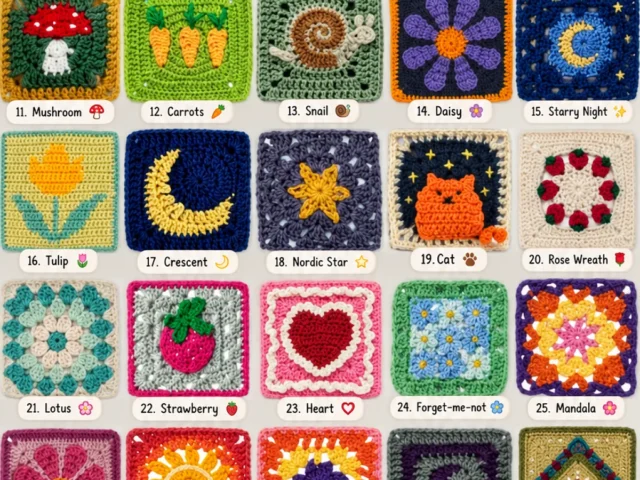
A motif collection is not one pattern repeated. It is a group of different squares that still look like they belong in the same basket.
The trick is boring and it works: lock the yarn weight, lock the outer round, and limit the colors. Everything else can change.
A crochet motif collection looks cohesive when every square shares three things: the same yarn weight, the same outer round, and a palette of three to five colors. Change the center as much as you like. Keep the border identical and the set holds together.
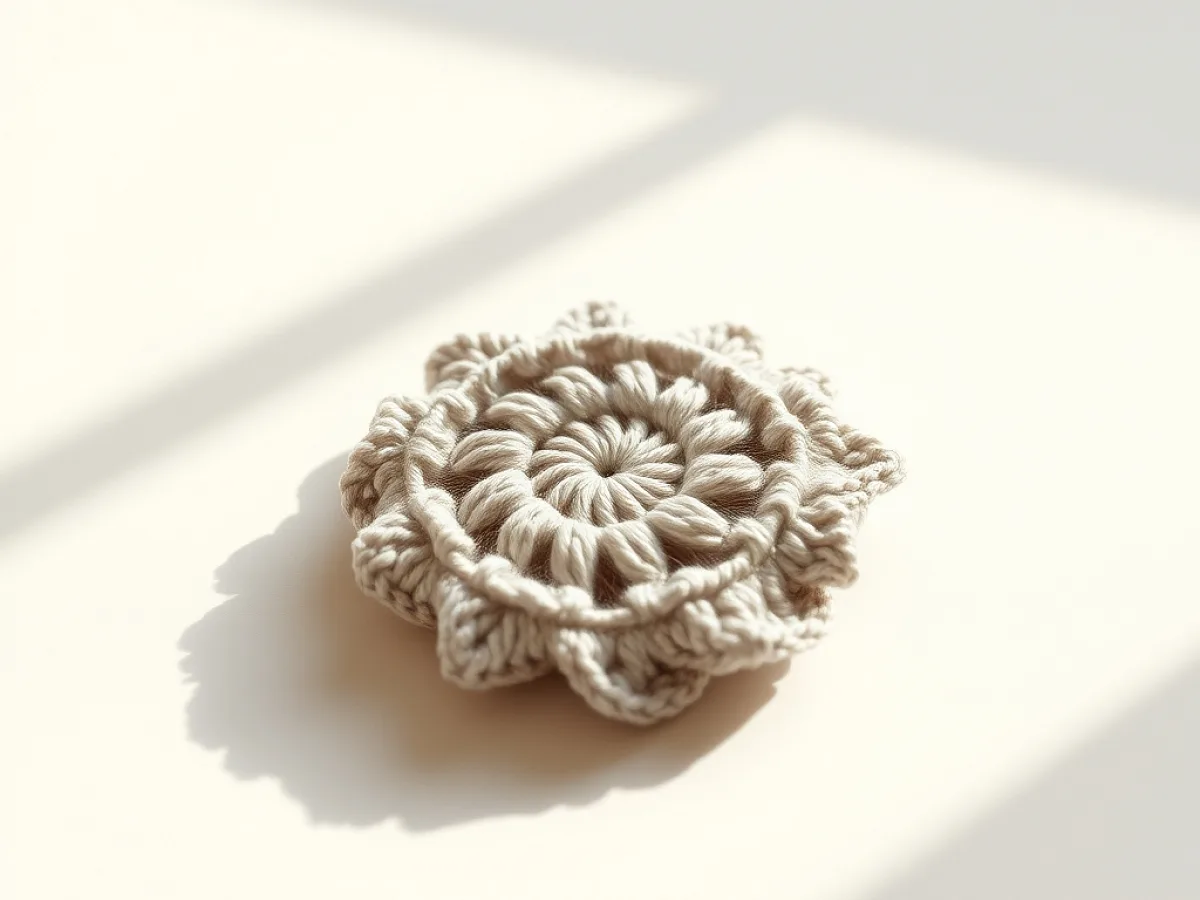
The collection
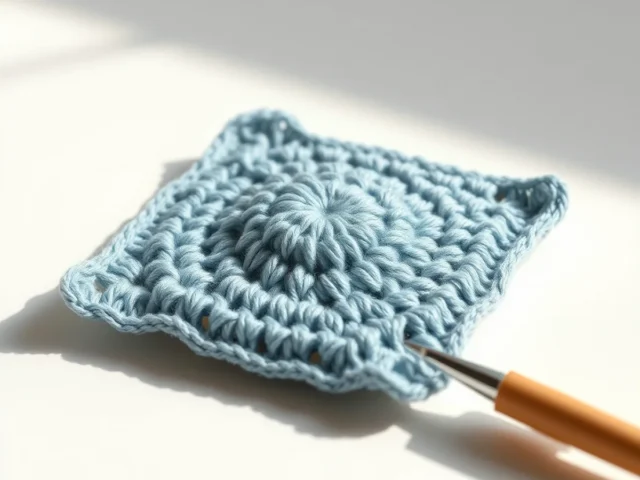
Classic granny square
Three double crochet clusters in each space. The most forgiving motif and the easiest to size up or down.
Solid square
Worked in one color with no chain spaces. Gives a flat, dense surface that suits bags and coasters.
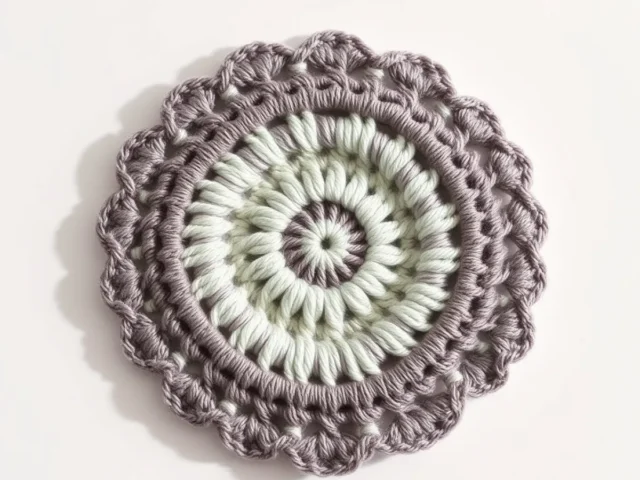
Sea shell motif
Shell stitches worked into a chain ring. Reads as a fan or a wave depending on the color you pick.
Sunburst or circle center
A round center inside a square outer. Needs a round of chain spaces to square it off cleanly.
Flower center
Five or six petals in a contrasting color, then squared off. Best used as an accent square, not the whole set.
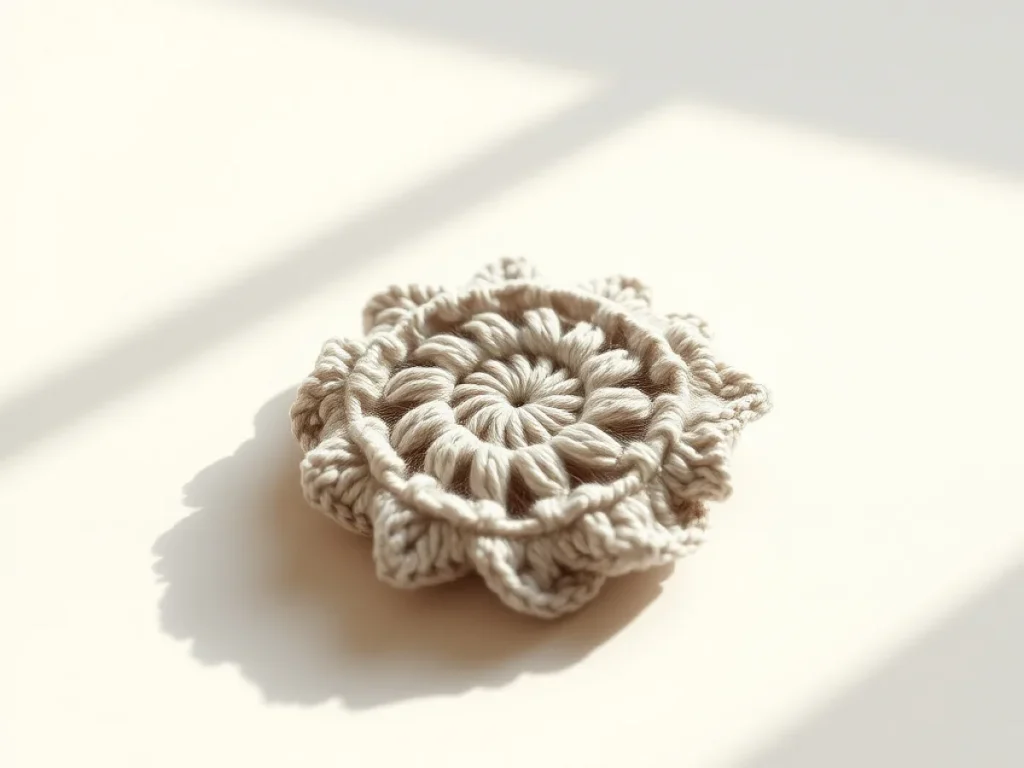
Star or snowflake center
Worked with tall stitches and chain points. Works well in cotton because the points hold their shape.
Mitered square
Worked from one corner outward with decreases. Gives a diagonal line that adds movement to a plain set.
Corner-to-corner square
Built with blocks of chain and double crochet. Fast to work and easy to size because you stop when it is square.
What you need
Worsted weight yarn, Category 4
Three to five colors, about 30 g of each for a small set of squares. Acrylic is cheap and easy to find; cotton holds stitch definition better.
5.0 mm crochet hook
One size for the whole project. If your squares come out too small, go up to 5.5 mm rather than pulling your stitches looser.
Tapestry needle
A blunt-tip needle with an eye wide enough for worsted yarn. Used for seaming and for weaving in ends.
Stitch markers
Six or so. Clip one into the corner chain space of each square so you can find it again after you put the work down.
Blocking mat and pins
A foam mat with grid lines plus rustproof pins. A folded towel works if you do not have a mat, but the squares may dry unevenly.
Why most motif collections look messy
The usual problem is not bad squares. It is mismatched squares. A worsted-weight square next to a fingering-weight square will be about 30 percent smaller, and no amount of blocking fixes that.
The second problem is color drift. If you add one new shade to every square, you end up with fifteen colors and no palette. Pick three to five and hold the line.
A third problem shows up in the join. Squares joined with a contrasting yarn read as separate blocks. Squares joined in the same color as the outer round read as one piece.
Lay all your finished squares on the floor in daylight before you join anything. Indoor bulbs hide the color clashes that daylight shows you.
Choosing a yarn weight and hook size
Worsted weight yarn (Category 4) with a 5.0 mm hook is the easiest place to start. A basic granny square in that combination comes out around 12 cm (4.75 in) across after four rounds.
If you want finer detail in the center motifs, go down to DK (Category 3) with a 4.0 mm hook. Those squares finish closer to 9 cm (3.5 in), so you will need more of them for the same blanket.
Gauge matters here even though nobody is wearing the square. Work one test square, measure it, then work a second one. If the two differ by more than 5 mm, your tension is drifting and your finished piece will not lie flat.
- Worsted, 5.0 mm hook: about 12 cm per four-round square
- DK, 4.0 mm hook: about 9 cm per four-round square
- Cotton worsted, 4.5 mm hook: firmer square, good for coasters and bags
Write the hook size on a scrap of paper and keep it in the project bag. Swapping hooks mid-project is the most common reason squares stop matching.
Building a palette that holds together
Three colors is enough. One light, one mid, one dark. Add a fourth only if it is a near-neighbor of one you already have, like a soft sand next to a warm cream.
Sea-inspired sets work well because the colors sit close together: cream, sand, pale blue, deep teal. Change the center motif and the palette still reads as one set.
If you want a bright pop, use it in the center only, and use it in no more than one square out of four. That keeps it as an accent instead of a theme.
Photograph your yarn in black and white before you start. If two colors look the same in grey, they will blur together in the finished piece.
The collection: eight motifs worth mixing
These are the classic centers. Work four rounds of each, then finish every square with the same final round in your main color.
Joining so the set reads as one piece
Join with the same yarn you used for the outer round. A contrast join is a design choice, but it splits the collection into tiles.
The flat slip stitch join and the join-as-you-go method both keep the surface smooth. Whipstitch is faster but leaves a raised ridge that shows from the front.
Work the join at the same tension as the squares. A tight join pulls the corners in and the piece cups. If that happens, go up one hook size just for the joining round.
Join in long strips first, then join the strips. It is easier to keep the corners lined up that way than joining one square at a time.
Blocking and finishing
Pin every square to the same measurement. If your target is 12 cm, pin all four corners at 12 cm, even the squares that came out at 11.5 cm.
Mist with cool water, press gently with your hands, and let them dry flat for at least 12 hours. Cotton takes longer than acrylic.
Sew in the ends before blocking, not after. Ends that are still loose will pull the corners out of shape while the square dries.
Use a foam blocking mat with grid lines. Eyeballing the size is how you end up with a wavy blanket edge.
Step
Work one test square
Chain 4, join into a ring, and work four rounds of a basic granny square. Measure across the middle. If it is not close to 12 cm, change hook size and work another.
Lock your palette
Choose three to five colors and put the rest of your yarn away. Out of sight means out of the project.
Work the centers
Crochet the first two rounds of each motif in your chosen colors. Keep a note of which color went where so you can repeat it.
Add the shared outer rounds
Work rounds three and four in the same color for every square. This is the round that makes the set look deliberate.
Check the size before joining
Lay all squares side by side. If any is more than 5 mm off, rework it or adjust the outer round. Do not join mismatched squares and hope blocking will fix it.
Join in strips
Join squares into rows first, then join the rows. Use the same yarn as the outer round and the same tension as the squares.
Block and dry flat
Pin every square to the same measurement, mist with cool water, and leave flat for at least 12 hours.
Ways to change it
Coastal palette
Cream, sand, pale blue and deep teal. Suits the sea-themed centers and reads calm in a whole blanket.
Single-color set
All squares in one yarn, with texture doing the work instead of color. Good if you cannot decide on a palette.
Scrap version
Use leftover yarn for the centers only, then one full skein for the shared outer rounds. Keeps the set unified without buying much.
Cotton instead of acrylic
Firmer stitch definition and no fuzz. Better for potholders, bags and anything that gets washed often.
Smaller scale
DK yarn with a 4.0 mm hook makes 9 cm squares. Use them for cushions and coasters instead of a blanket.
Larger scale
Chunky yarn with a 6.5 mm hook makes roughly 18 cm squares. A throw needs far fewer of them.
The short version
- Three to five colors is enough for a set. More than that and the squares stop looking related.
- A shared outer round in one color is what makes different motifs read as one collection.
- Worsted weight with a 5.0 mm hook gives about a 12 cm square after four rounds.
- Join with the same yarn as the outer round to avoid a tiled look.
- Block every square to the same measurement, even the ones that came out slightly small.
- Rework a square that is more than 5 mm off rather than fixing it with blocking.
Questions people ask
How many squares do I need for a blanket?
It depends on the size you want and your square measurement. A throw of about 120 by 150 cm needs roughly 100 squares at 12 cm each, plus a border. Work ten squares first and measure the group before you commit to a count.
Can I mix different yarn weights in one motif collection?
You can, but the squares will not match in size. A worsted square and a fingering square of the same round count differ by about 3 cm. If you want to mix, work extra rounds on the lighter yarn until the measurements line up.
Why are my squares cupping at the corners?
Usually the joining round is too tight, or the last round has too few stitches in the corners. Try going up one hook size for the join and check that each corner has the full chain space.
Do I have to block every square?
Yes, if you want the finished piece to lie flat. Blocking evens out small differences in tension. Cotton needs about 24 hours to dry; acrylic dries in around 12.
What is the easiest join for a beginner?
The flat slip stitch join. It is worked through both loops along the edge and keeps the surface smooth. Whipstitch is faster but leaves a visible ridge.
Pick three colors and work one test square today
Start with a single square in worsted weight and a 5.0 mm hook. Measure it, pick your three colors, and the rest of the collection falls into place from there.