Granny Square Library aesthetic ideas
You’ll know how to mix handmade granny squares with bookish warmth—without clutter or craft-store overwhelm.
Granny squares are stiff until they’re washed and blocked—so most library corners fail before they begin.
This isn’t about covering every surface in crochet. It’s about using granny squares where they soften hard edges and invite pause: a pillow under your elbow while reading, a coaster under your teacup, a runner across a narrow shelf.
People try to build this aesthetic by crocheting too much, too fast—then end up with lumpy, unblocked squares that look homemade in the wrong way. That’s fixable. You just need to know where one square makes more difference than ten.
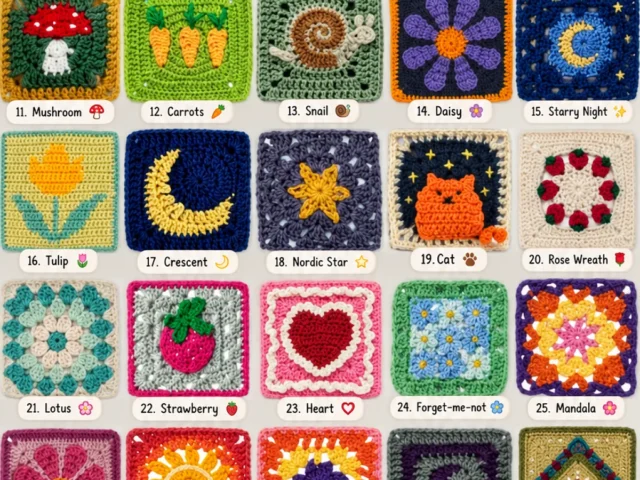
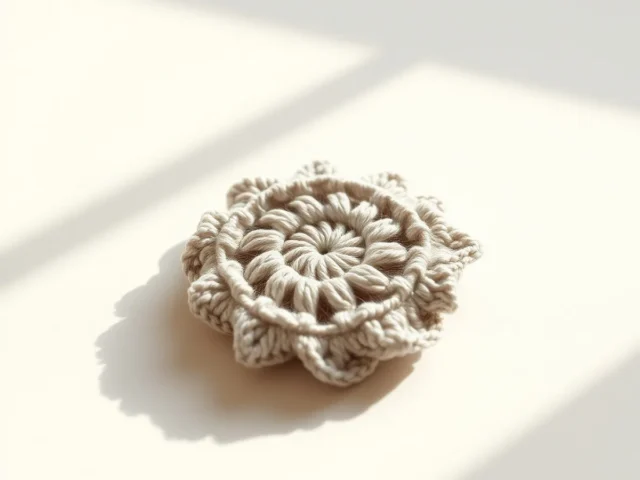
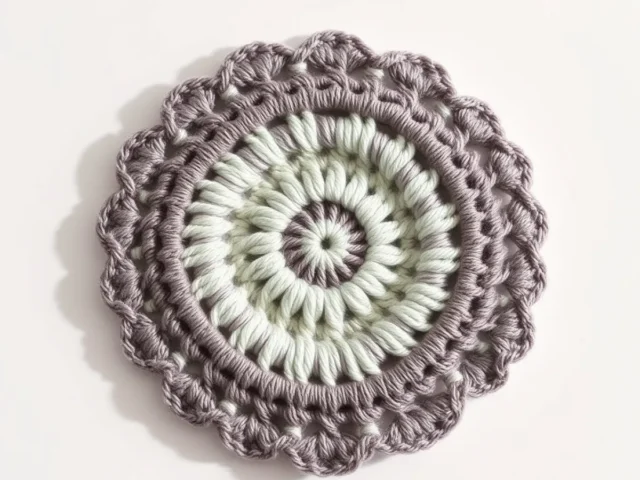
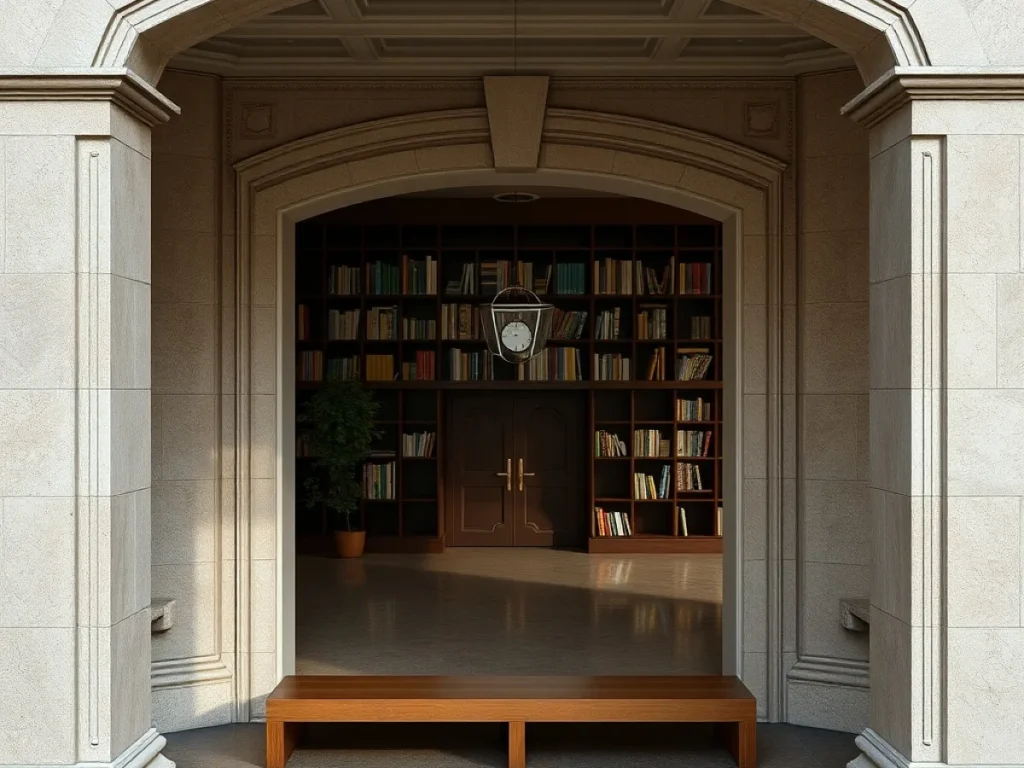
Granny Square Library aesthetic ideas combine handmade crochet squares with cozy, book-filled spaces. You don’t need dozens of squares—just five thoughtful placements. The look works best when texture, light, and quiet come first, not pattern density.
What you need
Granny squares
Six to eight 4–8 inch squares, cotton or cotton-acrylic blend. Wash and block them first—no raw edges. You can use leftovers from other projects.
Warm white fairy lights
Battery- or plug-in LED string lights, 2700K–3000K color temperature. Avoid blinking or multicolor modes. A 20-light strand is enough for most nooks.
Cloth-bound or matte-finish books
Three to five real books with consistent spine color and thickness. Thrift stores often have these for $2–$4 each. Skip paperbacks and glossy covers.
Start with what you already own
Look at your current bookshelf, armchair, or side table. Spot one spot where something feels cold, sharp, or visually loud—a metal lamp base, a glass coffee table edge, a bare wood shelf bracket.
That’s where your first granny square goes. Not as wall art. Not as a blanket. As a tactile anchor: a square folded into a triangle and tucked behind a book spine, a square sewn flat onto a plain linen cushion cover, a square wrapped around a cordless lamp base like a sleeve.
- Use a 6-inch square for shelf corners or lamp bases
- Use an 8-inch square for chair armrests or ottoman tops
- Skip the yarn label—cotton or cotton-blend holds shape better than acrylic here
If your square curls at the edges, steam it lightly with an iron on low, then pin it flat on a towel for two hours before placing it.
Light matters more than color
Warm white fairy lights (2700K–3000K) make granny squares look rich, not crafty. Cool white lights turn them pale and flat—even if the yarn is bright.
String lights along the top shelf edge, behind a row of books, or coiled inside a clear glass jar beside your reading chair. Keep them low-wattage and dimmable. One strand of 20 lights costs under $12 and lasts three years.
- Avoid LED string lights with visible bulbs—they draw attention away from the squares
- Tuck lights behind books, not over them. Light should glow *from* the shelf, not *at* your eyes
- If you use battery lights, change batteries every four months—dead ones dim unevenly
Test your lighting before adding squares: sit in the chair at night with only those lights on. If you can read a page without squinting, it’s right.
Books set the tone—not the squares
Granny squares support the mood; books define it. Choose three to five cloth-bound or matte-finish books in similar tones—deep green, charcoal, cream, rust—and group them tightly on one shelf section.
Leave space between that cluster and the rest. That gap is where your square lives: a single 5-inch square pinned to the shelf backing behind the books, or stitched to the front edge of the shelf like a tiny banner.
- Avoid glossy or metallic book covers—they clash with hand-crochet texture
- Use real books, not decor-only props. Weight and spine thickness matter for balance
- If your books are all different sizes, stack two horizontally at the back, then stand one upright in front
No book? Use three identical hardcover notebooks—lined or blank. They cost $8–$12 each and age well.
Where to stop
Three squares max in one view. More than that turns the look into a craft fair display, not a reading nook.
If you see more than one square at eye level while sitting, remove the highest one. If two squares share the same wall plane—like both on the same shelf—replace one with a small potted plant or ceramic mug instead.
- One square on furniture (chair, ottoman, shelf)
- One square as functional object (coaster, bookmark wrap, cord tidy)
- One square as subtle background (shelf liner, drawer pull cover)
Take a photo with your phone. Zoom out to full-frame. If squares dominate the image, simplify.
Ways to change it
No crochet at all
Use pre-made granny square fabric panels—available as 12×12 inch quilting squares online. Iron-on fusible web lets you attach them to cushions or shelves without stitching.
Tiny space
Swap the shelf runner for a single square glued to the inside of a cabinet door—visible only when open. Works in studio apartments or dorm rooms.
Kids’ corner
Use larger 10-inch squares in washable acrylic yarn, sewn into pillow covers with zippers. Add one square as a lap blanket folded beside a small reading chair.
Rental-friendly
Mount squares with removable fabric glue dots instead of pins or nails. They hold for months and peel off cleanly.
The short version
- Granny squares work best when they’re functional—not decorative—first: a coaster, a shelf liner, a chair pad.
- Warm light (2700K–3000K) makes crochet look intentional, not homemade.
- Three books in matching tones do more for the aesthetic than ten squares.
- Blocked, washed squares lie flat. Unblocked ones curl and distract.
- You only need three squares in one space—more breaks the quiet, bookish feeling.
- Real books matter. Glossy covers, e-readers, or empty shelves undermine the look.
- If it feels busy in a photo, it’s too much—even if every piece is ‘on theme’.
Questions people ask
Do I need to know how to crochet to use Granny Square Library aesthetic ideas?
No. You can buy finished granny squares online, repurpose old afghans, or use printed fabric that mimics the pattern. The aesthetic is about placement and pairing—not making.
Can I use granny squares in a modern or minimalist room?
Yes—if you limit them to one neutral square (cream, charcoal, or olive) and pair it with clean-lined furniture and warm light. Avoid pastels and busy book spines.
What if my squares don’t match in color?
Group them by value, not hue: put all light-toned squares together, all mid-tone, all dark. A tonal range reads as intentional, not mismatched.
Pick one spot, one square, and warm light—then sit down with a book.
The Granny Square Library aesthetic isn’t about filling space. It’s about slowing down where you already are. Start with one square, one shelf, one light string—and stop when it feels like a place you want to stay.