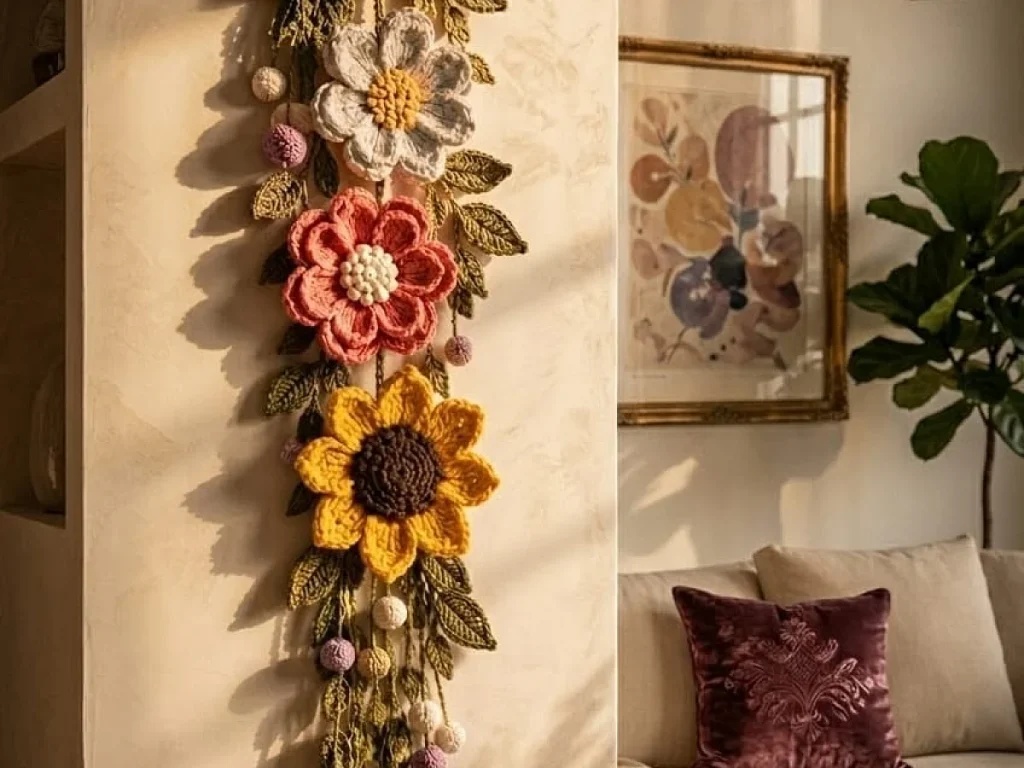
Statement Crochet: 7 Bold Patterns That Make a Room
Pick the right yarn and hook, and you can make a crochet piece that becomes the center of the room.
You can make a crochet piece that stops people mid-sentence.
Most crochet projects are small and practical: a scarf, a dishcloth, a baby blanket. Statement crochet flips that. You use chunky yarn and a large hook to make something big and bold, like a wall hanging that covers half a wall or a throw that drapes over a sofa.
The secret is not complicated stitches. It is the yarn weight and the hook size. When you use a size 15 or 19 hook with super bulky yarn, the stitches open up and the texture becomes the design. You can finish a large piece in a weekend because the stitches are so big.
This guide walks you through the materials, the basic stitches, and seven patterns to try. You will learn what makes a piece read as statement, and how to avoid the common mistakes that make projects look messy.
Statement crochet is about using big hooks, thick yarn, and bold colors to create pieces that stand out. With the right materials and a few simple stitches, you can make a wall hanging, throw, or bag that becomes a focal point.
What you need
Super bulky or jumbo yarn (weight 6 or 7)
Choose a yarn that is soft and not too fuzzy, so the stitches show clearly. You will need about 200-400 grams for a wall hanging, more for a throw.
Crochet hook size 10-19 mm
Match the hook to the yarn weight. For weight 6, use 10-12 mm. For weight 7, use 15 mm or larger.
Yarn needle
For weaving in ends and sewing pieces together. A blunt-tip needle works best.
Scissors
Any sharp scissors will do.
Stitch markers
Use them to mark the first stitch of each row or round. You can also use a piece of contrasting yarn.
Measuring tape
To check your width and finished size.
What Makes Crochet a Statement?
A statement piece is not just big. It has contrast, texture, or a shape that draws the eye. Think of a blanket with thick cables, a wall hanging with tassels, or a bag with a bold geometric pattern.
The scale matters. A small motif repeated on a large background creates impact. So does color: choose two or three strong colors that contrast, like mustard and charcoal, or teal and rust. Avoid pastels if you want a bold look.
The stitch choice also matters. Simple stitches like single crochet and double crochet look different when worked with a big hook. The holes become part of the design. You can also use front post and back post stitches to create raised ridges.
- Use super bulky or jumbo weight yarn (weight 6 or 7).
- Use a hook size 15 (10 mm) or larger, up to 19 (15 mm).
- Choose colors with high contrast, not similar tones.
- Work in a simple stitch pattern, like single crochet or half double crochet, to let the yarn shine.
Before starting a large piece, crochet a 10 cm square with your yarn and hook. Measure the stitches per 10 cm. This tells you how wide your piece will be.
Yarn and Hook: What You Need
Yarn weight is the most important choice. Use weight 6 (super bulky) or weight 7 (jumbo). These yarns are thick, so you do not need many stitches to cover a large area. A 100-gram ball of super bulky yarn is about 80-100 meters, enough for a small wall hanging.
Hook size follows the yarn. For weight 6, use a 10-12 mm hook. For weight 7, use a 15 mm or larger. The label on the yarn usually gives a recommended hook size, but you can go up a size or two for a looser, drapier fabric.
You also need a yarn needle for weaving ends, scissors, and stitch markers if your pattern uses them. A measuring tape helps you check your width as you go.
If you cannot find super bulky yarn, hold two strands of worsted weight yarn together and use a 10 mm hook. This gives a similar thickness.
Basic Stitches and Techniques
You only need a few stitches: chain, single crochet, double crochet, and maybe half double crochet. If you know these, you can make any pattern in this guide.
Work with a loose tension. If you pull the yarn tight, the fabric becomes stiff and hard to drape. Let the hook glide, and keep your yarn hand relaxed.
Counting stitches is essential. Mark the first stitch of each row with a stitch marker. It is easy to lose count when stitches are large.
If your edges are wavy, you are adding stitches at the ends. If they are pulling inward, you are missing stitches. Count every 10 rows to catch mistakes early.
7 Statement Crochet Patterns to Try
Here are seven ideas, from easiest to most challenging. Each one uses the same basic skills, so you can start simple and build up.
Each pattern lists the materials and the finished size. Adjust the size by changing the number of starting chains.
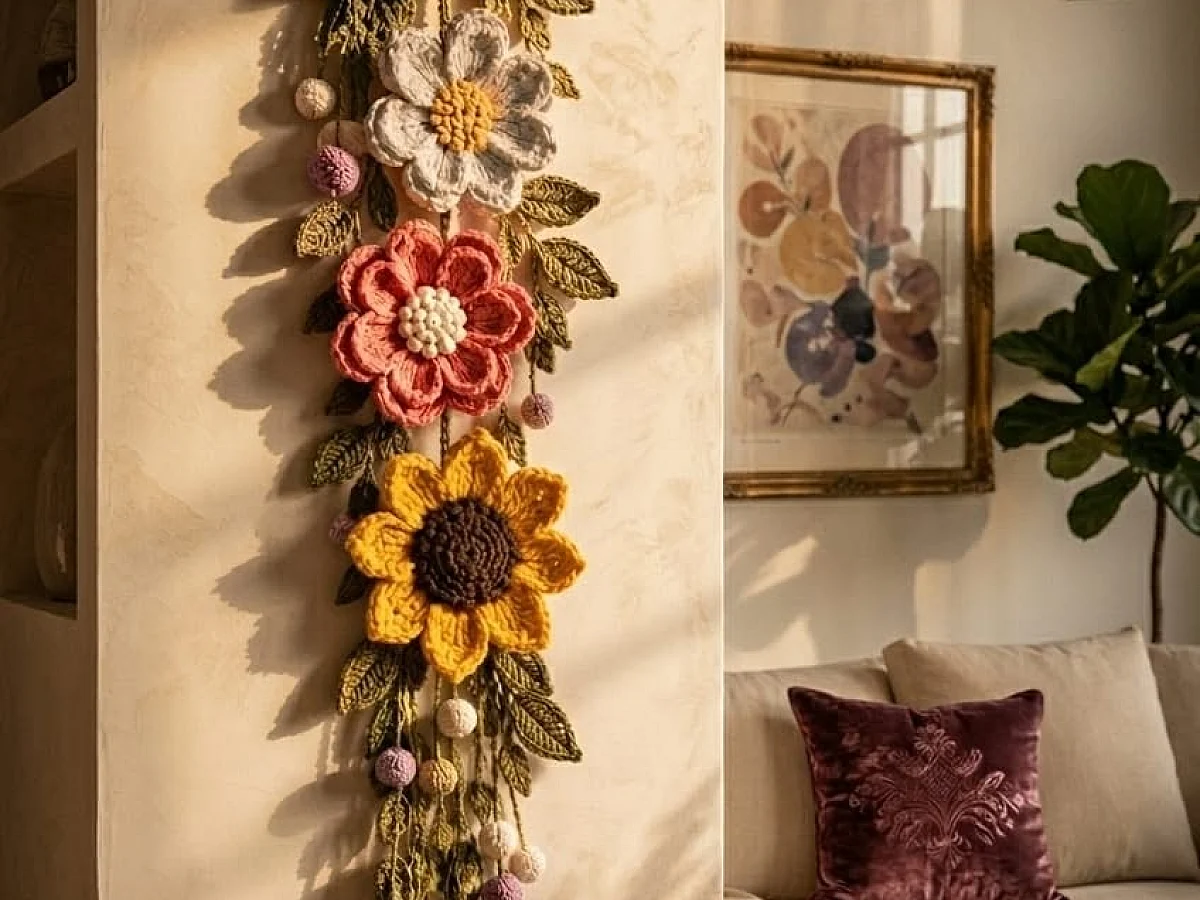
- 1. Chunky Wall Hanging: A rectangle of single crochet with long tassels at the bottom. Use a wooden dowel to hang it.
- 2. Oversized Throw: A blanket made of double crochet with a repeating color block pattern. Use two colors, alternating every 10 rows.
- 3. Textured Cushion Cover: Use front post and back post double crochet to create a ribbed pattern. Make a square, then sew three sides and add buttons.
- 4. Basket with Handles: Work in the round with single crochet. Use two strands of yarn for extra sturdiness.
- 5. Statement Bag: A tote with a bold stripe pattern. Use half double crochet and a fabric lining for strength.
- 6. Rug: Use jumbo yarn and a 19 mm hook. Work in a spiral with single crochet. The rug will be thick and soft underfoot.
- 7. Coasters and Trivets: Small squares that use up leftover yarn. They are quick gifts and good practice for color changes.
For a wall hanging, choose a dowel that is at least 5 cm wider than your piece on each side. You will wrap the yarn around it to hang.
How to Finish and Hang Your Piece
Weave in ends with a yarn needle. Do not cut the yarn too short; leave a 10 cm tail, weave it in, then trim the excess.
For a wall hanging, fold the top edge over the dowel and sew it down, or use a row of slip stitches to attach it.
Blocking helps even out the stitches. Wet the piece, gently squeeze out water, and lay it flat to dry. Use a towel to reshape it if needed.
If your piece curls at the edges, blocking usually fixes it. If it still curls, add a border of single crochet around the edges.
Common Mistakes and How to Fix Them
The most common mistake is using a hook that is too small. This makes the fabric stiff and the stitches hard to see. If your piece feels like cardboard, go up a hook size.
Another mistake is pulling the yarn too tight. This also creates a stiff fabric. Relax your hands and let the yarn flow.
Losing count is normal, especially with large stitches. Use stitch markers every 10 or 20 stitches to keep track.
Color changes can leave holes if you do not pull the new yarn tight. When you change colors, pull the new yarn through the last loop of the old color, then continue.
If you make a mistake, do not be afraid to rip out the row. It is faster than trying to fix it later.
Ways to Change the Look
You can make any of these patterns your own by changing the colors, the yarn, or the size.
Use a variegated yarn for a multicolor effect without changing colors yourself.
Add fringe to the edges of a throw or wall hanging. Cut strands of yarn, fold them in half, and pull the loop through the edge with a hook.
Make a smaller version for a child's room or a larger one for a big wall.
If you are new to statement crochet, start with a small wall hanging, about 40 cm wide. It finishes quickly and teaches you the techniques.
Step
Choose your yarn and hook
Pick a super bulky or jumbo yarn and a hook that gives you a loose, drapey fabric. Make a small test square to check the feel.
Make a starting chain
Chain the number of stitches you need for your desired width. For a 40 cm wall hanging with weight 6 yarn and a 12 mm hook, chain about 30 stitches. Add 1 for turning.
Work the first row
Single crochet in the second chain from the hook and in each chain across. Count your stitches at the end of the row.
Work subsequent rows
Chain 1, turn, and single crochet in each stitch across. Repeat until the piece reaches your desired length. Remember to count every few rows.
Add texture or color changes
If you want stripes, change colors at the end of a row. If you want ridges, use front post and back post double crochet in a pattern.
Finish off
Cut the yarn leaving a 20 cm tail. Pull the tail through the last loop and tighten. Weave in all ends with a yarn needle.
Block and display
Wet the piece, lay it flat to dry, and reshape if needed. Then hang it on a dowel or drape it over furniture.
Ways to change it
Smaller size
Make a mini wall hanging about 20 cm wide. It takes less than an hour and uses less yarn.
Different colors
Use a monochrome palette for a subtle look, or bright contrasting colors for a bold statement.
Variegated yarn
A self-striping yarn gives you a multicolor effect without changing yarn.
Add fringe
Cut strands of yarn and attach them to the bottom edge for a boho look.
Use a different stitch
Try half double crochet or double crochet for a different texture. The bigger the stitch, the faster the project.
The short version
- Statement crochet uses thick yarn and large hooks to create bold, oversized pieces.
- Simple stitches like single and double crochet are enough for most statement patterns.
- Choose high-contrast colors to make the design pop.
- A loose tension is key for a drapey fabric.
- Counting stitches and using markers prevents mistakes.
- Blocking helps even out stitches and fix curling edges.
- You can finish a small statement piece in a weekend.
Questions people ask
What is statement crochet?
Statement crochet is any crochet piece that is large, bold, and designed to be a focal point in a room or outfit. It uses thick yarn and big hooks to create dramatic texture and scale.
What yarn is best for statement crochet?
Use super bulky or jumbo weight yarn (categories 6 and 7). These yarns work up fast and give a chunky, sculptural look. You can also hold two strands of worsted weight together.
How long does a statement crochet project take?
A small wall hanging can take 2-4 hours. A large throw might take 8-10 hours. Because the stitches are big, they work up much faster than regular crochet.
Do I need to know complex stitches?
No. Basic stitches like chain, single crochet, and double crochet are enough. The effect comes from the yarn and hook size, not complicated patterns.
How do I stop my piece from curling?
Curling often happens when the tension is too tight or the hook is too small. Try a larger hook and a looser grip. Blocking also helps flatten the piece.
Ready to make your own statement piece?
You do not need to be an expert to make something bold. Pick a pattern, grab a big hook, and start. The first row is the hardest, but after that it is just repetition. You will have a piece you are proud to show off in no time. Happy hooking!