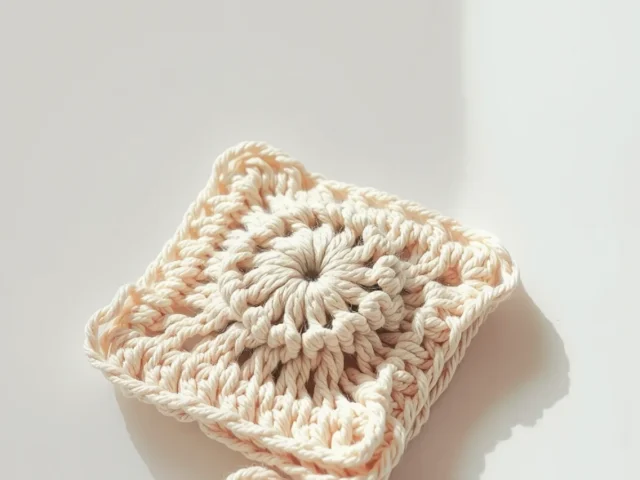
Slip Stitch Single Crochet Combination: Clean Texture in Rows
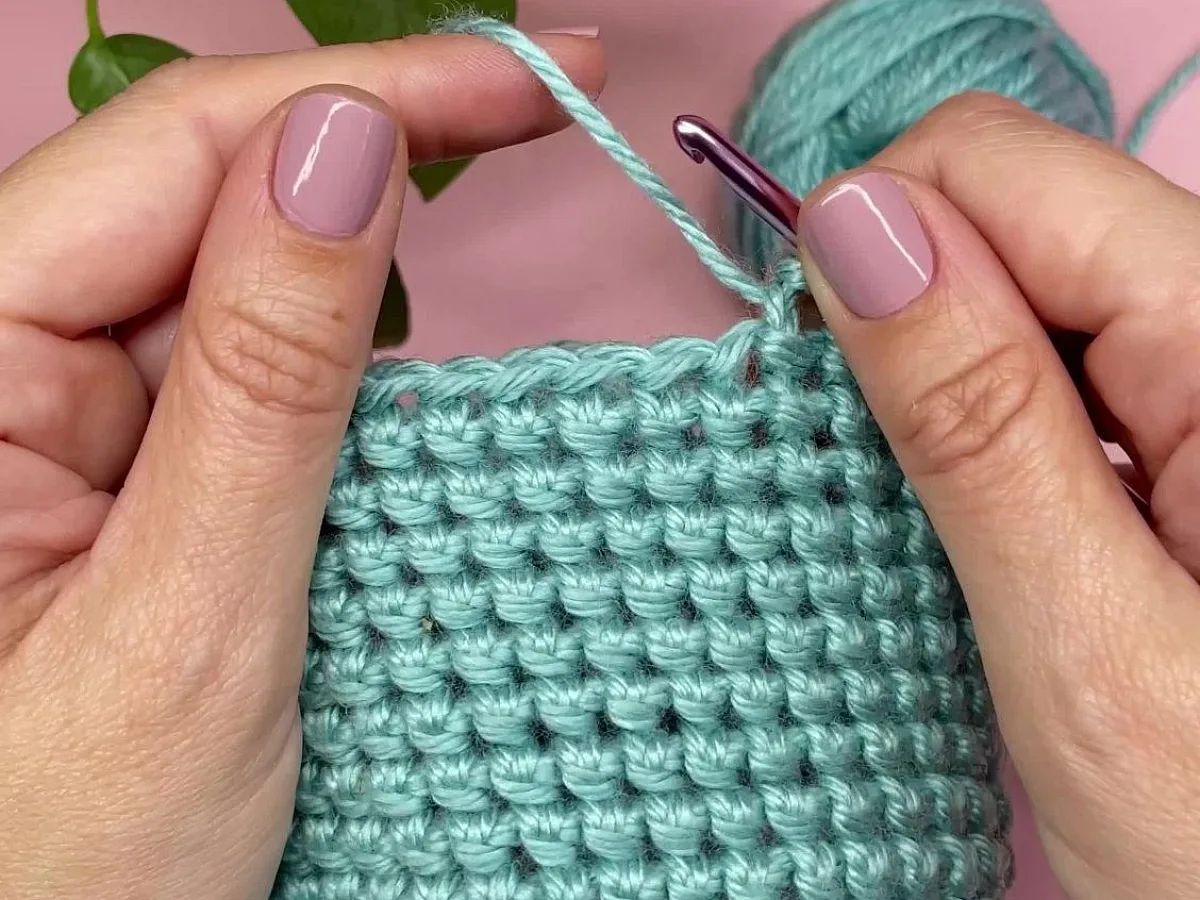
Work one row of slip stitch and one row of single crochet and you get a dense, ridged fabric with no holes.
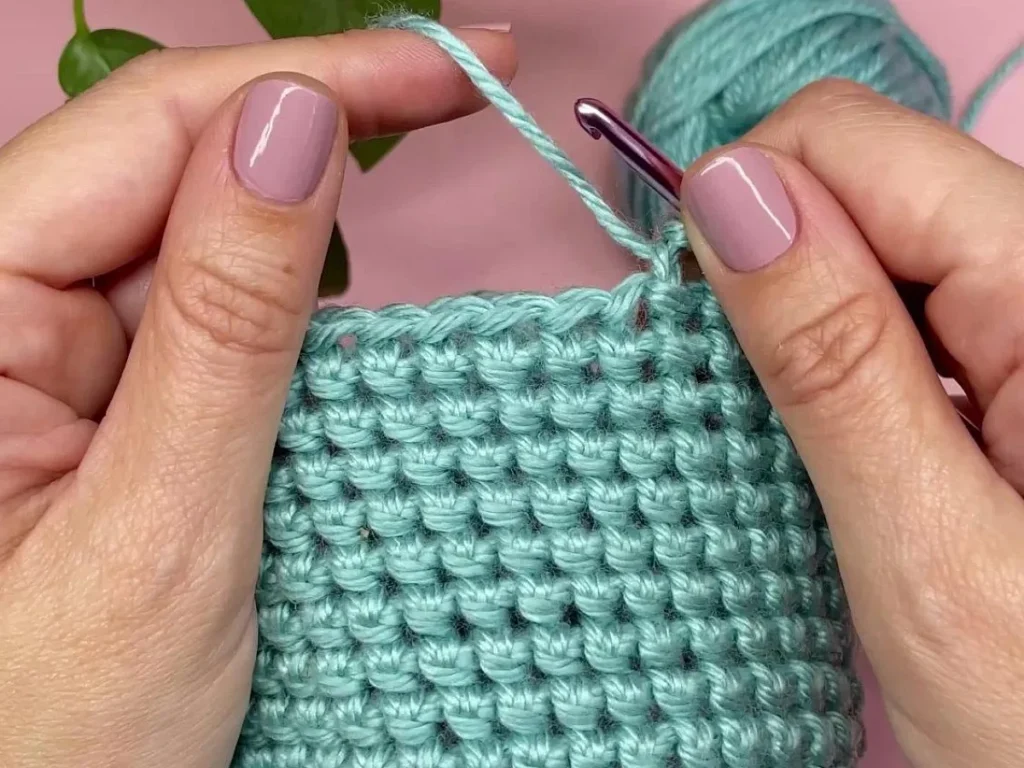
A slip stitch pulled tight makes a flat braid; a single crochet next to it makes a bump.
A slip stitch pulled tight makes a flat braid; a single crochet next to it makes a bump. Stack those two rows and you get a fabric with a clean horizontal ridge every other row.
The whole repeat is two rows tall. Most people finish a 15 cm square in about 35 minutes once the rhythm clicks. The catch is tension, and I will show you how to spot it before it ruins a row.
The slip stitch single crochet combination is a two-row repeat: one row of slip stitch worked into the back loop, one row of single crochet. It builds a firm, slightly ribbed fabric that holds its shape, so it suits bags, baskets, potholders and washcloths.
What you need
Worsted weight cotton yarn
About 100 g makes a 20 cm square. Cotton holds the ridge better than acrylic, which tends to relax.
4.0 mm hook
Use 3.5 mm if your slip stitches run loose. Use 4.5 mm if your hand cramps from fighting tight loops.
Stitch marker
One is enough. Clip it into the first stitch of a round so you do not lose your place.
Tapestry needle
A blunt tip, size 13 or so, for weaving in the two tails.
What the slip stitch single crochet combination actually is
It is not one fancy stitch. It is a repeat of two plain ones: a full row of slip stitch, then a full row of single crochet.
The slip stitch row sits low and tight, almost like a chain lying flat. The single crochet row stands up and adds height. Together they read as a fine horizontal ribbing.
If you have only ever used slip stitch to join rounds, this is a different job for it. Here it carries the fabric.
Why the fabric comes out firm
Slip stitch adds almost no height, so the row packs yarn into a small space. That density is why the finished piece does not stretch out of shape the way plain single crochet does.
Single crochet between the tight rows gives the fabric a little give back. You get structure without a board-stiff result.
- Dense enough that stuffing does not show through
- Ridge lines hide small tension wobbles
- Little to no drape, so it is wrong for scarves and shawls
Hold the swatch up to a window. If light comes through in pinholes, your hook is too big.
Tension is where this stitch goes wrong
The slip stitch row is the problem child. Pull each loop too tight and the next row of single crochet fights you, and your hook snags on every stitch.
Too loose and the slip stitch row goes wavy and the ridge disappears. You want the loop snug on the hook, not strangled.
Work the slip stitch row with the same hook you used for the single crochet row. Switching down a hook size for that row makes the fabric pucker.
Reading the finished fabric
Look at the right side. You should see a raised line, then a smooth band, then another raised line, evenly spaced.
On the wrong side the ridges look flatter and the single crochet bumps face out. Pick one side as your front and stay with it for the whole piece.
Count ridges, not rows, when you check your length. One ridge equals one repeat, which is two rows.
Working in the round
The same two rows work in a spiral for baskets and coasters. Slip stitch rounds are slow to grow, so expect the base to feel like it is barely moving.
Single crochet rounds add the height back. Alternate them and the sides of a basket stand up on their own.
Mark the first stitch of every round. Slip stitches are short and the join is easy to lose.
Step
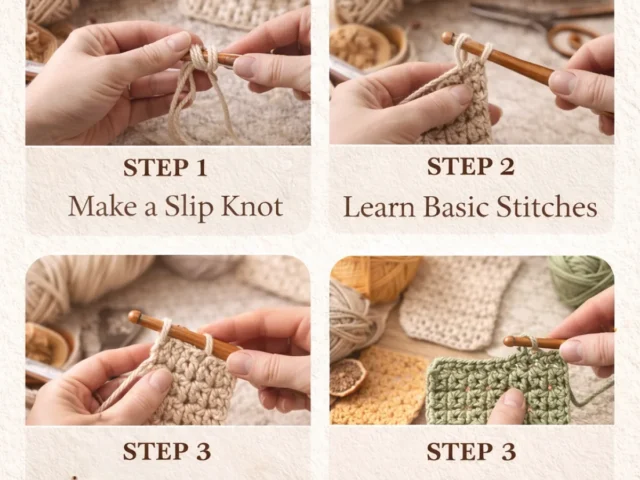
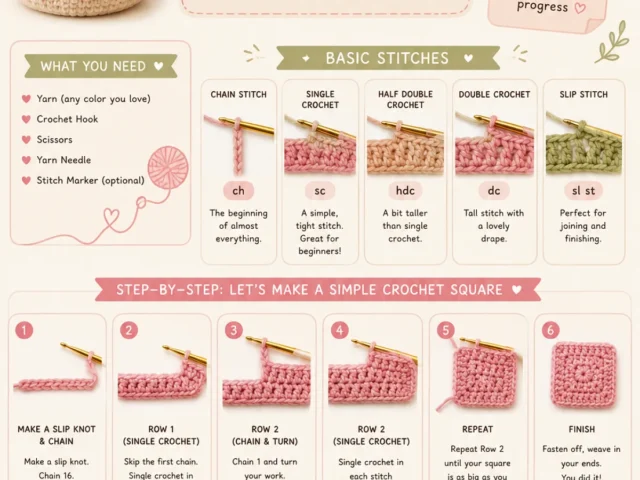
Make a foundation chain
Chain an even number, plus one for turning. For a 15 cm swatch, chain 25. Count twice, because a short chain shows up three rows later.
Work the slip stitch row
Slip stitch into the second chain from the hook and into every chain across. The row should look like a flat braid, not a tight cord.
Turn and work single crochet
Chain one, turn, and single crochet into each slip stitch across. Push the hook through both loops of the stitch. The row grows visibly taller than the one below it.
Repeat the two rows
Turn, chain one, and slip stitch into each single crochet across. Keep the loops snug. After four rows you should see two clear ridges.
Check the width
Lay the piece flat and measure across the middle. If it has pulled in narrower than the first row, your slip stitches are too tight.
Fasten off and weave in
Cut the yarn, pull the tail through the last loop, and weave both ends through the back of the fabric. Tug gently so the edge does not pucker.
Ways to change it
Bigger hook, softer fabric
Go up to 5.0 mm for a potholder that bends instead of cracking.
Two colors
Work slip stitch rows in one color and single crochet rows in another for clear stripes.
Back loop only
Work every stitch in the back loop for a sharper ridge and more stretch.
In the round
Skip the turning chain and spiral for round baskets and coasters.
Bulky yarn version
Use super bulky with a 6.5 mm hook for a rug. Gauge stops mattering, so measure as you go.
The short version
- The repeat is two rows: one slip stitch row, one single crochet row.
- Slip stitch adds almost no height, which is what makes the fabric firm.
- Loose slip stitches go wavy; tight ones make the next row hard to work.
- Count ridges, not rows, to track your length.
- Gauge of 16 stitches and 16 rows to 10 cm keeps bags and baskets in shape.
- This stitch has little drape, so it suits bags, mats and potholders, not scarves.
Questions people ask
Is the slip stitch single crochet combination good for beginners?
Yes, if you can already make a single crochet. The slip stitch row is the only new skill, and it is the same motion you use to join a round. Practice on a 15 cm swatch before starting a bag.
Why does my slip stitch row look wavy?
Your loops are too loose. Pull each loop snug against the hook before moving to the next stitch. If it still waves, drop one hook size for that row only.
How much yarn does a project take?
Roughly 100 g of worsted cotton makes a 20 cm square. A tote bag body usually takes 200 to 250 g, depending on the strap.
Can I use acrylic instead of cotton?
You can, but acrylic relaxes over time and the ridges soften. Cotton or a cotton blend keeps the texture crisp and washes well.
How do I stop the edges from leaning?
Keep your turning chain to one chain and do not skip the first stitch. Leaning edges usually mean a missed stitch at the start of the row.
Grab a hook and work two rows tonight
Two plain stitches, one tight row and one tall row, and you have a fabric that holds a shape. Start with a 15 cm swatch in worsted cotton and a 4.0 mm hook, then decide if the texture suits the bag you have in mind. Keep it quick and cute!