Stitch Dictionary: A Crochet Guide to Reading Stitch Charts and Symbols
Learn what every crochet symbol means, how to read a chart row by row, and how to fix the mistakes that trip up most people.
A crochet chart is just a picture of your stitches, read from the bottom up and usually from right to left if you are right-handed.
Written patterns and charts say the same thing in two different languages. A stitch dictionary is the translator: each stitch gets one symbol, and that symbol looks roughly like the stitch it makes.
If you have ever stared at a chart full of tiny T shapes and dots, this is the key. Learn the symbols once and you can pick up patterns from any country, in any language.
A stitch dictionary is a visual reference that shows each crochet stitch as a symbol, so you can follow a chart without reading written instructions. Once you know six or seven core symbols, most charts become readable at a glance.
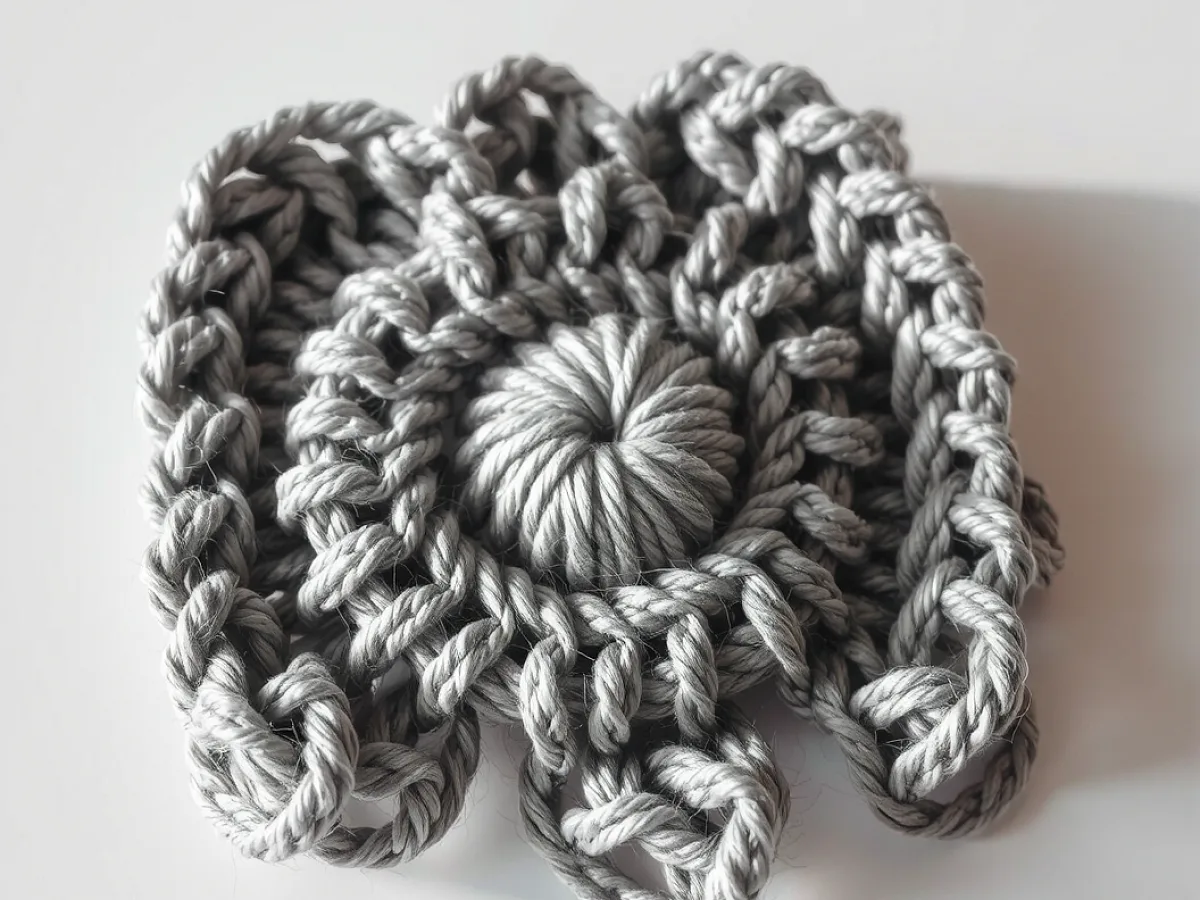
What you need
Stitch dictionary or symbol chart
Any printed or digital chart works. Free ones from yarn brands cover the core stitches.
Worsted weight yarn
A light or medium color shows stitch definition better than dark or fuzzy yarn.
Size H-8 (5 mm) hook
This size pairs with worsted weight yarn and gives a gauge of about 4 stitches per inch.
Index cards and a ring
For building your own reference set. Plain cards are fine.
Stitch markers
Use them to mark the first and last stitch of each row so you do not lose count.
What a stitch dictionary actually contains
A stitch dictionary is a reference page or booklet that pairs each crochet stitch with its symbol, its abbreviation, and often a small photo of the finished stitch. The symbol is the important part. It is drawn to match the height and shape of the real stitch, so a tall stitch gets a tall symbol.
Most dictionaries group stitches by height. Chain and slip stitch sit at the bottom, then single crochet, half double crochet, double crochet, and taller stitches above that. Once you notice the height pattern, you can guess an unfamiliar symbol instead of hunting for it.
- Chain: a small oval or open circle
- Slip stitch: a solid dot
- Single crochet: a short cross or plus sign
- Half double crochet: a T with one crossbar
- Double crochet: a T with two crossbars
- Treble crochet: a T with three crossbars
Print your dictionary and keep it in a plastic sleeve. You will reach for it constantly in the first month.
How to read a chart row by row
Start at the bottom right corner if you are right-handed, bottom left if you are left-handed. The first row of symbols sits on a foundation chain, drawn as a line of small ovals along the bottom edge.
Work across the row, then turn. The second row is drawn above the first, and the symbols sit slightly offset so you can see where each stitch goes. Most charts number the rows along the side, with odd numbers on the right and even numbers on the left, which tells you which direction you are working.
If the chart has no row numbers, count the symbols in the first row and compare that to the stitch count in the written pattern. They should match.
Symbols that look alike and how to tell them apart
The two that trip people up most are half double crochet and double crochet. Both are drawn as a T shape. The half double has one crossbar, the double has two. Miss that second bar and your stitch height changes, which throws off the whole row.
Another common mix-up is the cluster and the decrease. A cluster is several stitches worked together and closed at the top, drawn as a fan shape joined at the peak. A decrease is usually two stitches joined at the top, drawn as two legs meeting under one cap. They look similar in a small chart, so check the written abbreviation if you are unsure.
When two symbols confuse you, crochet a small swatch of each side by side. Seeing the real stitches next to each other settles it faster than reading about them.
Left-handed reading and mirrored charts
Left-handed crocheters read charts in the opposite direction. Start at the bottom left and work toward the right. The symbols themselves do not change, only the direction you follow them.
Some publishers print a mirrored chart for left-handed readers. If yours does not, you can flip the chart image horizontally on your phone or print it reversed. The stitch symbols will look backwards but the sequence stays correct.
Mark your starting corner with a sticky note before you begin. It saves you from working an entire row in the wrong direction.
Common mistakes and what they look like
The most frequent error is losing count in a long chain. If your foundation chain is two stitches short, the last symbol in row one will have nowhere to go. Count the chain before you start the first row, not after.
Another common problem is working into the wrong loop. Most charts assume you work under both loops of the stitch below. If you work into the back loop only, your fabric gets a ridge and the chart no longer matches your fabric. Some patterns do this on purpose and will say so.
Turning chains are the third big one. A chart shows the turning chain as a stack of ovals at the start of a row. If you forget it, your row gets shorter each time and the edge slants inward.
If your edges are slanting, count the stitches at the end of every row for three rows. The mistake usually shows up right there.
Building your own quick-reference dictionary
You do not need a hundred stitches. Most patterns use eight to twelve. Start with chain, slip stitch, single crochet, half double crochet, double crochet, treble crochet, increase, decrease, and the turning chain.
Draw each symbol on an index card, add the abbreviation and a two-line note about height, then punch a hole in the corner and put them on a ring. It takes about twenty minutes and you will use it more than any book.
Add a small swatch of the real stitch to the back of each card. The texture is often easier to remember than the symbol.
Step
Pick your core symbols
Choose eight to twelve stitches you see most often in patterns. Chain, slip stitch, single crochet, half double crochet, and double crochet cover most of them. Check that you can tell each symbol apart before moving on.
Crochet a swatch of each
Work a five-stitch by five-row swatch of each stitch. Label the back with the abbreviation. You should be able to look at the swatch and name the stitch without checking.
Match symbol to swatch
Lay the chart next to your swatches. Find the symbol that matches each swatch by height and shape. This is the step that makes charts click.
Read one full chart
Pick a simple chart with three or four rows. Follow it from the bottom corner, row by row, counting stitches as you go. If your stitch count matches at the end of each row, you read it correctly.
Check your edges
Look at the sides of your work. Straight edges mean you handled the turning chain right. Slanting edges mean you dropped or added a stitch, so recount before continuing.
Ways to change it
Use bulky yarn and a size L hook
Bigger stitches make the symbols easier to see while you learn. Good for visual learners.
Use cotton yarn
Cotton shows stitch definition clearly and does not stretch, so mistakes stand out.
Try a symbol-only pattern
Japanese and some European patterns are chart-only. Good practice once you know the core symbols.
Build a digital dictionary
Take photos of your swatches and keep them in a phone album next to the symbol. Useful when you shop for yarn.
Add tall stitches
Once the core set feels easy, add treble, double treble, and puff stitches to your cards.
The short version
- A stitch dictionary pairs each crochet stitch with a symbol drawn to match its height and shape.
- Charts read from the bottom up, right to left for right-handed crocheters and left to right for left-handed ones.
- Half double crochet has one crossbar on its T shape, double crochet has two.
- Turning chains appear as a stack of ovals at the start of a row and are easy to miss.
- Most patterns use eight to twelve stitches, so a small reference set covers nearly everything.
- Slanting edges usually mean a dropped or added stitch at the turning chain.
Questions people ask
Do I need to know how to read a chart to crochet?
No. Plenty of patterns are written out in words only. But charts are common in vintage patterns and in patterns from other countries, so learning the symbols opens up more of them.
What is the difference between a chart and a diagram?
A chart shows stitches as symbols in the order you work them. A diagram usually shows the shape and measurements of the finished piece, like a schematic for a sweater.
Why does my chart not match my stitch count?
The most common cause is the turning chain. Some charts count it as a stitch and some do not. Check the pattern notes at the top of the chart for which one applies.
Can I use a stitch dictionary for knitting too?
Knitting has its own symbol set, and the symbols are different. A crochet dictionary will not help with a knitting chart, though the idea of reading bottom up is the same.
Pick one chart and work through it row by row this week
Start with a three-row chart and the five basic symbols. Once your stitch count matches at the end of every row, you can read almost any crochet chart you pick up.