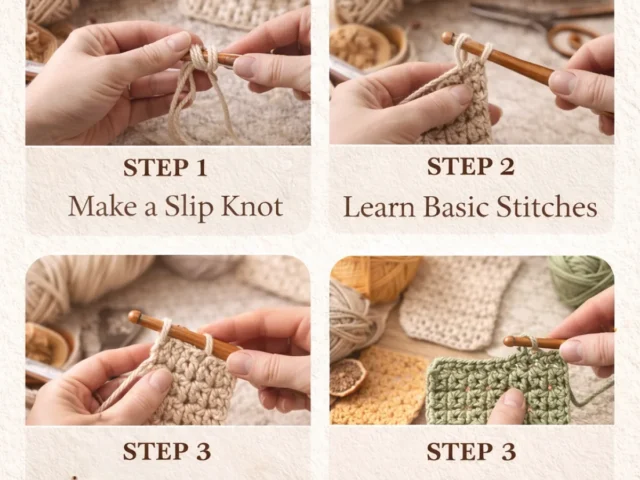
Aesthetic Crochet Stitch Ideas for Handmade Projects
Pick a stitch that looks calm and handmade, then match it to the right yarn and hook.
A single crochet in the back loop only makes a ridge that catches light, and that one small change is often what makes a project look handmade instead of store-bought.
Most crochet looks plain because every stitch is worked the same way, into both loops of the stitch below. Change where the hook goes and the fabric changes with it.
This guide covers eight stitches worth knowing, what yarn and hook to use for each, and how to tell when a swatch is working before you commit to a whole blanket.
The most useful aesthetic stitches are the simple ones worked in a slightly unusual place: back loop only, front post, or in the third loop. They cost you no extra yarn and no extra time, but they change the surface of the fabric. Start with one stitch, make a 15 cm swatch, and decide from the swatch.
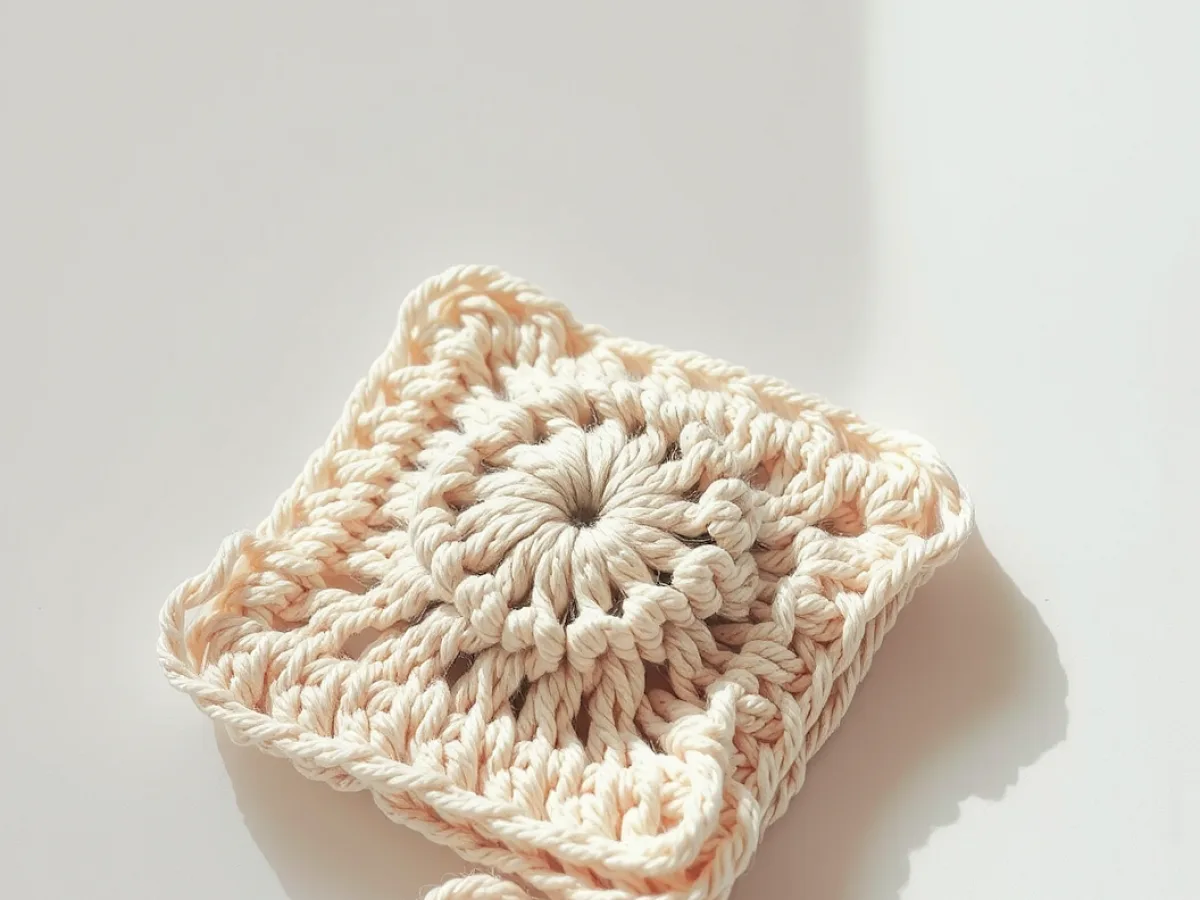
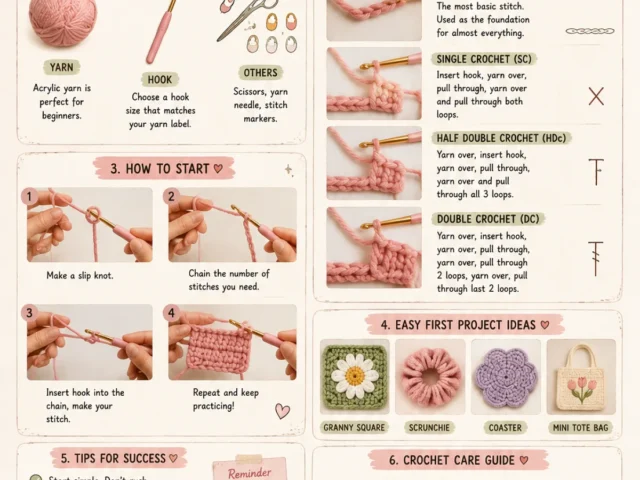
What you need
Yarn
DK or worsted weight in a smooth, plied yarn shows texture best. One 100 g ball is enough for several swatches.
Crochet hook
4 mm to 5 mm for DK and worsted. Go down half a millimeter for raised stitches.
Tapestry needle
A blunt needle with an eye wide enough for your yarn, for weaving in ends.
Scissors
Any small pair works. Keep them with your project so you do not stop mid-row.
Stitch markers
Use them to mark the first and last stitch of a row. A contrasting scrap of yarn works too.
Why placement matters more than the stitch name
A stitch name tells you the height. Placement tells you the texture. A double crochet worked into both loops gives a flat, even fabric. The same double crochet worked into the back loop only gives a ridge that runs across the row, and the fabric gets a soft stretch sideways.
That is the whole trick behind most stitches people save on Pinterest. Nothing new is invented. The hook just goes somewhere slightly different, and the surface changes.
If your swatch looks flat and a little boring, the fix is usually placement, not a new stitch.
Work a 15 cm square before you decide. Texture reads very differently in a small sample than in a full blanket.
Eight stitches worth trying
These are ordered from easiest to most involved. Each one works in any yarn weight, so you can use what you already have.
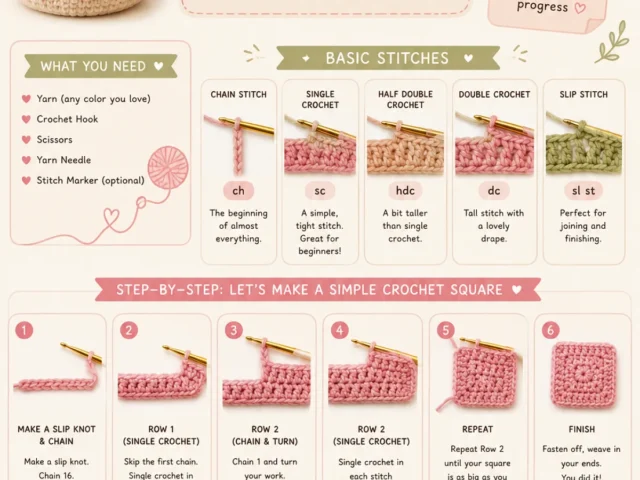
- Back loop only single crochet: firm, ridged, almost no stretch. Good for bags and baskets.
- Front post double crochet: raised vertical lines. Good for hats and cushion covers.
- Moss stitch: one single crochet and one chain, repeated. Soft, dense, hides color changes well.
- Shell stitch: five double crochets in one stitch. Gives a scalloped edge that needs no border.
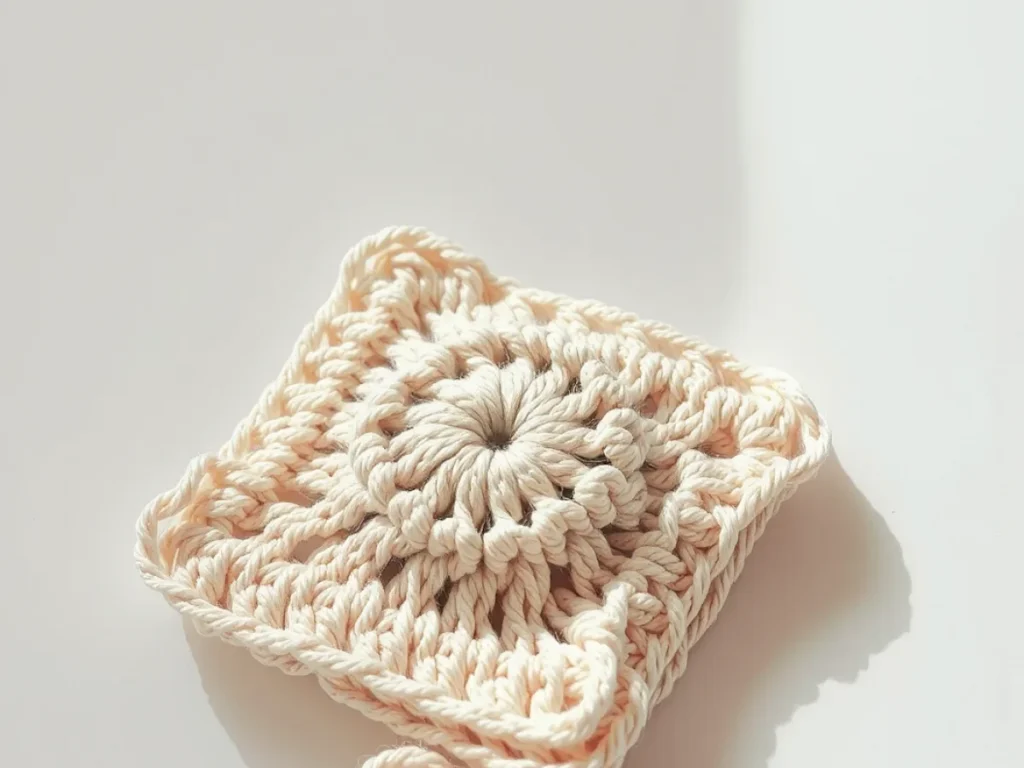
- Granny stitch: three double crochets in a chain space. Fast, forgiving, and good for scrap yarn.
- Alpine stitch: front post and back post together, worked in two rows. Makes a thick, warm fabric.
- Bobble stitch: five unfinished double crochets closed together. Adds dots of texture on a plain background.
- Linen stitch: single crochet and chain, worked into the chain space. Gives a woven look with a slight drape.
Yarn and hook choices that keep the texture visible
Texture disappears in fuzzy yarn. A brushed mohair or a heavy halo yarn will swallow a bobble completely, and you will have spent hours on something nobody can see. Smooth, plied worsted or DK shows stitch definition best.
For most of these stitches, a 4 mm to 5 mm hook with DK or worsted weight yarn gives a fabric you can still read. If you are working a raised stitch like front post double crochet, go down half a millimeter from the hook size on the yarn label. The tighter gauge holds the raised line upright instead of letting it flop.
Gauge matters most for anything that has to fit: hats, mittens, garment panels. Make a 10 cm swatch, count your stitches, and compare it to the pattern. For blankets and bags, gauge matters less, but a loose gauge will stretch out of shape with use.
If you only have one yarn and one hook, use them. A single-color project in a strong stitch looks better than a busy project in a weak one.
Substituting yarn: match the weight, not the brand. Two DK yarns from different shops usually work at the same gauge, even when the fiber differs.
Reading a stitch chart without guessing
A chart is a grid of symbols, read from the bottom up. Each row starts on the right if you are right-handed. The symbol shape tells you the stitch height: a plus sign is a single crochet, a T with one bar is a half double, a T with two bars is a double.
The important part is where the symbol sits, not what it looks like. If the symbol sits on top of the stitch below with a small loop drawn around it, that is a post stitch. If it sits in a chain space, that is a cluster or a shell.
Count your stitches at the end of every row for the first three rows. Most chart mistakes happen in row two, and you will not see them until row six.
Joining and finishing so the texture stays even
A raised stitch pattern shows every seam. Join with a slip stitch into the first stitch of the round, then chain the right number for your stitch height. Do not skip that chain, or the join will pull tight and leave a dip.
When you fasten off, leave a 15 cm tail and weave it through the back of the fabric in two directions. Go through the loops, not around them. A tail woven in one straight line works loose after a few washes.
For blankets, a single crochet border in the same yarn settles the edges and hides any uneven turning chains. It takes about ten minutes for a baby blanket and it is worth it.
Common mistakes and how to spot them
The most common problem is working into the wrong loop. If your ridges are only on one side, you are working front loop only instead of back loop only. Flip the swatch and check.
The second is losing stitches at the end of a row. Count after every row until you can feel the last stitch without looking. The turning chain often hides it.
The third is a gauge that drifts. If your swatch starts at 5 cm wide and ends at 6 cm, your tension is loosening as you go. That is normal at first, and it settles with practice.
If a raised stitch leans sideways, your hook is going into the stitch body instead of around the post. Undo the row and go around the whole post, front to back.
Step
Make a 15 cm swatch
Chain enough for 15 cm, then work the stitch for about 15 cm of rows. Do not measure the first row; measure after five rows when the fabric has settled.
Check the surface
Hold the swatch up to a window. If the texture reads as a pattern from a meter away, it will work in a full project. If it looks flat, the stitch is too small for your yarn.
Measure the gauge
Lay the swatch flat without stretching it. Count the stitches across 10 cm and the rows down 10 cm. Write both numbers down.
Wash and dry the swatch
Wash it the way you plan to wash the finished piece. Some yarns relax by half a stitch per 10 cm, and that changes the fit of a hat.
Decide before you commit
If the swatch still looks right after washing, start the project. If it does not, change the hook size before you chain the first row.
Ways to change it
Worsted instead of DK
Gives a thicker fabric and larger texture. Use a 5 mm to 5.5 mm hook.
Cotton instead of wool
Less stretch, sharper stitch definition. Good for bags and washcloths.
Two colors
Change color every two rows in moss stitch. The texture stays visible and the color changes hide neatly.
Chunky yarn
Makes a blanket in a weekend. Use an 8 mm hook and keep the stitch simple.
Scrap yarn version
Granny stitch and linen stitch both tolerate mixed weights better than raised stitches do.
Left-handed working
Read charts from left to right and start each row on the left. The stitches are identical.
The short version
- Placement changes texture more than the stitch name does.
- Back loop only single crochet gives a firm, ridged fabric with little stretch.
- Fuzzy yarn hides texture; smooth plied yarn shows it.
- Go down half a millimeter for raised post stitches so they stand upright.
- Count stitches after every row for the first three rows.
- Wash your swatch before starting a project that has to fit.
Questions people ask
What is the easiest aesthetic crochet stitch for a beginner?
Back loop only single crochet. You already know the stitch, you just work into one loop instead of two. It gives a clean ridge and holds its shape well.
How much yarn does a textured stitch use?
Post stitches and bobbles use about 15 to 20 percent more yarn than plain double crochet. Buy one extra ball for a large blanket.
Why does my texture disappear after blocking?
Wool relaxes in water, and raised stitches flatten a little. Go down half a millimeter on your hook, or use cotton, which holds its shape better.
Can I mix two textured stitches in one project?
Yes, if the stitch heights match. A shell stitch and a moss stitch work together. Mixing a tall stitch with a short one makes the fabric pull.
Do I need a special hook for post stitches?
No. A standard hook works. A hook with a slightly deeper throat makes it easier to reach around the post.
Pick one stitch and make a swatch tonight
Choose the stitch that looks right in your hand, not the one with the most saves. A calm, even fabric in a simple stitch will outlast a complicated one every time. Wash your finished piece by hand in cool water, dry it flat, and fold it rather than hanging it so the texture keeps its shape. Stitch with ease.