One of My Favorites: The Chunky Blue Crochet Blanket
Make a soft chunky blue throw in about six hours, with the exact hook, stitch count and finishing steps.
A chunky blue blanket made with super bulky yarn and a 10 mm hook grows about two inches per hour, so a throw the size of a sofa cushion takes one long afternoon.
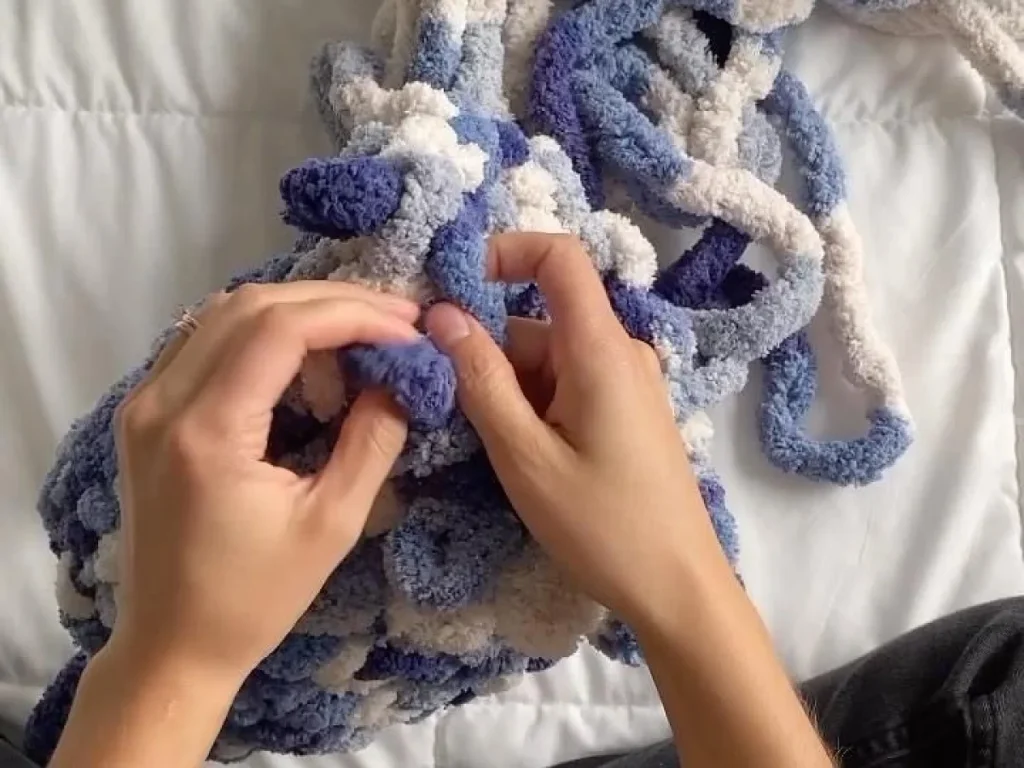
Some projects earn their place in your basket again and again. For me it is a chunky blue crochet blanket, the kind you see made on a big hook with thick yarn moving fast between your fingers.
The reason is simple. Thick yarn hides small mistakes, the rows stack up quickly, and the finished blanket feels heavy in a good way. You can finish the whole thing in one weekend.
This is a super bulky blue throw worked in half double crochet with a 10 mm hook. You need 6 to 7 skeins of weight 6 yarn, a gauge of 8 stitches per 4 inches, and roughly 40 by 50 inches of finished fabric.
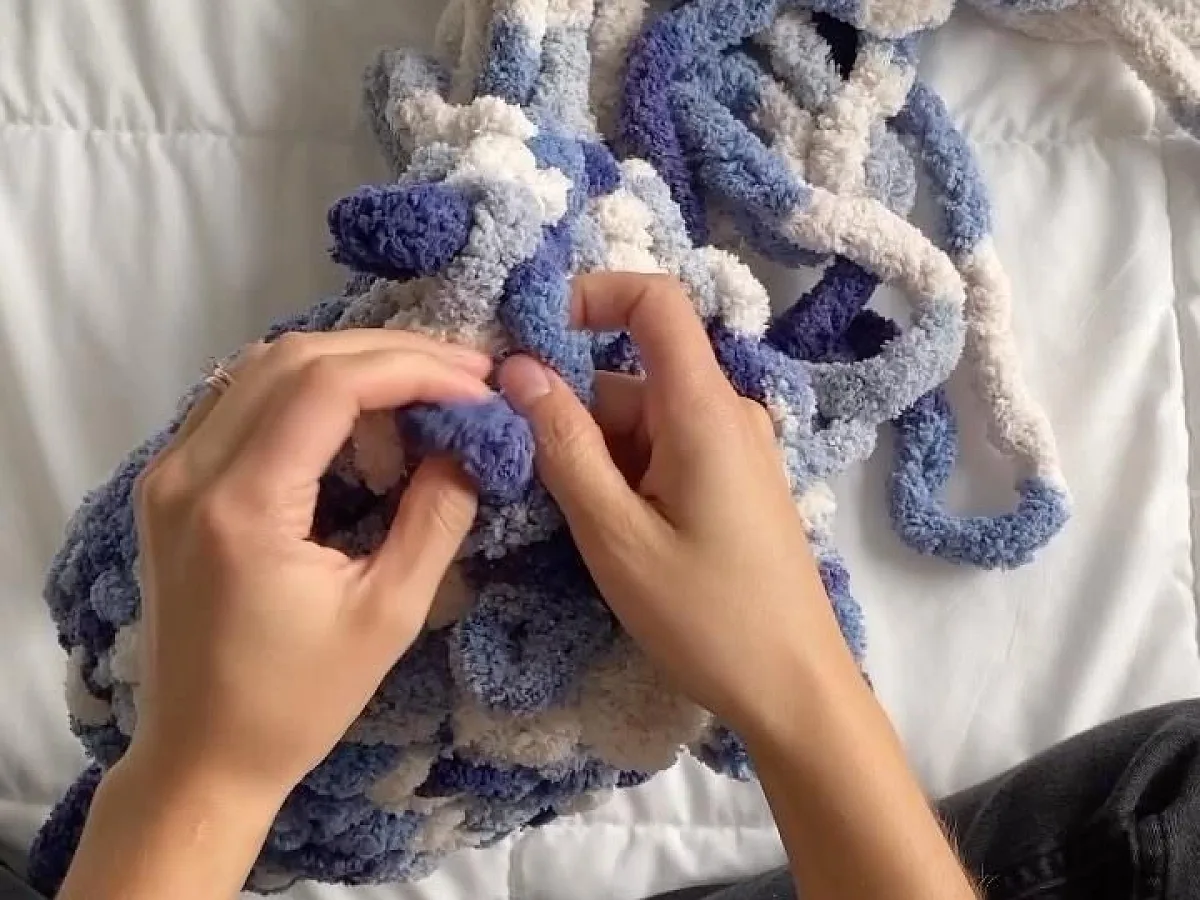
What you need
Super bulky yarn, weight 6
Six to seven 100 gram skeins in a medium blue. A chenille or acrylic blend washes well and costs less than wool.
10 mm hook
US size N. Use 12 mm instead if your hands tire easily or you want a looser fabric.
Tapestry needle
A blunt-tip needle with an eye wide enough for thick yarn, used for weaving in the tails.
Stitch markers
Place one in the first and last stitch of each row for the first ten rows, then remove them once the edges stay straight.
Why chunky blue yarn works so well here
Weight 6 super bulky yarn is about four times thicker than worsted. That thickness means fewer stitches across the row, so every row you finish looks like real progress. A worsted blanket needs around 200 stitches across. This one needs 80.
Blue is a forgiving color too. Dark navy shows lint, pale sky blue shows every join, and a medium denim blue sits between them. If you plan to use the blanket on a sofa, a mid-tone blue hides everyday wear better than either extreme.
Squeeze the skein before you buy. If it springs back flat, the yarn has enough twist to hold its shape after washing.
Yarn, hook and gauge
Choose a weight 6 yarn such as a chenille or a roving-style bulky. Acrylic blends cost less and wash better; wool feels warmer but pills where hands rub. Six to seven 100 gram skeins is enough for a 40 by 50 inch throw.
Use a 10 mm hook, which is a US size N or a metric 10. If your hands ache, go up to 12 mm. The fabric gets looser and airier, and the blanket finishes wider than planned.
Gauge matters here because it changes the final size. Work a swatch of 12 half double crochets and 8 rows. If 4 inches holds 8 stitches and 6 rows, your blanket will land near 40 by 50 inches. More stitches per 4 inches means a smaller blanket, so size up the hook.
Abbreviations and the written chart
ch is chain, hdc is half double crochet, sl st is slip stitch, and rep means repeat. The pattern is one row repeated, so the chart is short.
- Row 1: ch 82, hdc in the third ch from the hook, hdc in each ch across. You now have 80 hdc.
- Row 2: ch 2, turn, hdc in each stitch across. 80 hdc.
- Repeat Row 2 until the blanket measures 50 inches, then fasten off.
- Border: work 1 round of sc evenly around all four sides, then 1 round of sl st. Fasten off and weave in ends.
Count your stitches at the end of every fifth row, not every row. Counting too often slows you down and the number rarely drifts by one.
Working the blanket in order
The chain is the part most people rush. A tight chain makes the first row pull inward and the blanket never lies flat. Work the chain with a hook one size larger than the one you will use for the body, then switch back.
Turn at the end of each row with two chains. Those two chains count as your first stitch only if you are consistent. Pick one habit and keep it, because mixing the two habits adds a stitch every row and the edge fans out.
The last stitch of each row hides under the turning chain. Slide your hook into the space below it, not into the chain itself. Skip that step and each row loses one stitch, which shows up as a triangle instead of a rectangle.
Joining a new skein and finishing
Join a new skein at the end of a row, never in the middle. Work until about 6 inches of yarn remain, drop it, and pull the new yarn through the last loop of the final stitch. Leave both tails 6 inches long.
Weave the tails through the back of the fabric in three different directions. A single pass comes loose in the wash. Three passes hold. Trim the yarn only after the third pass.
For the border, work single crochet evenly around the edge, placing about one stitch per row along the sides. Too many stitches makes the border ruffle; too few makes it pull. If it ruffles, pull it out and space the stitches wider.
Common mistakes and how to spot them
If your blanket curves like a banana, your chain was too tight. Block the piece by misting it and pinning it flat for a day, or add a border that pulls it straight. A border hides up to about an inch of curve.
If the sides slope inward, you are skipping the last stitch. Count the stitches in the row you just finished. It should read 80. If it reads 79, add one stitch before you turn.
If the fabric feels stiff as cardboard, your hook is too small for the yarn. Move up one size and the drape softens within a few rows.
Step
Make the chain
Chain 82 with a hook one size larger than the body hook. Lay the chain flat and check that it does not twist before you work into it.
Work row one
Switch to the 10 mm hook, then work one hdc into the third chain from the hook and one into every chain after it. Count 80 stitches before you turn.
Repeat the body
Chain 2, turn, and hdc into every stitch across. Keep going until the fabric measures 50 inches, checking the count every fifth row.
Join new skeins
Change yarn at the end of a row by pulling the new strand through the final loop. Leave 6 inch tails on both strands.
Add the border
Work one round of single crochet evenly around all four sides, then one round of slip stitch. Fasten off and weave in every tail in three directions.
Ways to change it
Baby blanket size
Chain 52 for a 24 by 30 inch blanket. Two skeins are enough, and it finishes in about two hours.
Cotton instead of acrylic
Cotton gives a cooler, heavier throw that suits warm rooms. It has less stretch, so the fabric feels firmer.
Two-color stripes
Alternate a denim blue and a cream every ten rows. The stripes hide yarn joins and use up leftover skeins.
Single crochet version
Swap hdc for sc and expect about 40 percent more time. The fabric is denser and holds its shape longer.
Worsted weight version
Use worsted yarn and a 6 mm hook, chain 140, and plan for about 12 hours of work.
The short version
- Weight 6 yarn with a 10 mm hook gives a gauge of 8 half double crochets per 4 inches.
- A 40 by 50 inch throw needs 6 to 7 skeins of 100 gram super bulky yarn.
- Chain 82 to start, and count 80 stitches at the end of every fifth row.
- Work the starting chain with a larger hook so the first row does not pull inward.
- Join new skeins only at the end of a row, and weave tails in three directions.
- A single crochet border hides up to an inch of curve in the finished edges.
Questions people ask
How much yarn do I need for a chunky crochet blanket?
For a 40 by 50 inch throw in weight 6 yarn, plan on 6 to 7 skeins of 100 grams each. Buy one extra skein if you plan a border or a longer length, since dye lots can differ between restocks.
What hook size works with super bulky yarn?
A 10 mm hook is the standard match for weight 6 yarn. Go up to 12 mm if you want a looser drape or your hands tire, and expect the finished blanket to come out a few inches wider.
Why does my crochet blanket curve at the edges?
A tight starting chain is the usual cause. Work the chain with a hook one size larger, or add a single crochet border, which pulls up to an inch of curve straight.
Can I wash a chunky crochet blanket?
Acrylic and cotton blends take a gentle machine wash at 30 degrees Celsius. Wool needs a cold hand wash. Dry flat, because a hanging wet blanket stretches out of shape.
How long does a chunky blanket take to crochet?
About six hours of actual stitching for a 40 by 50 inch throw at this gauge. Most people split that across two or three evenings.
Pick your blue, make the chain, and enjoy the first row.
Chunky blue blankets are one of my favorites because the yarn does half the work. Get the gauge right, keep your stitch count steady, and the rest is just rows. Stitch with ease.