Crochet Stitch Tutorial: From Slip Knot to Double Crochet
Learn the four basic crochet stitches—from slip knot to double crochet—with clear steps and troubleshooting tips.
The first stitch you learn in crochet is the slip knot, and it's the one most beginners get wrong.
Crochet starts with a loop on your hook. From that loop, you build chains and stitches, row by row. The whole craft rests on four basic moves: the slip knot, the chain stitch, the single crochet, and the double crochet.
Once you have those down, you can make scarves, blankets, washcloths, and most beginner patterns. This tutorial shows each stitch slowly, explains why it works the way it does, and tells you what to do when something looks wrong.
This guide walks you through the four foundational crochet stitches: slip knot, chain, single crochet, and double crochet. You'll learn the motion for each, how to fix common mistakes, and what to do when your edges curl or your count goes off.
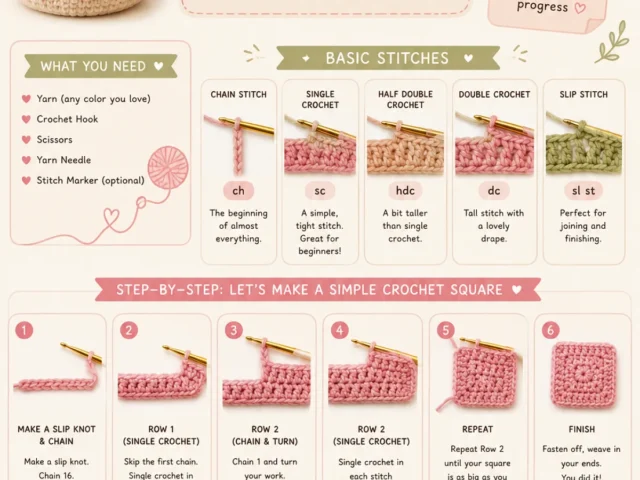
What you need
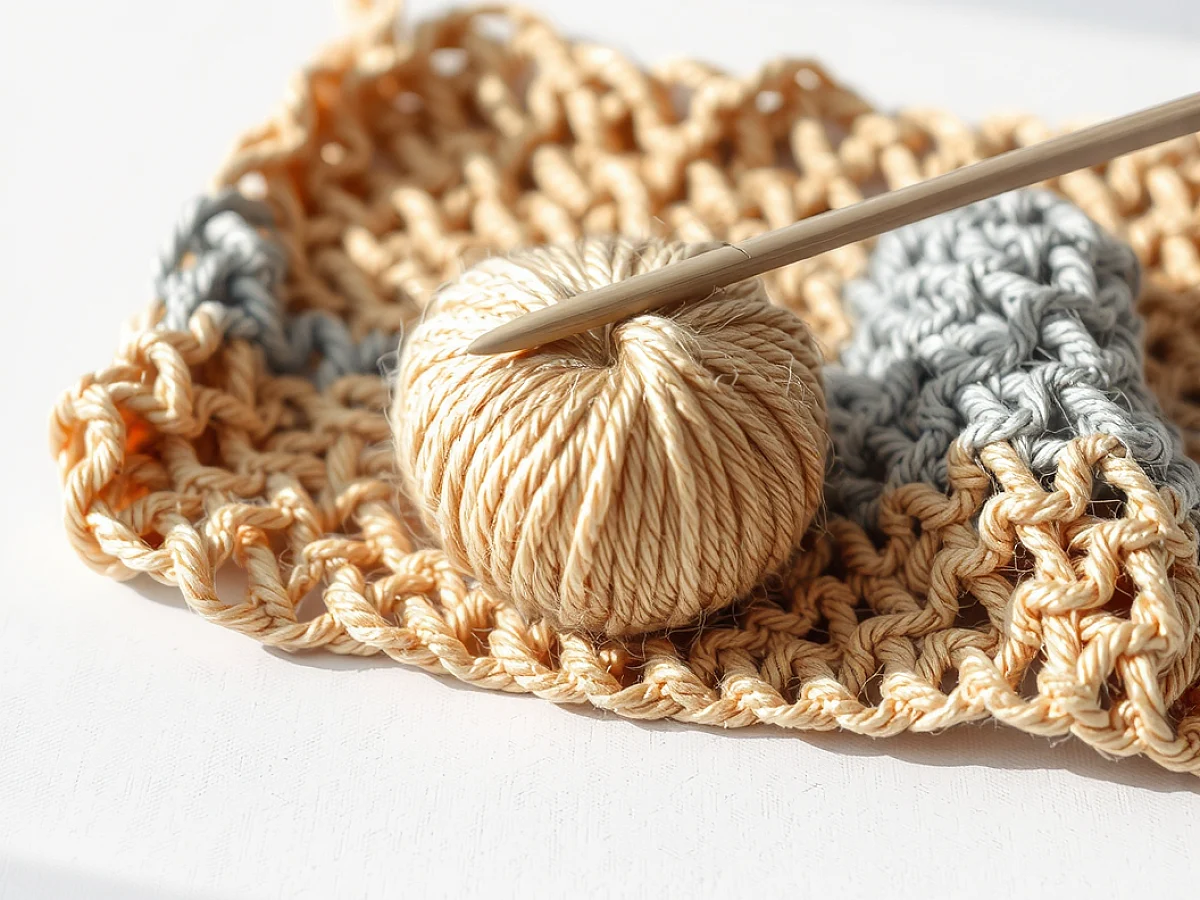
Worsted weight yarn
A smooth, light-colored yarn in a solid color. About 100–200 yards for practice. Acrylic is fine and inexpensive.
Crochet hook
5.5 mm (I-9) is a good start. If you have a different size, check the yarn label for a recommended hook.
Scissors
Any small scissors to cut your yarn when you finish.
Stitch markers
Use them to mark the first and last stitch of a row. You can also use a piece of contrasting yarn.
What you need to start
Grab a worsted weight yarn (the kind labeled #4) and a 5.5 mm (I-9) hook. That combination is forgiving—the yarn is thick enough to see your stitches, and the hook is comfortable to hold. If you only have a different weight, that's fine. Just know that a thinner yarn with a smaller hook makes tighter stitches, and a bulkier yarn with a larger hook makes looser ones.
You don't need a fancy kit. A smooth, light-colored yarn is best because you can see the V shapes of your stitches clearly. Dark yarn hides them, and fuzzy yarn makes it hard to find your loops.
Sit near a window or a bright lamp. Good light makes a huge difference when you're learning to see your stitches.
The slip knot: your first loop
Make a loop with the yarn, leaving a tail about six inches long. Insert your hook through the loop, catch the working yarn, and pull it through. Tighten gently. You should have a loop on your hook that slides easily but isn't loose.
Why it matters: the slip knot is the anchor for everything else. If it's too tight, you won't be able to pull your hook through. If it's too loose, your work will unravel. Practice until you can make one without thinking.
If your slip knot is too tight, just pull the tail to loosen it. You can always adjust it before you start chaining.
Chain stitch: the foundation
Hold the hook with the slip knot on it. Yarn over—that means wrap the yarn from back to front over the hook. Then pull that loop through the loop on your hook. That's one chain. Repeat to make a foundation chain.
Keep your tension even. If your chains are too tight, you'll struggle to insert your hook into them later. If they're too loose, your work will have gaps. Aim for a chain that's snug but not stiff.
Count your chains as you go. Most patterns tell you how many to start with, and that number includes the turning chain—the extra chain you make at the end of a row to bring your hook up to the right height.
If your chain twists, just turn it over. The front of a chain looks like a series of V's; the back has bumps. You'll work into the front loops for most basic stitches.
Single crochet: the tightest basic stitch
Insert your hook into the second chain from your hook (skip the first chain—that's your turning chain). Yarn over and pull up a loop. You now have two loops on your hook. Yarn over again and pull through both loops. That's one single crochet.
Work one single crochet into each chain across. At the end of the row, chain one and turn your work. Now you'll work into the top of each stitch from the previous row.
Why it works: the single crochet is short and dense, making a sturdy fabric. It's great for washcloths and amigurumi. It's also the slowest stitch, so if you want something quick, you'll move to taller stitches.
If your edges are curling, you're probably skipping the first stitch of the row. Count your stitches often—it's easier to fix a mistake right away than to rip out a whole row.
Double crochet: the taller, quicker stitch
Yarn over, then insert your hook into the fourth chain from your hook (skipping three chains for the turning chain). Yarn over and pull up a loop. You have three loops on your hook. Yarn over and pull through two loops, yarn over and pull through the last two loops. That's one double crochet.
The double crochet is twice as tall as a single crochet, so rows go faster. The fabric is looser and drapes nicely, which is why it's used for blankets and shawls.
At the end of a row, chain three and turn. That chain three counts as your first double crochet of the new row, so you'll work your next stitch into the second stitch of the previous row.
If your double crochet looks like a knot, you might be pulling the yarn too tight. Let the hook do the work—keep your tension relaxed.
Common mistakes and how to fix them
Losing count is the most common issue. Mark the first and last stitch of each row with a stitch marker or a piece of contrasting yarn. That way you know where to stop.
If your edges are uneven, you might be adding or skipping stitches at the ends. Check your stitch count every few rows. It's normal to have to rip out a row—everyone does it.
If your work is curling into a tube, your foundation chain might be too tight. Try using a hook one size larger for the chain, then switch back to your regular hook for the stitches.
When you need to undo a mistake, pull the yarn gently to unravel the stitches. Don't pull too hard or the yarn will twist and fray.
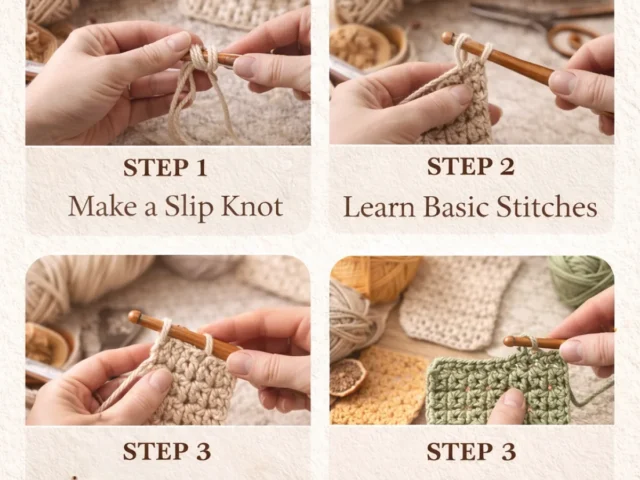
Step
Make a slip knot
Loop the yarn, pull a loop through, and slide it onto your hook. Tighten gently so it moves easily.
Chain a foundation
Yarn over and pull through to make each chain. Make about 20 chains for practice.
Work single crochet
Insert hook into second chain, yarn over, pull up a loop, yarn over, pull through two loops. Repeat across.
Turn and continue
Chain one, turn your work, and work single crochet into each stitch across.
Try double crochet
Yarn over, insert hook into fourth chain, pull up a loop, yarn over, pull through two loops twice. Repeat across.
Practice both stitches
Make a row of single crochet, then a row of double crochet. Notice the difference in height and drape.
Ways to change it
Half double crochet
A middle ground between single and double. Yarn over, insert, pull up a loop, yarn over, pull through all three loops. Taller than single, shorter than double.
Use a larger hook
With the same yarn, a larger hook (6.5 mm) makes looser, drapier stitches. Good for scarves and blankets.
Use a smaller hook
A smaller hook (5.0 mm) makes tighter, denser fabric. Good for amigurumi and structured items.
Try cotton yarn
Cotton has no stretch, so it's great for washcloths and dishcloths. It can be harder on your hands, but the fabric is sturdy.
Work in the back loop only
Insert your hook only under the back loop of each stitch. This creates a ribbed texture, often used for cuffs and brims.
The short version
- The slip knot is the foundation; keep it loose enough to move on the hook.
- Chain stitches should be even—not too tight, not too loose.
- Single crochet is the shortest basic stitch, great for dense fabric.
- Double crochet is twice as tall and works up faster.
- Always count your stitches; mark the first and last stitch of each row.
- If edges curl, check your tension and stitch count.
- Practice on a small swatch before starting a real project.
Questions people ask
Why does my crochet curl at the edges?
Curling usually means your foundation chain is too tight, or you're skipping the first stitch of a row. Try making your chain with a larger hook, and count your stitches each row.
How do I know which loop to insert my hook into?
For basic stitches, you insert your hook under both loops of the V at the top of the stitch. Some patterns tell you to work in the front or back loop only, but for beginners, both loops is standard.
What does 'chain 1' or 'chain 3' mean at the end of a row?
That's the turning chain. It raises your hook to the height of the next stitch. For single crochet, you chain 1; for double crochet, you chain 3. The turning chain often counts as the first stitch of the new row.
Why is my stitch count changing?
You're probably missing the first or last stitch of a row. Put a marker in the first and last stitch so you know where to work. Count your stitches every few rows to catch mistakes early.
Pick up your hook and practice these four stitches on a small swatch
Start with a slip knot, make a chain, and work a few rows of single and double crochet. The more you repeat the motions, the more natural they feel. When you're comfortable, you can move on to simple patterns like scarves or dishcloths. Stitch with ease.