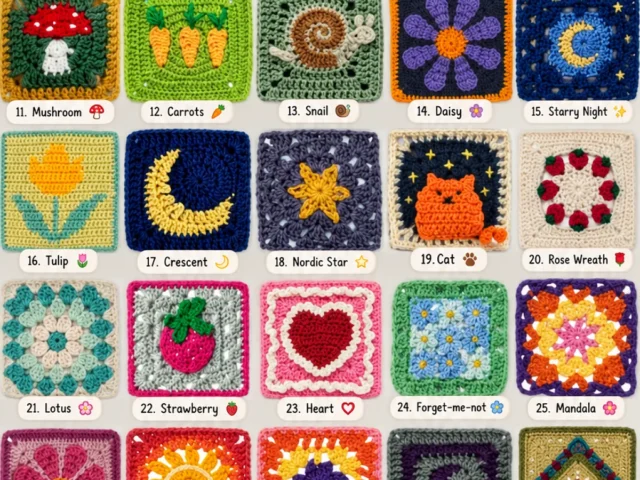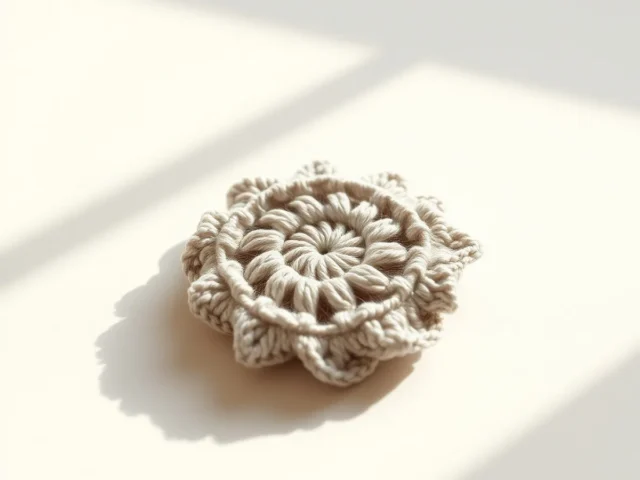
Crochet Motif Collection: 12 Shapes to Mix and Match
Mix and match 12 crochet motifs to make blankets, bags, and garments you'll actually use.
A single granny square is nice, but a whole collection of motifs opens up a world of possibilities.
A single granny square is nice, but a whole collection of motifs opens up a world of possibilities. You can mix them into a blanket, sew them into a tote bag, or join them into a scarf. The best part? Each motif is small enough to finish in an evening.
This guide walks you through 12 motifs, from the classic granny square to a delicate flower. You'll learn the basic stitches, how to read a diagram, and how to join motifs neatly. No matter your skill level, you'll find something to try.
This collection gives you 12 crochet motifs, from classic squares to lacy circles and floral shapes. Each one comes with a simple written pattern, a clear diagram, and tips for joining them into larger projects.
The collection
Classic Granny Square
The most versatile motif. Use it for blankets, bags, and more.
Solid Square
A dense square with no holes. Great for warm blankets.
Sunburst Granny Square
A circular center with a square outer edge. Gives a retro feel.
Lacy Circle
An open, airy circle. Perfect for summer tops or shawls.
Flower Motif
A simple flower with petals. Use as an applique or join into a garland.
Hexagon Motif
A six-sided shape that joins without gaps. Great for blankets.
Triangle Motif
A small triangle that can fill gaps or make a bunting.
Heart Motif
A cute heart shape. Perfect for Valentine's projects.
Butterfly Motif
A delicate butterfly with wings. Use as a decoration.
Star Motif
A five-pointed star. Great for festive projects.
Leaf Motif
A simple leaf shape. Use as an applique or in a garland.
Shell Motif
A fan-like shell pattern. Adds texture to any project.
What you need
Yarn
Worsted weight in two or three colors. About 50 yards per motif.
Crochet hook
5mm for worsted weight. Adjust for other yarn weights.
Yarn needle
For weaving ends and sewing motifs together.
Scissors
Sharp scissors for cutting yarn.
What You Need to Get Started
Before you pick up your hook, gather a few basics. You'll need worsted weight yarn in two or three colors, a 5mm hook, and a yarn needle for weaving ends. That's it.
If you only have DK yarn, use a 4mm hook. If you have bulky yarn, go up to a 6mm hook. The motifs will be bigger or smaller, but the pattern still works.
Use a light-colored yarn for your first motif. Dark colors make it hard to see your stitches.
The Basic Stitches You'll Use
Most motifs use the same handful of stitches: chain, slip stitch, single crochet, double crochet, and treble crochet. If you know these, you're ready.
The key is to count your stitches. Each round should have the same number of increases. If you miss one, the motif will pucker or ruffle.
- Chain (ch): the foundation of most motifs.
- Slip stitch (sl st): used to join rounds.
- Single crochet (sc): a tight, dense stitch.
- Double crochet (dc): a taller, open stitch.
- Treble crochet (tr): even taller, for lacy effects.
Place a stitch marker in the first stitch of each round. It's easy to lose your place.
Reading a Motif Diagram
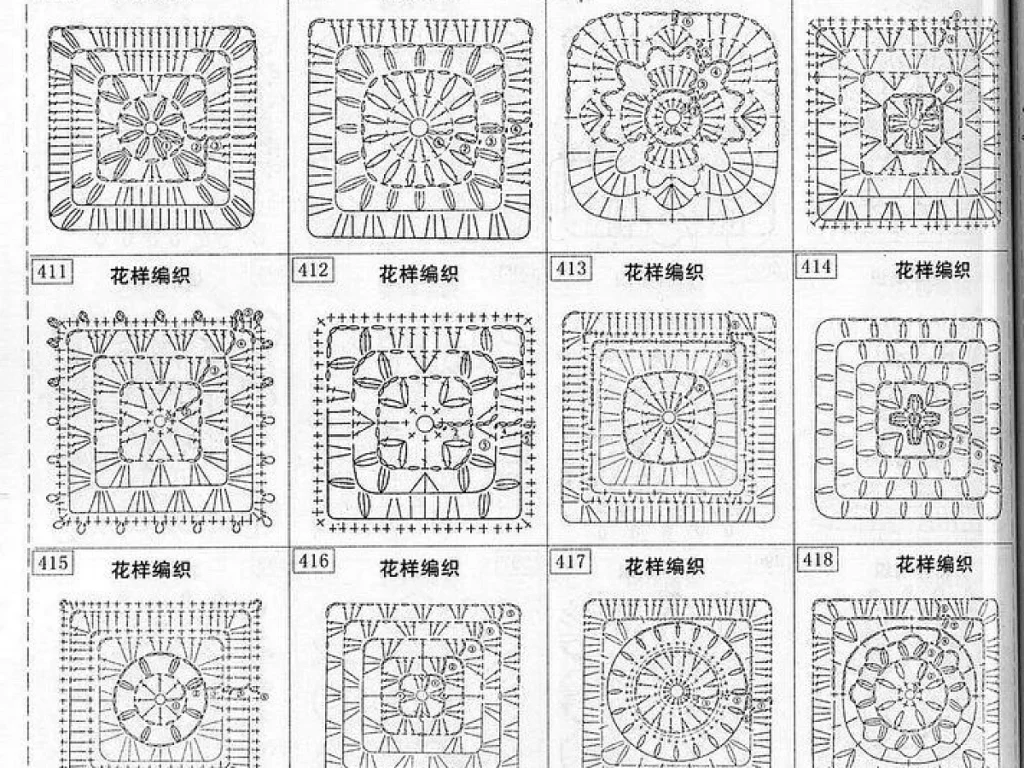
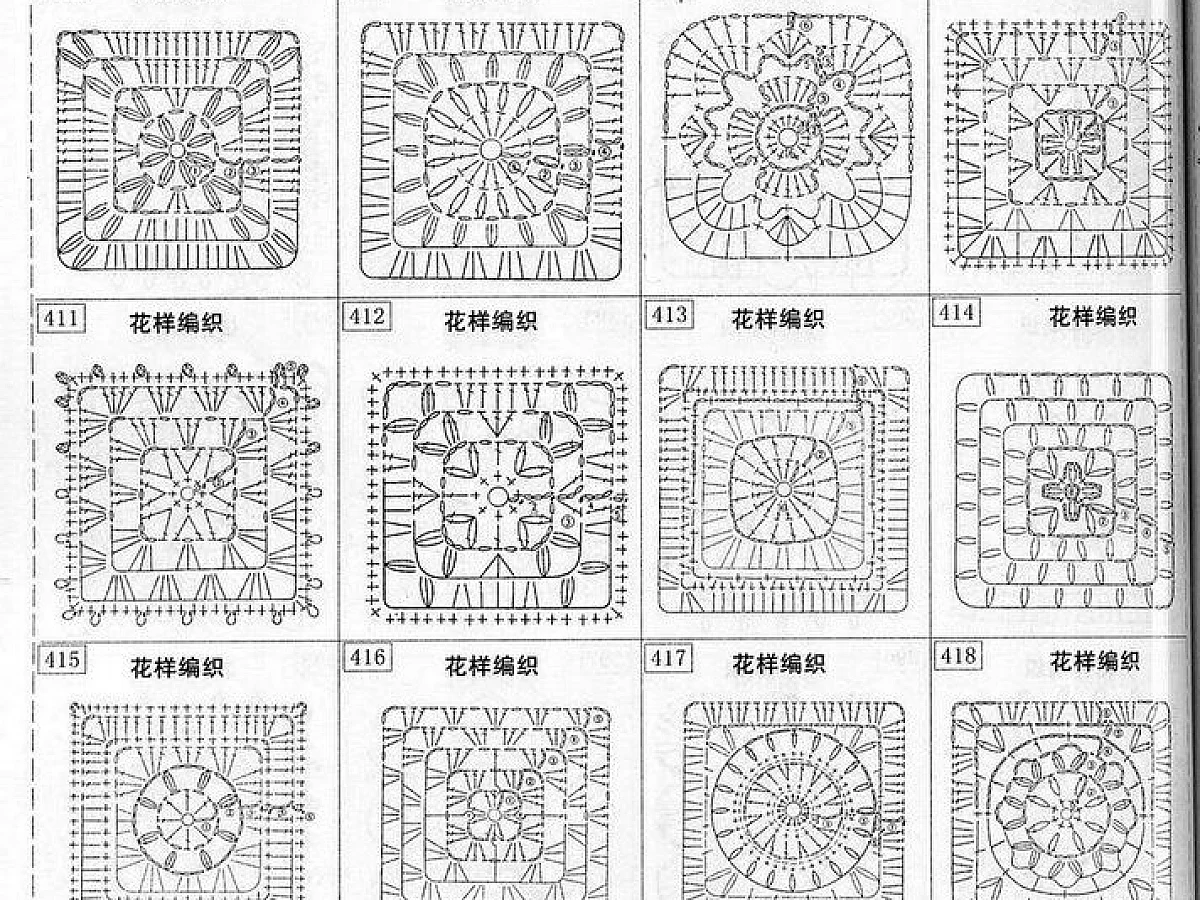
A diagram shows each stitch as a symbol. A chain is an oval, a double crochet is a long T with a slash. The center is a ring or a chain loop.
Start at the center and work outward, following the arrows. Each round is numbered. When you finish a round, you join with a slip stitch or work in a spiral.
Print the diagram and keep it next to you. It's easier to follow than a written pattern.
How to Join Motifs
There are several ways to join motifs. The simplest is to sew them together with a yarn needle and the same yarn.
For a more decorative join, use a slip stitch crochet join. Hold two motifs right sides together and work slip stitches through both edges.
You can also join as you go. When you finish the last round of a motif, you attach it to the previous one by working a chain and slip stitch into the edge.
Block your motifs before joining. It makes them even and easier to sew.
Common Mistakes and How to Fix Them
The most common mistake is losing count. If your motif is wavy, you added too many stitches. If it curls, you missed some.
Another issue is tight tension. If your motifs are stiff, try a larger hook. If they're floppy, use a smaller one.
When you weave in ends, don't pull too tight. That can pucker the fabric.
If you make a mistake, don't rip it all out. Just frog back to the last round and redo it.
Step
Make a slip knot
Loop the yarn around your fingers and pull a loop through. Place it on the hook and tighten.
Chain the foundation
Chain 4 and join with a slip stitch to form a ring. This is the center of most motifs.
Work the first round
Chain 3 (counts as a double crochet), then work 11 double crochets into the ring. Join with a slip stitch to the top of the starting chain.
Continue the rounds
Follow the pattern for each motif. Each round increases the stitch count. Check that the motif lies flat after each round.
Finish off
Cut the yarn, pull through the last loop, and weave in the end. Block if needed.
Ways to change it
Yarn weight
Use DK yarn and a 4mm hook for smaller motifs. Use bulky yarn and a 6mm hook for larger ones.
Color scheme
Use a single color for a modern look, or multiple colors for a scrappy feel.
Skill level
Start with the solid square and granny square. Save the lacy circle and flower for later.
Project type
Join motifs into a blanket, a tote bag, a scarf, or a pillow cover.
Joining method
Sew them for a flat seam, or join as you go for a decorative edge.
The short version
- A motif collection lets you mix and match shapes for endless projects.
- Most motifs use only basic stitches and take about 30 minutes each.
- Counting stitches is the key to a flat, even motif.
- Blocking before joining makes your work look professional.
- You can adjust the size by changing your yarn weight and hook size.
- Joining as you go saves time and creates a decorative edge.
Questions people ask
How many motifs do I need for a blanket?
For a lap blanket, you might need 30 to 60 motifs, depending on size. A full bed blanket could take over 100. Make a few and measure to estimate.
Can I use cotton yarn for motifs?
Yes, cotton is great for motifs. It's sturdy and holds its shape well. Just check the recommended hook size on the label.
How do I block motifs?
Pin each motif to a blocking mat, spray with water, and let dry. This evens out the stitches and makes joining easier.
Pick a motif and start crocheting
Start with the classic granny square. Once you've made a few, try a flower or a hexagon. Mix and match to create something uniquely yours. Stitch with ease.