Handcrafted Crochet Flower Bouquet: A Complete Guide to Yarn Flowers That Last
Learn how to crochet roses, tulips, lavender, and daisies, then wrap them into a bouquet that never wilts.
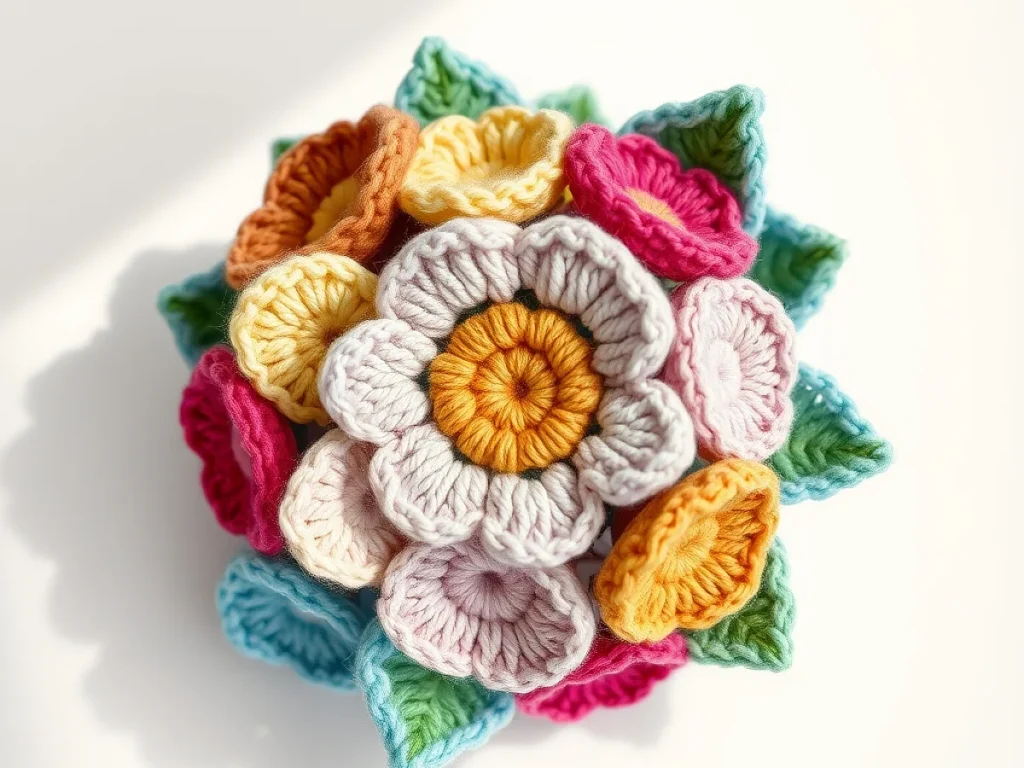
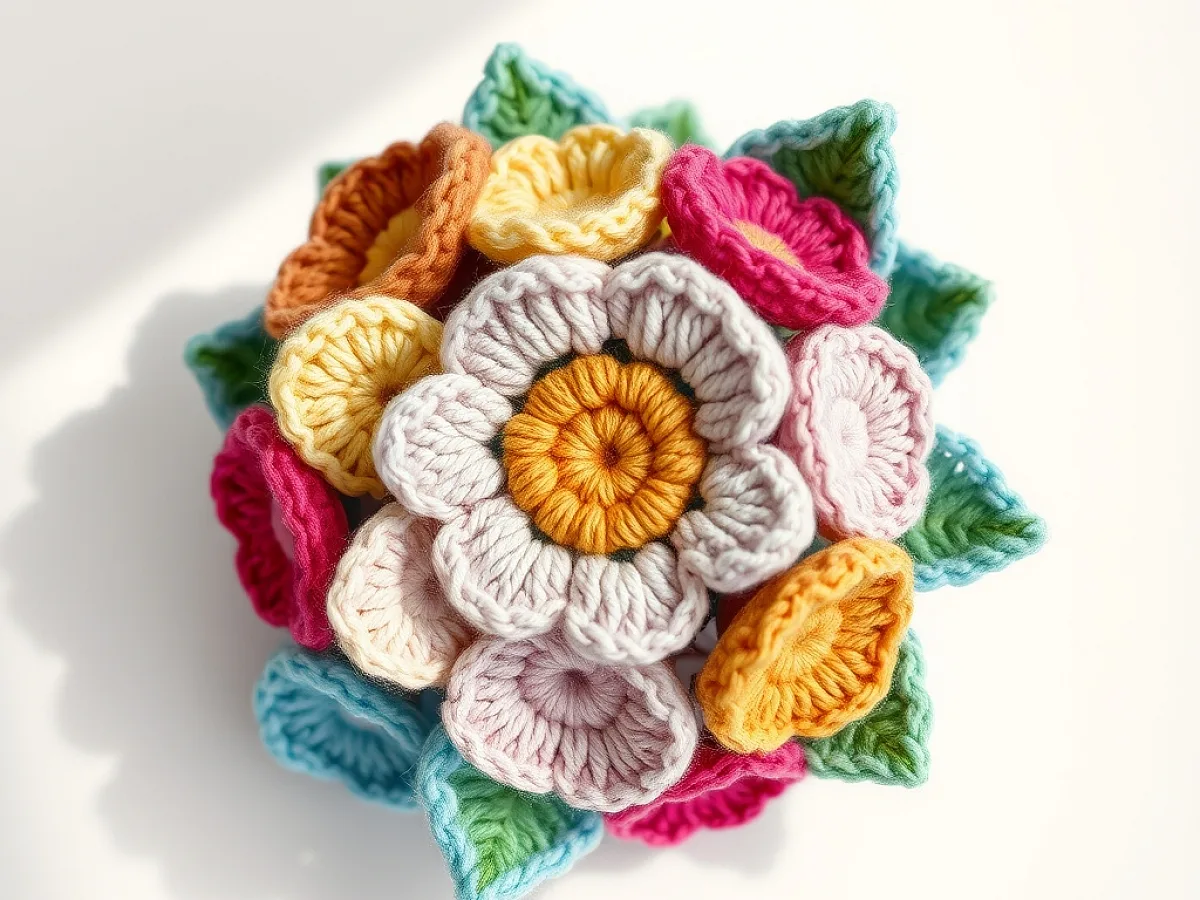
A crochet flower bouquet is a bunch of yarn flowers worked on a small hook, wired or stiffened so they hold their shape, and wrapped like fresh flowers.
Yarn flowers do not drop petals or need water. That is the quiet appeal. You crochet each bloom, stiffen the stem, and arrange them once.
This guide walks through the yarn and hook choices, the stitches for four common flowers, how to wrap the bouquet, and what to do when a stem flops or a petal curls the wrong way.
You can make a handcrafted crochet flower bouquet with medium cotton yarn, a 2.5 mm to 3.5 mm hook, floral wire, and a paper wrap. Most people finish five to seven stems in eight to twelve hours, spread over a few evenings.
What you need
Light worsted cotton yarn
About 15 to 20 g per flower. Cotton holds shape better than acrylic. Use acrylic only if you plan to stiffen it.
3.0 mm crochet hook
Use 2.5 mm for leaves and ferns. A hook with a smooth throat helps prevent splitting.
22 gauge floral wire
One 25 cm length per stem. Use 20 gauge for larger blooms that need more support.
Green floral tape
One roll covers about ten stems. Stretch it as you wrap so it sticks to itself.
Brown paper and jute string
A 30 cm by 40 cm sheet wraps a five-stem bouquet. Jute string holds the bunch; white ribbon finishes it.
Why crochet flowers hold up better than fresh ones
Fresh tulips last about a week. A crocheted tulip lasts years if you keep it out of direct sun. The trade is time: one rose takes roughly forty minutes once you know the pattern.
The shape comes from two things. First, tight, even stitches. Second, a wire or stiffener inside the stem. Skip the wire and the flower head will droop within a day.
Work your petals one hook size smaller than the stem. The firmer fabric keeps the bloom from going flat.
Yarn, hook, and the numbers that matter
Use a light worsted weight cotton, often sold as size 3 or 4. Cotton holds a crease and takes starch well. Acrylic is cheaper and comes in more colors, but it springs back and petals can look rounded instead of crisp.
For a rose about 6 cm across, use a 3.0 mm hook with size 4 cotton. Gauge is not critical for a bouquet, but it changes the finished size. If your rose comes out 8 cm wide, your hook or yarn is thicker than the sample. That is fine, just keep every flower on the same hook so the bouquet looks even.
- Yarn: light worsted cotton, about 15 to 20 g per flower
- Hook: 3.0 mm for petals, 2.5 mm for leaves
- Wire: 22 gauge floral wire, one 25 cm length per stem
- Tape: green floral tape, one roll covers about ten stems
If you only have acrylic, add a light spray of fabric stiffener after shaping. Let it dry flat for four hours.
Abbreviations used in these patterns
These are the standard US terms. If you learned UK terms, remember that a US single crochet is a UK double crochet.
ch chain, sl st slip stitch, sc single crochet, hdc half double crochet, dc double crochet, tr treble crochet, inc two stitches in one, dec two stitches together, FO fasten off.
Write the abbreviations on a sticky note and keep it beside you. It saves you from re-reading the same line five times.
How to make four flowers, in order
Start with the daisy. It is the simplest and gives you a feel for the petal tension before you try the rose.
Work all flowers before you wrap anything. Laying them out first lets you swap colors and heights without unwrapping.
- Daisy: magic ring, 6 sc into ring, join. Round 2: inc in each stitch (12). Round 3: ch 3, 2 dc in next stitch, ch 3, sl st in next. Repeat around for 6 petals. FO.
- Lavender: ch 25. Row 1: sc in second ch from hook, sc across (24). Row 2: ch 2, 2 hdc in each stitch across. Roll the strip into a spiral and stitch the base to hold it.
- Tulip: magic ring, 6 sc. Round 2: inc around (12). Rounds 3 to 6: sc around. Round 7: ch 2, dc in next 3, ch 2, sl st in next. Repeat three times for a three-petal cup.
- Rose: ch 21. Row 1: dc in third ch from hook, dc across (19). Row 2: ch 2, 2 dc in each stitch across (38). Roll the strip tightly from one end and stitch the base. The outer edge becomes the open petals.
If your rose looks like a flat spiral instead of a bloom, you rolled it too loosely. Unroll and roll again, keeping the first three turns tight.
Adding stems, leaves, and ferns
Cut a 25 cm length of 22 gauge wire for each flower. Bend the top 2 cm into a small hook. Push the hook through the base of the flower and pull it snug, then twist the wire once to lock it.
Wrap green floral tape around the wire from the flower base down to the bottom. Stretch the tape as you wrap. It sticks to itself and holds without glue.
Leaves: ch 8, sc in second ch from hook, hdc, dc, dc, hdc, sc, sl st. FO. Make two leaves per rose and one per tulip. Ferns are a simple ch 15 with sc in every other chain, then a second row of sc back.
If the wire pokes through the flower, you pushed too far. Pull it back a little and wrap the base with a small square of green felt before taping.
Wrapping the bouquet so it looks like a florist made it
Hold all stems in one hand and fan them out. Aim for the tallest flower at the back and the shortest at the front. A good rule is a 5 cm height difference between the tallest and shortest.
Tie the stems together with jute string about 5 cm below the flower heads. Then wrap brown paper around the bunch, folding the top edge down once. Tie again with the same string and add a white fabric ribbon on top.
- Cut paper to 30 cm by 40 cm for a five-stem bouquet
- Wrap so the paper covers the lower half of the stems
- Tie the string in a double knot, then a bow
- Trim stem ends to the same length after wrapping
If the bouquet feels top-heavy, add one extra stem at the back as a counterweight. A single lavender sprig often does the job.
What goes wrong and how to fix it
Petals curl inward: your tension is too tight. Try a hook one size larger for the petal rounds only.
Flower head droops: the wire is too thin or the tape is loose. Use 20 gauge wire for larger blooms and wrap the tape tighter.
Stitches look uneven: cotton splits easily. Switch to a hook with a smoother throat, or use a slightly thicker yarn.
Steam the finished flower over a kettle for three seconds, then shape with your fingers. It softens the yarn just enough to reshape.
Step
Make all flowers first
Work each flower and leave the tails long. Lay them side by side and check that the sizes look even before you wire anything.
Wire each stem
Bend the wire top into a hook, push it through the flower base, and twist once. The flower should hang straight when you hold the wire.
Wrap the stems with floral tape
Start at the flower base and wrap down to the wire end, stretching the tape. The stem should feel firm and not show any wire.
Add leaves and ferns
Tape one or two leaves to each stem about 3 cm below the flower. Ferns go on the outer stems for a fuller look.
Arrange and tie
Fan the stems in one hand, tallest at the back. Tie with jute string 5 cm below the heads, then wrap paper and tie again.
Ways to change it
All-white bouquet
Use white and cream cotton for daisies and roses. Works well for weddings and looks calm on a shelf.
Mini bouquet
Use size 2 cotton and a 2.0 mm hook. Each flower comes out about 3 cm wide. Good for a brooch or a gift topper.
Autumn colors
Swap pink and yellow for rust, mustard, and deep red. Add a few brown leaves for contrast.
Acrylic version
Cheaper and easier to find. Spray with fabric stiffener after shaping and let dry flat for four hours.
Scented finish
Add two drops of lavender oil to a cotton ball and tuck it inside the paper wrap. Refresh every few weeks.
The short version
- Cotton yarn holds a crease better than acrylic, so petals stay crisp.
- A 22 gauge wire inside each stem keeps the flower head from drooping.
- Work all flowers before wrapping so you can balance heights and colors.
- A 5 cm height difference between the tallest and shortest stem makes the bouquet look arranged.
- If petals curl inward, go up one hook size for the petal rounds only.
- Steaming a finished flower for three seconds lets you reshape it with your fingers.
Questions people ask
How much yarn does one crochet flower use?
About 15 to 20 g of light worsted cotton per flower. A five-stem bouquet uses roughly one 100 g skein if you keep the colors simple.
Can I make a crochet flower bouquet without wire?
Yes, but the stems will be soft and the heads may droop. You can stiffen yarn stems with fabric stiffener or use pipe cleaners instead of floral wire for a lighter hold.
How long does a crochet flower bouquet last?
Years, if you keep it out of direct sun and dust it gently. Sun fades cotton over time, so a shelf away from a window is best.
What is the best yarn for crochet flowers?
Light worsted cotton, often sold as size 3 or 4. It holds shape and takes starch well. Acrylic works if you stiffen it after shaping.
How do I keep the bouquet from looking messy?
Tie the stems tightly with jute string before wrapping the paper. Trim all stem ends to the same length after wrapping. That one step makes the biggest difference.
Pick your colors and start with one daisy tonight.
A handcrafted crochet flower bouquet is really a small collection of skills: even stitches, a wired stem, and a tidy wrap. Start with one flower. The rest gets easier. Stitch with ease.