Micro Crochet Art: How to Crochet Tiny Animals and Charms That Hold Their Shape
By the end you will know which thread and hook to pick, how to keep your stitch count straight at 4 mm wide, and how to finish a tiny animal so it survives daily wear.
A crocheted bear that fits inside a thumbnail takes about forty minutes and roughly 120 stitches, and almost all of them are single crochet.
A crocheted bear that fits inside a thumbnail takes about forty minutes and roughly 120 stitches, and almost all of them are single crochet. Nothing about the technique is new. The scale is what makes it feel like a different craft.
Once you work below about 8 mm across, your hands stop doing what they normally do. The hook barely moves. Your fingers do most of the work, and the yarn has to be held closer to the tip than you are used to. That is the whole adjustment, and it takes one or two small pieces to settle in.
Micro crochet art is ordinary crochet worked at a much smaller scale, usually with thread between size 40 and size 80 and a steel hook between 0.5 mm and 0.75 mm. The stitches are the same ones you already know; what changes is your grip, your lighting, and how carefully you count.
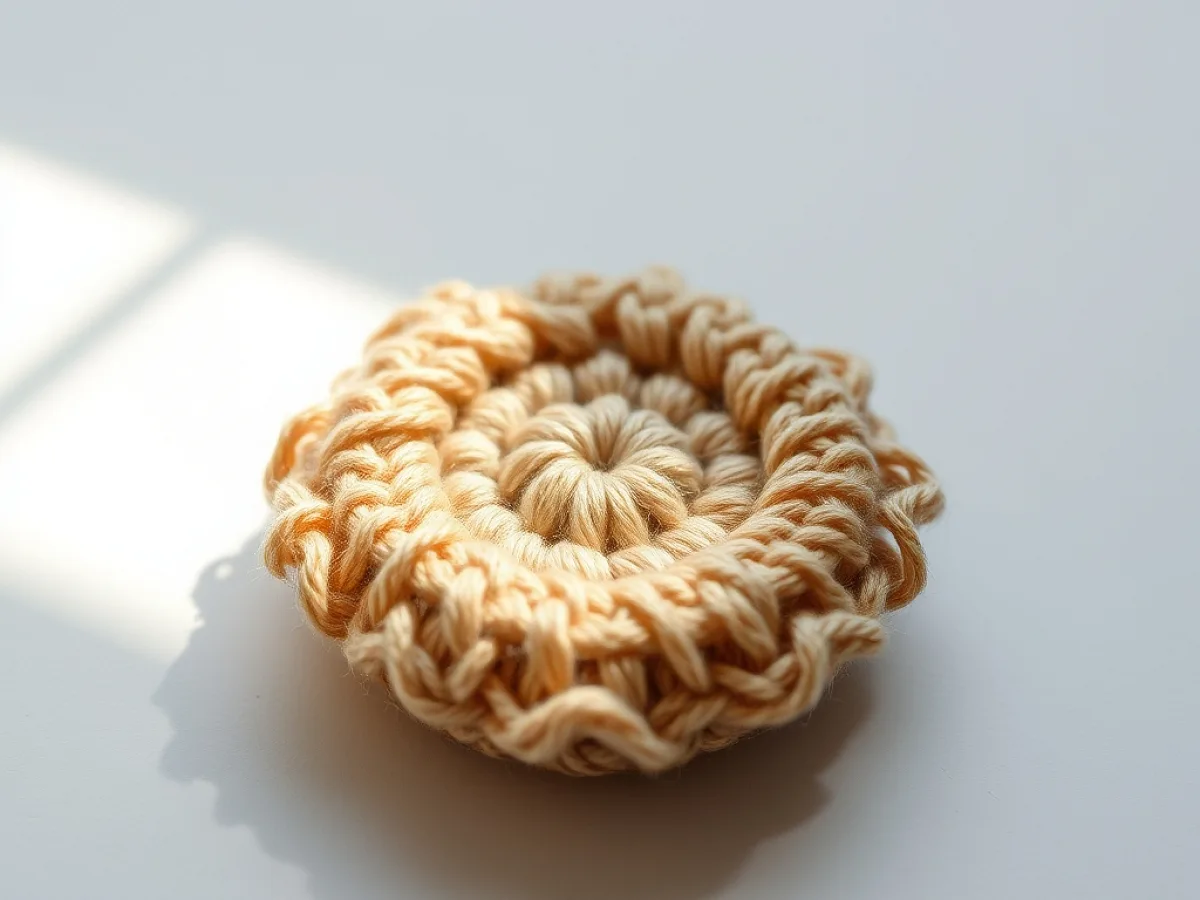
What you need
Crochet cotton thread
Size 40 is the easiest starting point. Size 80 is finer and better for very small figures, but it snaps more easily.
Steel crochet hook
0.75 mm for size 40 thread, 0.5 mm for size 80. Buy two, because the smallest sizes bend if you grip hard.
Tapestry needle
Size 26 or 28. A blunt tip slides between stitches without splitting the thread.
Fibre filling
A small handful lasts for dozens of pieces. Use the finest grade you can find so it does not lump inside a 10 mm head.
Safety pin or scrap thread
One marker for the first stitch of each round. Missing a stitch at this scale is the most common mistake.
Daylight lamp
A bright lamp with a white cloth underneath. This matters more than any other item on the list.
What counts as micro crochet
Most people draw the line at pieces under 2.5 cm tall, and many work much smaller than that. A finished animal charm often measures 10 mm to 15 mm from nose to tail. At that size, the head is about six single crochet stitches around.
The thread is what sets the scale. Size 40 crochet cotton gives you a figure around 15 mm tall with a 0.75 mm hook. Size 80 gives you roughly 10 mm with a 0.5 mm hook. If you want something closer to 20 mm, size 20 thread and a 1.0 mm hook will get you there without straining your eyes as much.
Stitch definition matters more than size. A micro piece should still show individual stitches when you hold it up. If the fabric looks like felt, your hook is too big for the thread, and the piece will sag out of shape within a week.
Work under a daylight lamp with the piece on a white cloth. Dark thread on a dark table is the single most common reason people give up in the first hour.
Thread, hook and the numbers that matter
Crochet cotton is sold by number, and the number goes up as the thread gets thinner. Size 10 is the thickest you would use here. Size 80 is close to sewing thread. Between them you have a full range of sizes to grow into.
Steel hooks are labelled in millimetres, and the sizes you need are 0.5 mm, 0.6 mm, 0.75 mm and 1.0 mm. A hook with a soft handle helps, because you will grip it harder than usual. If your hand cramps after ten minutes, that is normal at first and it eases as your grip loosens.
Gauge is not usually written for micro pieces, because the finished size depends on your tension more than on the pattern. What you can do instead is measure the first round. If your starting ring comes out at 5 mm across instead of 4 mm, drop one hook size rather than changing your thread.
- Size 20 thread with a 1.0 mm hook: finished figures around 18 to 22 mm
- Size 40 thread with a 0.75 mm hook: finished figures around 13 to 16 mm
- Size 80 thread with a 0.5 mm hook: finished figures around 8 to 11 mm
- Tapestry needle in size 26 or 28 for weaving in ends
If size 80 thread keeps snapping, it is usually old stock. Cotton thread has a shelf life, and thread that has been in a warm cupboard for years loses its twist and breaks under tension.
The four stitches you actually need
Almost every micro animal is built from single crochet, slip stitch, chain and one increase or decrease. That is the whole vocabulary. If you can make a flat circle in single crochet, you can make a bear.
The written chart for a basic round head, worked in continuous rounds without joining, looks like this:
Round 1: 6 sc in a magic ring. (6)
Round 2: inc in each stitch around. (12)
Round 3: sc, inc, repeat six times. (18)
Round 4: sc in each stitch around. (18)
Round 5: sc, dec, repeat six times. (12)
Round 6: dec six times. (6)
Stuff before round 6 closes, then pull the last round tight with your tapestry needle. The head should sit round and firm, not squashed. If it looks flat, you stuffed too little; if the stitches pull apart, you stuffed too much.
Use the back loop only on the last round before closing. It pulls the opening closed more neatly and hides the gap where the stuffing shows.
How to hold the work without losing stitches
At this scale, your yarn hand does the tensioning and your hook hand barely travels. Pinch the work between your thumb and middle finger, right below the stitch you are making. The hook moves about 3 mm per stitch. That is all the room there is.
The most common error is losing a stitch at the start of a round. Mark the first stitch of every round with a small safety pin or a piece of contrasting thread. Counting back afterwards is slow and often wrong.
If your stitches keep sliding off the hook, your hook is too small for the thread. If they are hard to push through, it is too big. A well-matched pair lets the loop glide with a light pull and no squeak.
Take a break every fifteen minutes. Micro work is done with the fingertips, and fingertip tendons complain faster than wrists do.
Making a tiny animal bracelet
The bracelet is the part people notice, and it is the easy part. Work a chain long enough to go around the wrist with 1 cm of ease, then work one row of single crochet into the chain. A 16 cm wrist usually needs a chain of 19 to 21 stitches in size 40 thread.
Join the ends with a slip stitch to make a ring, then slip stitch the animal to the band at its base. Two or three passes with the same thread is enough. Do not use glue; it stiffens the thread and cracks within days.
Finish by weaving every end through at least four stitches in two directions. Micro pieces unravel from the inside, and a single short end will work its way free in a pocket.
Attach the animal slightly off-centre, toward the back of the wrist. Centred figures catch on sleeves and get pulled off.
Faces, ears and the parts that go wrong
Eyes are where micro animals stop looking like animals. A French knot in size 80 thread makes an eye about 1 mm across, which is right for a 10 mm head. Anything larger and the face reads as a cartoon.
Ears and limbs are usually made as separate small pieces and sewn on with the same thread, using a whip stitch around the base. If a limb droops, you sewed through too few stitches. Go around the base twice.
The mistake that ruins the most pieces is overstuffing. A 10 mm head needs a piece of fibre filling about the size of a grain of rice. Push it in with the blunt end of your hook, a little at a time, and stop when the shape holds itself.
If you cannot get the eyes even, place them with pins first, hold the piece at arm's length, and adjust before you sew. At this size your eye reads the whole face at once, and small differences show.
Finishing, wearing and washing
A finished micro piece should feel firm but not hard. Squeeze it gently; if it springs back, the stuffing is right. If it stays dented, add a few more fibres.
Cotton thread takes wear well but it does not like hot water. Wash a bracelet by hand in cool water with a drop of mild soap, press it in a towel, and let it dry flat away from sunlight. Do not wring it, and do not put it in a dryer.
Wear the bracelet on the arm you use least if you can. The figures rub against desks, bag straps and coat cuffs, and the thread wears thin at the highest point of the head first. Check that spot every few months and re-sew the base if it feels loose.
Store small pieces in a tin lined with a soft cloth. Loose in a jewellery box, a 10 mm bear will lose an ear within a month.
Step
Pick your thread and hook as a pair
Match size 40 thread with a 0.75 mm hook, or size 80 with 0.5 mm. Work a test ring of six single crochet. If the ring measures wider than 5 mm, go down one hook size.
Make the head and count every round
Work the six-round chart above, marking the first stitch of each round. Check the count after each round before moving on. A head that should be 18 stitches but reads 17 will lean to one side.
Stuff before the opening closes
Add filling a little at a time when you reach 12 stitches. Stop when the shape holds itself. Pull the last round tight with your needle.
Make the body and limbs
Work the body as a slightly wider version of the head, then make four small limbs of five or six stitches each. Leave a 10 cm tail on every piece for sewing.
Sew the parts together
Pin the limbs in place first. Sew with a whip stitch around the base, going around twice. Check the figure sits level before you knot the thread.
Add the face last
Place two French knots for the eyes with pins marking the spots. Hold the piece at arm's length and adjust before sewing. A nose is one small straight stitch.
Crochet the bracelet band and join
Chain enough to go around the wrist with 1 cm of ease, then work one row of single crochet. Join into a ring and slip stitch the animal to the band in two or three passes.
Weave in every end twice
Run each tail through at least four stitches in two directions, then trim close. Check by tugging gently. If the thread moves, weave it further.
Ways to change it
Smaller thread, smaller figure
Move from size 40 to size 80 and a 0.5 mm hook. The same chart gives a figure about two-thirds the size, but it takes longer and needs better light.
Thicker thread for beginners
Size 20 thread with a 1.0 mm hook makes a figure around 20 mm tall. It is a good way to learn the shapes before going smaller.
Earrings instead of a bracelet
Attach one figure to a fishhook earring finding with a jump ring. Keep the figure under 12 mm so it does not pull the ear.
Keyring version
Sew the figure to a 25 mm split ring with a short crocheted loop. Add a second pass of thread at the base, since keys pull harder than wrists.
Seasonal colours
Change the thread colour rather than the pattern. A white figure with a red scarf reads as a winter piece in the same six rounds.
The short version
- Micro crochet uses the same stitches as ordinary crochet; only the thread, hook and grip change.
- Size 40 thread with a 0.75 mm hook gives a figure around 15 mm tall.
- A 10 mm head needs only about a grain of rice of filling, and overstuffing is the most common failure.
- Marking the first stitch of every round prevents the missed-stitch lean that ruins small pieces.
- Cotton thread should be washed cool and dried flat, never wrung or tumble dried.
- Weave each end through four stitches in two directions, or the piece will unravel from the inside.
Questions people ask
How small can micro crochet actually get?
With size 80 thread and a 0.5 mm hook, a simple animal can finish around 8 mm tall. Below that, the stitches stop holding a shape and the piece reads as a blob rather than an animal.
Do I need special eyes for tiny animals?
No. A French knot in the same thread makes an eye about 1 mm across, which suits a 10 mm head. Plastic safety eyes are usually too large and too heavy at this scale.
Why does my micro crochet keep curling?
Curling almost always means the hook is too big for the thread, so the fabric is looser than it should be. Drop one hook size and work the same round again to compare.
How long does one tiny animal take?
A 10 mm figure in size 40 thread takes about 40 minutes once you know the shape. The first one will take closer to two hours, mostly because of counting.
Can I use regular yarn instead of thread?
Yes, but the result will be a normal small amigurumi rather than a micro piece. Size 20 thread with a 1.0 mm hook is the practical limit before you leave micro scale.
Pick your thread, mark your first stitch, and make one small bear this week
Start with size 40 thread and a 0.75 mm hook, work the six-round head until the count stays steady, and keep the filling light. The first figure will take an evening. The third one will take forty minutes. Stitch with ease.