Easy Crochet Patterns Graphic Design: Chart a Black Cat Grid
Turn a black cat grid into a crochet chart you can read one square at a time.
One square on graph paper equals one single crochet stitch, and that is the whole trick behind turning a picture into an easy crochet pattern.
A crochet chart is a picture made of squares. Each square is one stitch, so a grid of 30 by 30 squares becomes a piece 30 stitches wide and 30 rows tall.
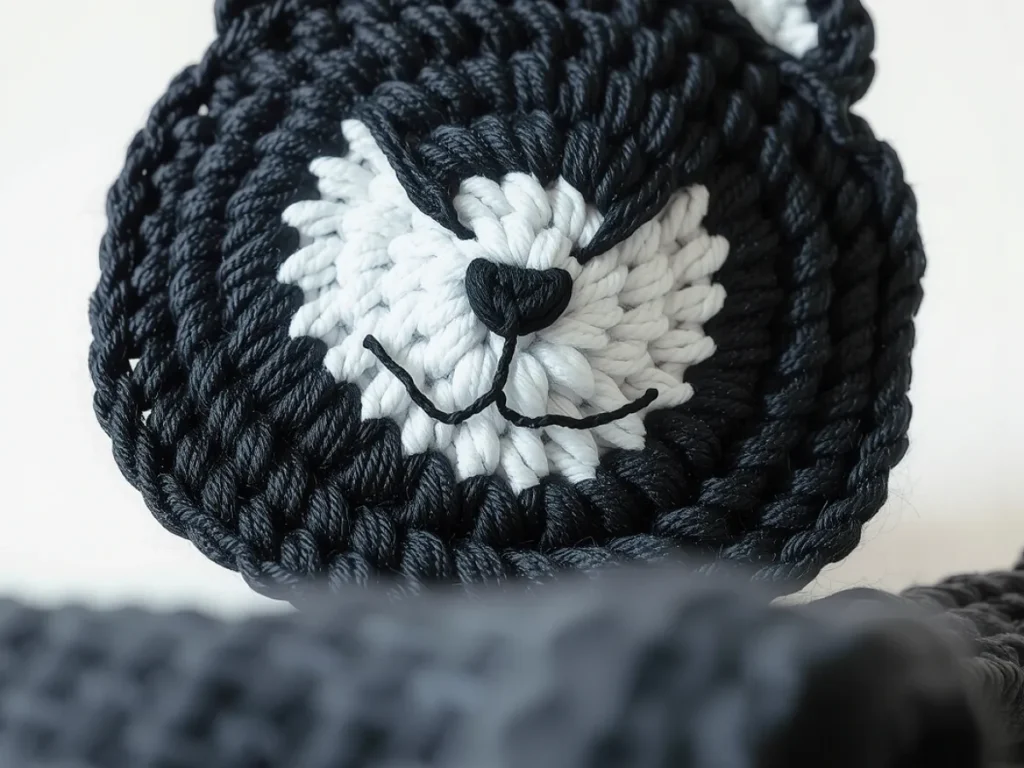
The black cat grid is a good first project because it needs only two colors. You carry the unused yarn behind your work and pick it up when its square comes around. That technique is called colorwork or intarsia, and it looks harder than it is.
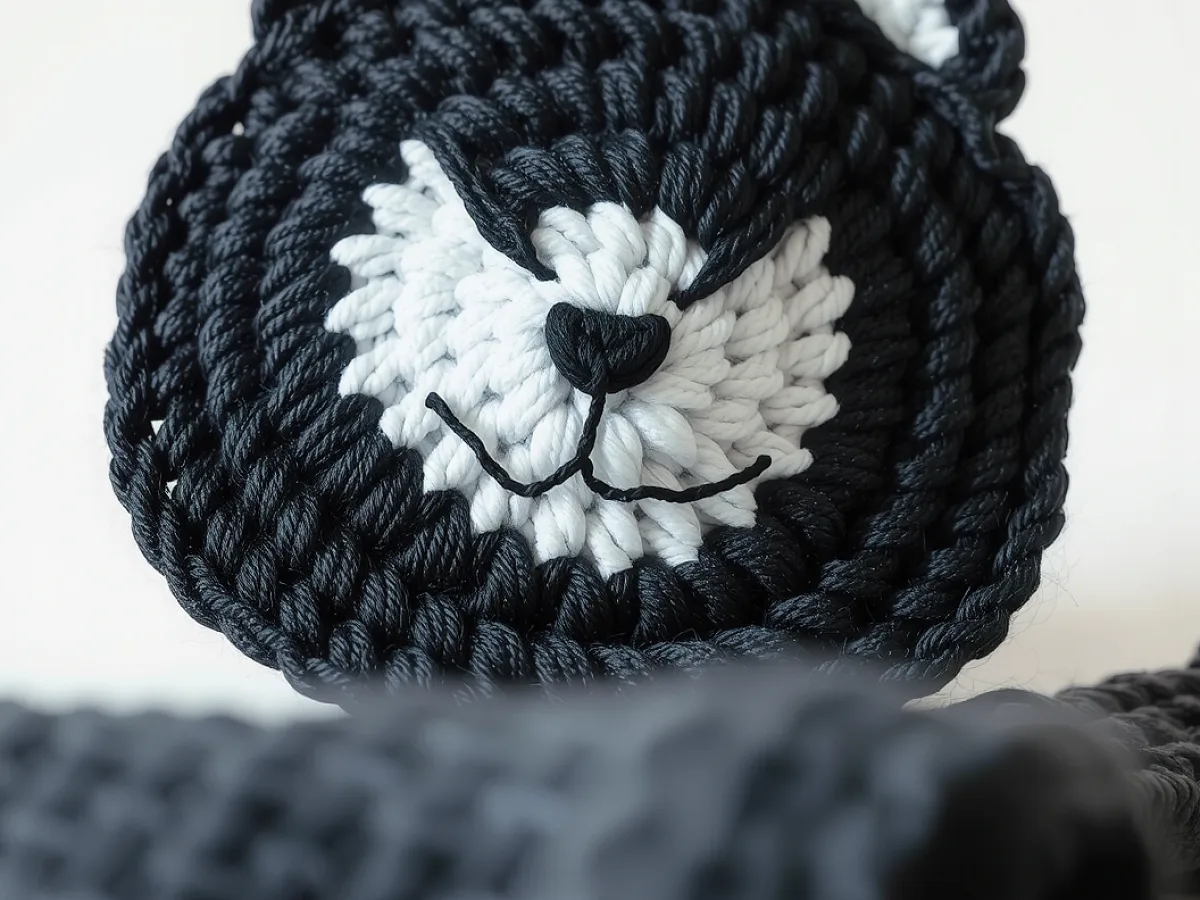
You can design a simple crochet chart by drawing your picture on a grid where each square is one stitch. A black cat chart usually fits in 30 by 30 squares, uses two colors, and works up in about three hours with worsted weight yarn and a 5 mm hook.
What you need
Worsted weight yarn
One skein each of black and a contrast color. About 100 yards total is plenty for a 30 by 30 chart.
5 mm crochet hook
Use 4.5 mm if your gauge runs loose. Check your swatch before starting.
Graph paper
Four squares per inch works best. You can also print a blank grid from any spreadsheet program.
Tapestry needle
A blunt needle with a large eye. It should pass through a single crochet stitch without splitting the yarn.
Stitch markers
Five or six markers to mark every tenth row on the chart and in your work.
What makes a crochet chart easy to read
Good charts share three things: big squares, two colors, and a clear repeat. If your grid is 10 squares per inch on paper, the symbols blur together. Draw at 4 squares per inch instead, or print the grid at 200 percent.
Mark every tenth row and every tenth column with a heavier line. You will count less and rip out less. Most mistakes in colorwork come from losing your place, not from the stitch itself.
Photocopy your chart and cross off each row with a pencil as you finish it. That single habit fixes most counting errors.
Choosing yarn, hook and gauge
Worsted weight yarn, the common number 4 weight, pairs well with a 5 mm hook for this kind of chart. That combination gives you roughly 4 single crochet stitches per inch, so a 30 square chart becomes a square about 7.5 inches across.
Gauge matters here more than in most projects. If your stitches are wider than 4 per inch, the cat will look stretched sideways. Crochet a 10 by 10 swatch first, measure it, and change hook size if you are off by more than one stitch.
- Worsted weight yarn in black and one contrast color
- 5 mm hook, or 4.5 mm if your stitches run loose
- Tapestry needle for weaving ends
- Stitch markers to mark every tenth row
If you only have sport weight yarn, drop to a 3.5 mm hook and expect a smaller finished piece, about 5.5 inches wide.
How to turn a picture into a grid
Start with a photo of a cat, or a simple line drawing. Reduce it to two colors first, black and white, so you can see the shape clearly. Then lay a grid of 30 by 30 squares over it.
Each square becomes one stitch. If a square is more black than white, make it a black stitch. If it is more white, leave it. Do not try to copy every whisker. A cat reads as a cat from the ears, the eyes and the tail.
Draw the outline first, then fill the inside. Outlines are what the eye recognizes.
Reading the chart row by row
Work from the bottom right corner if you are right-handed. Row 1 is the bottom row of the chart, and you read it right to left. Row 2 goes left to right. This back and forth is normal for single crochet.
When the chart says black, you work with black. When the next square is white, you drop black and pick up white behind the work. Do not cut the yarn unless the color stops for more than about five stitches.
Keep the unused strand loose. Pulling it tight makes the fabric pucker and the cat look squashed.
Where beginners go wrong
The most common mistake is twisting the carried yarn. If you turn your work and the unused color is in front, it will show through on the next row. Keep it behind the hook at all times.
The second mistake is counting the turning chain as a stitch. In single crochet, chain one to turn, then work into the first stitch. If you skip that first stitch, every row gets one stitch narrower and the cat slowly leans to one side.
Count your stitches at the end of every row for the first ten rows. After that, you will feel when something is off.
Finishing and blocking
Weave in the ends with a tapestry needle, going back and forth through the stitches three or four times so they never work loose. Then block the piece by pinning it flat and misting it with water.
Let it dry for a few hours. Blocking evens out the stitches and makes the cat shape sit straight. Without it, the edges curl and the picture looks crooked.
Pin the piece to a towel, not directly to a wood table. Wood can stain from the moisture.
Step
Draw the grid
Mark a 30 by 30 square grid on graph paper. Draw the cat outline first, then fill the inside with black squares. Leave the background empty.
Swatch and measure
Crochet a 10 by 10 single crochet swatch. Measure it. If it is not about 2.5 inches square, change your hook size and swatch again.
Chain the base
Chain 31. Single crochet into the second chain from the hook and across, giving you 30 stitches. Count them before moving on.
Work the chart
Follow the chart from the bottom right. Change colors by dropping one strand and picking up the other behind the work. Keep the unused strand loose.
Check your width
After every ten rows, count your stitches. You should still have 30. If you have 29, you skipped a stitch at the start of a row.
Finish and block
Fasten off, weave in all ends, and pin the piece flat. Mist with water and let it dry for about three hours.
Ways to change it
Smaller cat
Use a 20 by 20 grid for a coaster or mug rug. It works up in about an hour.
Bigger cat
Use a 60 by 60 grid with bulky yarn and a 6.5 mm hook for a cushion cover.
Three colors
Add a third color for the eyes or a collar. Keep the extra color to small areas so you carry it less.
Different animal
The same grid works for a fox, a rabbit or a bird. Only the outline changes.
Washcloth version
Use cotton yarn and a 4 mm hook. Cotton shows the picture more crisply than acrylic.
The short version
- One square on the grid equals one single crochet stitch.
- A 30 by 30 chart at 4 stitches per inch makes a piece about 7.5 inches square.
- Keep the unused yarn behind the work or it will show on the front.
- Count your stitches every ten rows to catch skipped stitches early.
- Blocking flattens the piece and stops the edges from curling.
Questions people ask
Can I crochet a picture without a chart?
You can, but the result usually looks uneven. A chart tells you exactly when to change color, so the shape stays sharp. For anything with a clear outline, like a cat, draw the grid first.
How do I keep the back of the work neat?
Carry the unused color loosely behind the stitches. If a color stops for more than five stitches, cut it and join again later. That avoids long floats that catch on things.
What yarn is best for a crochet chart?
Worsted weight acrylic or cotton both work. Cotton shows the picture more crisply because it has less fuzz. Acrylic is cheaper and softer for a blanket.
Why is my cat leaning to one side?
You are probably skipping the first stitch of each row. In single crochet, chain one to turn, then work into the very first stitch. Count your stitches to confirm.
Draw your grid, pick two colors, and start the first row tonight.
Graph paper, two colors of worsted weight yarn and a 5 mm hook are all you need to turn a black cat picture into a crochet chart. Draw the outline, work row by row from the bottom right, and keep the unused strand behind the hook. In about three hours you will have a piece about 7.5 inches square that actually looks like a cat.