Crochet Chart Archive Design Inspiration: How to Read Old Charts and Reuse Them
Read any archived crochet chart symbol by symbol, then redraw it as your own design.
A crochet chart is a drawing of stitches, not a set of written rows, and that is exactly why an old archive chart still works when the words around it are gone.
Chart archives hold thousands of motifs with no written pattern attached. The symbols carry the whole design.
This guide shows you how to read those symbols, how to check your gauge before you commit, and how to turn one archived motif into something new.
Chart archives are useful because the symbols do not change. A single crochet is still a cross, a chain is still an oval, and a round is still read from the center out. Once you can follow the symbols, you can pull a motif from an old chart and rebuild it in any yarn you like.
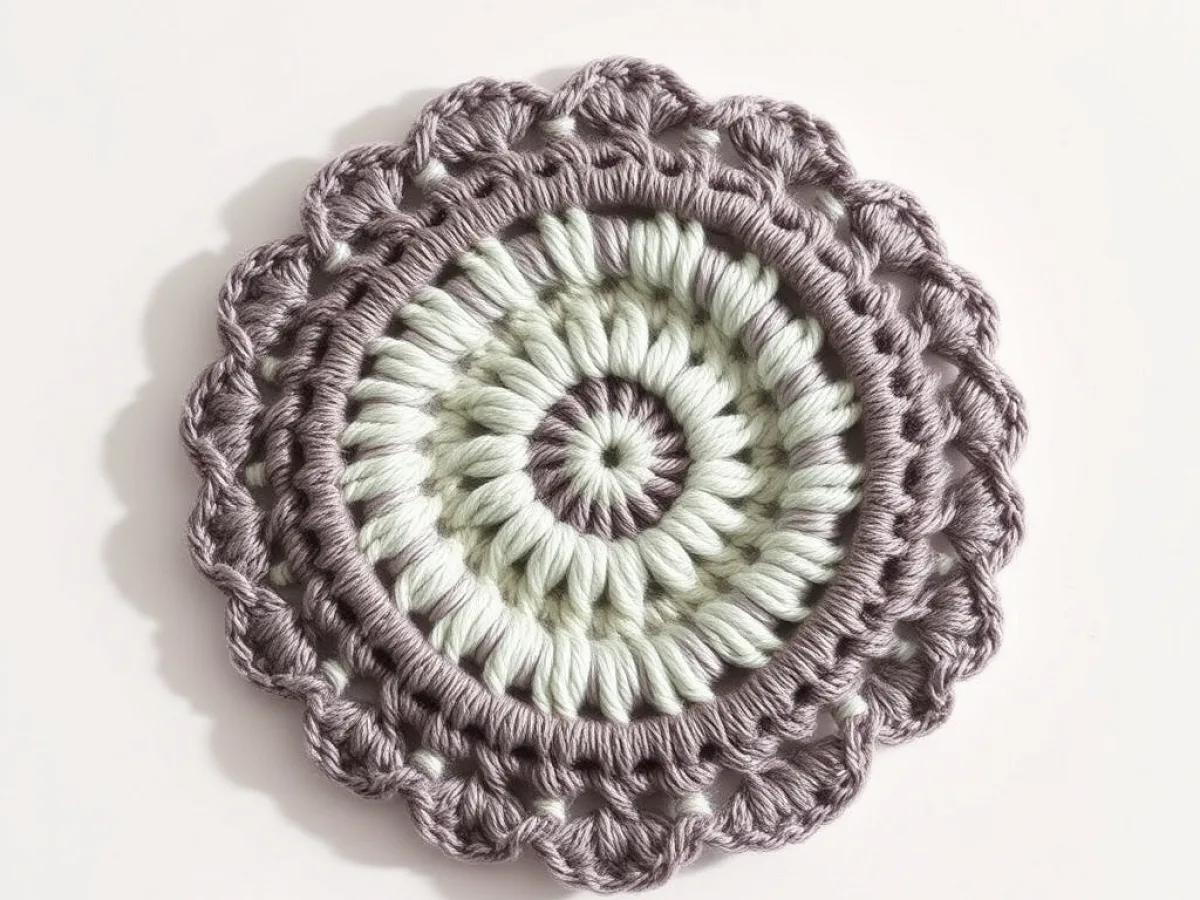
Chart symbols you will meet
Chain (oval)
One oval is one chain stitch. A string of ovals is a starting chain or a chain space.
Slip stitch (dot)
Used to join rounds and to travel across a row without adding height.
Single crochet (cross or plus)
The shortest common stitch. Short symbol, short stitch.
Half double crochet (T with one bar)
Slightly taller than single crochet. Common in textured rounds.
Double crochet (T with two bars)
The workhorse stitch of most archived motifs. Tall symbol, tall stitch.
Treble crochet (T with three bars)
Used for open, lacy rounds and for long petals.
Cluster or bobble
Several tall stitches joined at the top. Read the group as one stitch.
Picot
A small chain loop closed with a slip stitch. Common on borders and edgings.
What you need
Yarn
Cotton or cotton blend in DK or worsted weight for flat motifs. Acrylic is fine for practice swatches.
Crochet hook
4 mm for DK, 5 mm for worsted. Have one size up and one size down for gauge adjustments.
Stitch markers
At least four. You need one for the first stitch of each round and one for the join.
Printed chart
Print at full size so the symbols are readable. A phone screen is too small for round-by-round work.
Notebook or binder
For recording yarn, hook, gauge and finished size on every chart you work.
What a crochet chart actually tells you
A chart is a map of where each stitch goes. The bottom edge is your starting chain or ring, and you work upward or outward from there.
Each symbol is one stitch. A small cross or plus is a single crochet. A tall T with one bar is a double crochet. An oval is a chain. A dot is a slip stitch.
The shape of the symbol matches the height of the stitch. Taller symbols mean taller stitches, which is why a chart looks like a small skyline.
If a symbol is unfamiliar, count how many yarn overs it shows. That number tells you the stitch height before you look it up.
Reading a chart in the round
Most archive motifs are worked in the round from a center ring. You read counterclockwise if you are right-handed, clockwise if you are left-handed.
Round one sits closest to the center. Each new round sits outside the last one, so the chart grows outward like tree rings.
The starting chain of each round is drawn at the beginning of that round. It counts as your first stitch unless the chart shows a separate turning chain.
- Center ring: usually 4 to 6 chains joined with a slip stitch
- Round one: often 6 to 12 stitches, depending on the motif
- Join: a slip stitch into the top of the first stitch of the round
- Turning chain: 1 chain for single crochet, 2 for half double, 3 for double
Mark the first stitch of every round with a stitch marker. Off-by-one errors in the round are the most common chart mistake.
Gauge, yarn weight and hook size
Gauge matters when the finished size matters. For a coaster, a blanket square or a garment, the chart gives you the stitch pattern, not the size.
Work a swatch of at least 10 cm (4 in) in the main stitch. Count your stitches and rows, then compare with the size you want.
If your swatch is too small, go up one hook size. If it is too big, go down one. Yarn weight changes the look more than the hook does.
- Aran or worsted weight with a 5 mm hook: firm coaster fabric
- DK weight with a 4 mm hook: tighter, more defined motif
- Cotton holds a flat round better than acrylic, which can curl
- Acrylic is cheaper and easier to find for practice swatches
Write your swatch numbers on the chart itself. Six months later you will not remember which hook you used.
Common chart mistakes and how to spot them
The most common mistake is reading the chart in the wrong direction. If your motif is spiralling instead of sitting flat, check your reading direction first.
The second mistake is skipping the joining slip stitch. Without it, each round drifts one stitch sideways and the whole motif leans.
The third is misreading a cluster. A cluster drawn as three tall stitches joined at the top is one stitch group, not three separate stitches.
- Motif curls upward: too few stitches in the round, or hook too small
- Motif ruffles: too many stitches in the round, or hook too large
- Hole in the center: center ring too loose, or too few chains
- Edges look stepped: turning chain counted as a stitch when it should not be
Lay the work flat after every round. A motif that will not sit flat on round three will not sit flat at round ten.
Turning an archived motif into your own design
Pick one motif you like and change one thing at a time. Change the yarn colour first. Then change the yarn weight. Then change the border.
A single motif can become a coaster at 10 cm across, a blanket square at 15 cm, or a bag panel at 30 cm. The chart stays the same; only your yarn and hook change.
If you want a bigger square, repeat the last two rounds before the border. That adds about 2 cm per repeat in worsted weight.
Photograph each version as you go. The archive chart plus your own photos becomes your working notebook.
Building your own chart archive
Keep charts you have actually worked, not every chart you like. A folder of 20 tried charts is worth more than 200 untried ones.
Label each one with yarn weight, hook size, finished size and any changes you made. That note is the part you cannot get back later.
Sort by shape: rounds, squares, triangles, borders, and edgings. Shape is how you search when you need something specific.
- Use a ring binder with plastic sleeves so you can mark charts with a dry-erase pen
- Scan or photograph each finished piece next to its chart
- Note the date you made it, not the date you found the chart
Keep a separate page for symbols you had to look up. That page becomes your personal key.
Step
Pick one chart and print it
Choose a single motif, not a whole collection. Print it large enough that the symbols are clear. If the print is fuzzy, redraw it on graph paper.
Swatch the main stitch
Work a 10 cm square in the main stitch of the chart. Count stitches and rows. If the count is off, change hook size before starting the motif.
Work the center ring
Chain 4 to 6 and join with a slip stitch. Check that the ring lies flat and the hole is small enough to close later.
Work round by round
Read counterclockwise, mark the first stitch of each round, and join with a slip stitch at the end of each round. Lay the work flat after every round.
Finish and block
Fasten off, weave in the ends, then pin the motif flat and damp-block it. Cotton holds the shape better after blocking than acrylic does.
Ways to change it
Coaster
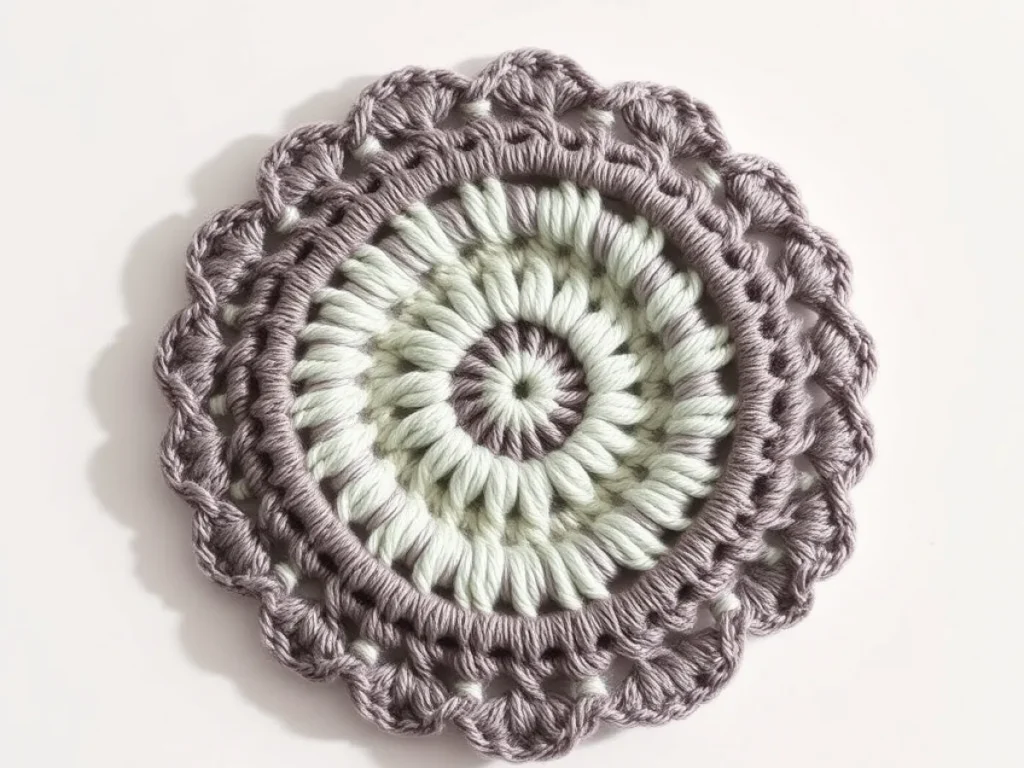
One motif in worsted cotton with a 5 mm hook. About 10 cm across.
Blanket square
Add two extra rounds before the border. About 15 cm across in worsted weight.
Bag panel
Work four motifs and join them with slip stitch. About 30 cm across.
Lace version
Swap to size 10 cotton thread and a 1.75 mm hook for a much finer motif.
Two-colour version
Change colour at the start of the last two rounds. Carry the old colour up the back.
Left-handed version
Read clockwise instead of counterclockwise. The symbols themselves do not change.
The short version
- Chart symbols do not change over time, so old archive charts stay readable.
- A chart shows stitch placement, not finished size. Gauge decides size.
- Read rounds from the center outward, marking the first stitch of every round.
- A motif that will not lie flat on round three will not lie flat later.
- One chart can become a coaster, a square or a bag panel just by changing yarn and hook.
- Label every chart you work with yarn, hook, gauge and finished size.
Questions people ask
Do I need to know how to read charts to use an archive?
Yes, at least the basic symbols. Learn chain, slip stitch, single crochet and double crochet first. Those four cover most archived motifs.
What hook size should I use with an old chart?
Start with the hook recommended for your yarn, not the chart. Most old charts do not list a hook size because the yarn is long gone. Swatch and adjust from there.
Why does my motif curl up at the edges?
Usually too few stitches in the round or a hook that is too small. Try going up one hook size before you change the chart.
Can I use acrylic yarn for a charted motif?
You can, but acrylic curls more than cotton and does not block as flat. Cotton or a cotton blend is easier for coasters and squares.
How do I make a charted motif bigger?
Repeat the last two rounds before the border. In worsted weight that adds roughly 2 cm per repeat.
Pick one chart from the archive and work it this week
Start with a single motif and one hook size. Once that motif lies flat, you have the skill to pull any chart out of the archive and make it yours.