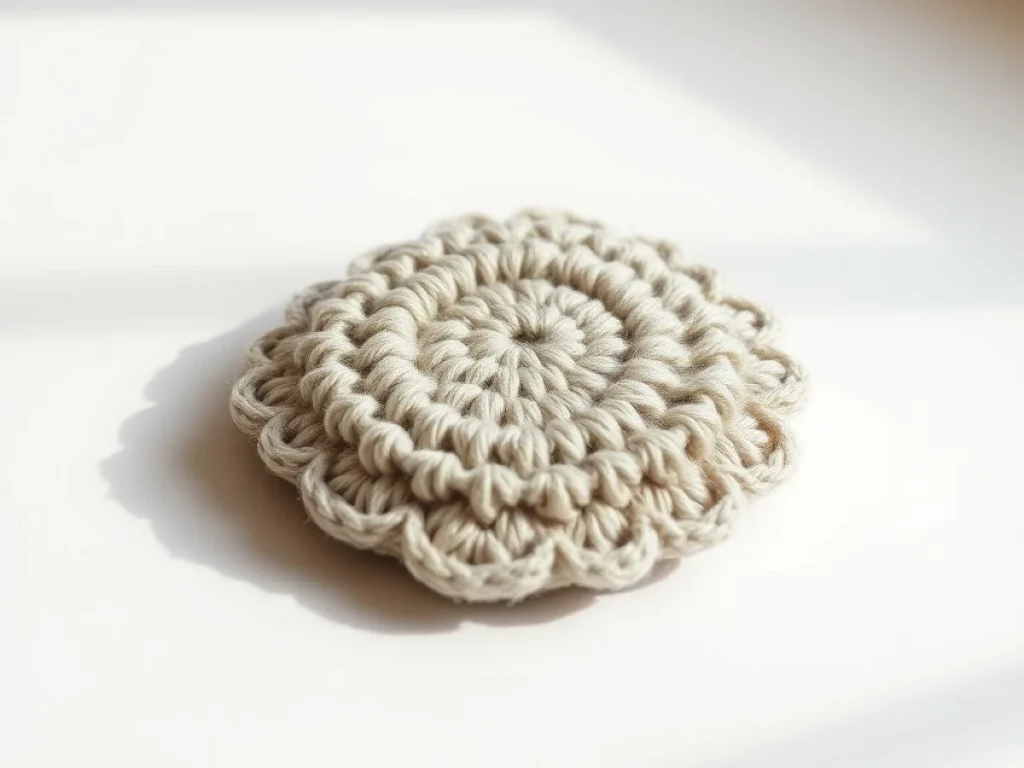
Want to Learn Crochet from Scratch? Start Here
Learn the supplies, the first four stitches and one small finished project you can hold in your hands today.
A crochet hook is just a stick with a notch, and the whole craft grows from one loop on it.
You do not need a class, a kit or a grand plan. You need a hook that feels comfortable in your hand and yarn you can actually see.
This guide walks you through what to buy, the first stitches to learn, the mistakes almost everyone makes, and a small project to finish on day one.
You can learn crochet from scratch with one hook, one ball of yarn and about an hour of practice. Start with a 5 mm hook and worsted weight yarn, learn the chain and single crochet, then make a small square. Everything else builds on those two moves.
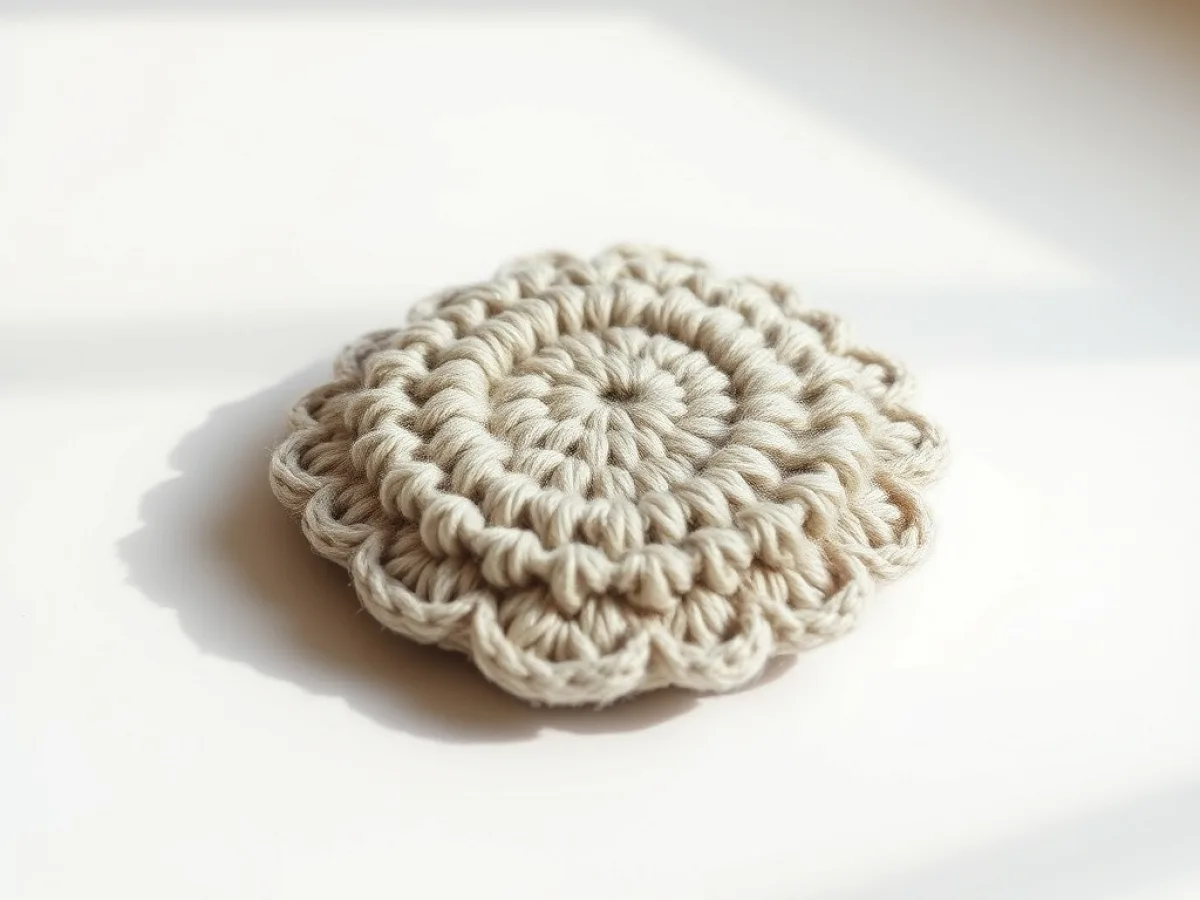
What you need
5 mm (US H-8) crochet hook
An aluminum hook with a grip is enough. A set of three sizes costs less than a single specialty hook.
Worsted weight yarn, light color
One 100 g ball makes several practice squares. Acrylic is cheap and easy to unravel.
Small scissors
Any sharp pair you already own works. Keep them with your project so you do not lose them.
Blunt yarn needle
For weaving in the loose ends. A metal one slides through yarn more easily than plastic.
Stitch marker
A safety pin works fine. Clip it into the first stitch of a row so you can find it again.
What you need before your first stitch
Buy less than you think. One hook and one ball of yarn will teach you more than a box of twenty tools.
Pick a light-colored yarn. Dark yarn hides your stitches, and you will spend more time guessing than crocheting.
- A 5 mm (US H-8) aluminum hook with a soft grip
- One 100 g ball of worsted weight yarn in a light color, acrylic or cotton
- Small scissors and a blunt yarn needle for weaving in ends
- A stitch marker or a safety pin
If the yarn splits while you work, go up one hook size. The label on the yarn ball suggests a hook size, and it is a starting point, not a rule.
How to hold the hook and yarn
Hold the hook like a pencil or like a knife. Both work. Try each for a minute and keep the one that lets your wrist stay relaxed.
Wrap the yarn over your index finger and let it run through your hand. Your tension comes from that finger, not from gripping the hook hard.
If your hand aches after ten minutes, you are squeezing. Loosen your grip and let the yarn slide.
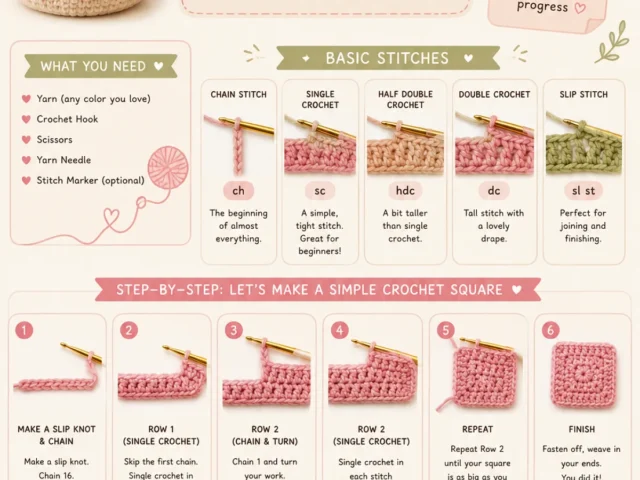
The first four stitches, in order
Every crochet project is these stitches stacked in different patterns. Learn them in this order and you will not get lost.
Work each step until the row looks even before you move on. Ten minutes per stitch is plenty.
Count your stitches at the end of every row. If the count changes, you either added or dropped one.
How to read a pattern without panic
Crochet patterns use short codes. Once you know six of them, most beginner patterns make sense.
The common ones are ch for chain, sl st for slip stitch, sc for single crochet, hdc for half double crochet, dc for double crochet and rep for repeat.
A pattern also tells you the yarn weight, the hook size and the gauge. Gauge means how many stitches fit in 10 cm (4 in). If your gauge is off, your finished piece will be the wrong size.
Read the whole pattern once before you start. It saves you from ripping out a row later.
Mistakes almost every beginner makes
Your first square will curl. That is normal, and blocking with a little water and a pin will flatten it.
Stitches get tighter as you go if your tension creeps up. Stop every few rows and check that the width is still the same.
Dropping the last stitch of a row is the most common error. Count at the end of each row and you will catch it right away.
If a row looks wrong, pull it out. Yarn forgives everything, and ripping back is part of the craft.
Your first project: a 15 cm practice square
This square teaches you turning, counting and finishing. Make three of them and you will be ready for a scarf.
Finished size is about 15 cm (6 in) square in worsted weight yarn with a 5 mm hook. Gauge is not critical here, but aim for 14 single crochet stitches in 10 cm.
Keep the first square. In a month you will see how far your hands have come.
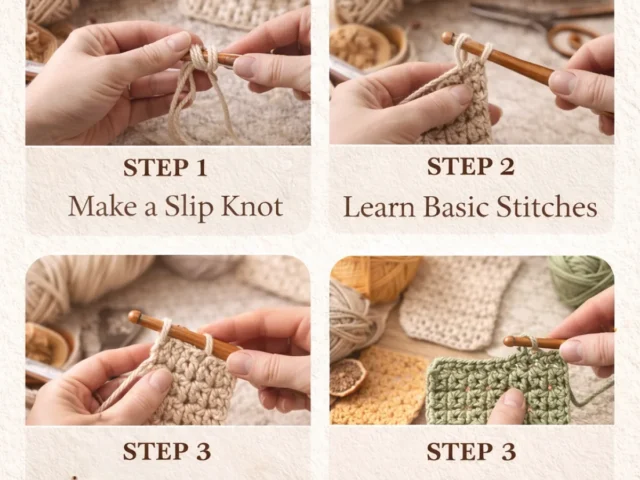
Step
Make a slip knot
Loop the yarn and pull a loop through it. Slide the loop onto the hook and tug the tail. It should slide along the hook but not fall off.
Chain 20
Wrap the yarn over the hook and pull it through the loop. That is one chain. Count as you go and stop at 20.
Single crochet into the second chain
Skip the first chain, push the hook through the next one, yarn over and pull up a loop. Yarn over again and pull through both loops. You now have one single crochet.
Work across the row
Repeat that stitch into each chain until you reach the end. You should have 19 single crochet stitches. Count them before turning.
Chain 1 and turn
Chain one, then flip the work like a page in a book. That chain is your turning chain, not a stitch.
Work 19 more rows
Single crochet into the first stitch, then each stitch across. Keep the count at 19 every row. Stop when the square looks even.
Fasten off and weave in
Cut the yarn, pull the tail through the last loop and tighten. Thread the tail onto the needle and run it through the back of the work.
Ways to change it
Cotton instead of acrylic
Cotton shows stitch definition clearly and makes good dishcloths. It has less stretch, so your hands work a little harder.
A thicker yarn and 6.5 mm hook
Chunky yarn makes big, visible stitches. Good if your eyes or hands need something easier to see.
A scarf instead of a square
Keep working rows until the scarf is as long as you are tall. Same stitch, just more of it.
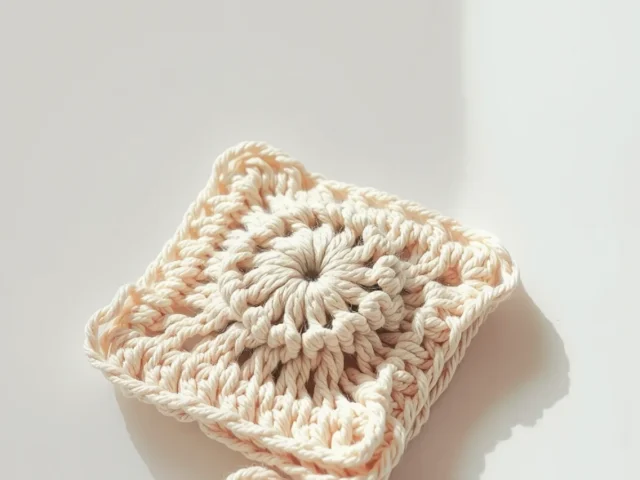
A granny square
Once you know double crochet, this classic square works up fast and uses up yarn scraps.
Left-handed crochet
Mirror every step. Hold the hook in your left hand and the yarn in your right, and work rows from left to right.
The short version
- A 5 mm hook and worsted weight yarn in a light color are enough to start.
- Chain and single crochet are the two stitches that unlock everything else.
- Count your stitches at the end of every row to catch dropped or added stitches.
- Gauge is how many stitches fit in 10 cm and it decides the finished size.
- Curling and uneven tension are normal in the first few squares.
- Weaving in ends with a blunt needle keeps the finished piece tidy.
Questions people ask
How long does it take to learn crochet from scratch?
Most people can chain and single crochet within an hour. A neat, even square usually takes a few practice sessions over a week.
What is the easiest yarn for a total beginner?
Worsted weight acrylic in a light color. It is cheap, it does not split easily, and you can see every stitch.
Why does my crochet curl up?
Curling comes from tight tension and from working only single crochet. Loosen your grip and block the piece flat with water and pins.
Do I need a pattern to start?
No. A practice square needs no pattern at all. Once you can read ch, sc and rep, you can follow simple written patterns.
Can I crochet if I am left-handed?
Yes. Hold the hook in your left hand and mirror each step. The stitches are the same, just worked in the other direction.
Pick up a hook and make your first square today
Grab a 5 mm hook and one ball of light worsted yarn. Chain 20, single crochet back across, and keep going until the square is even. That is crochet from scratch, and you just did it. Happy hooking!