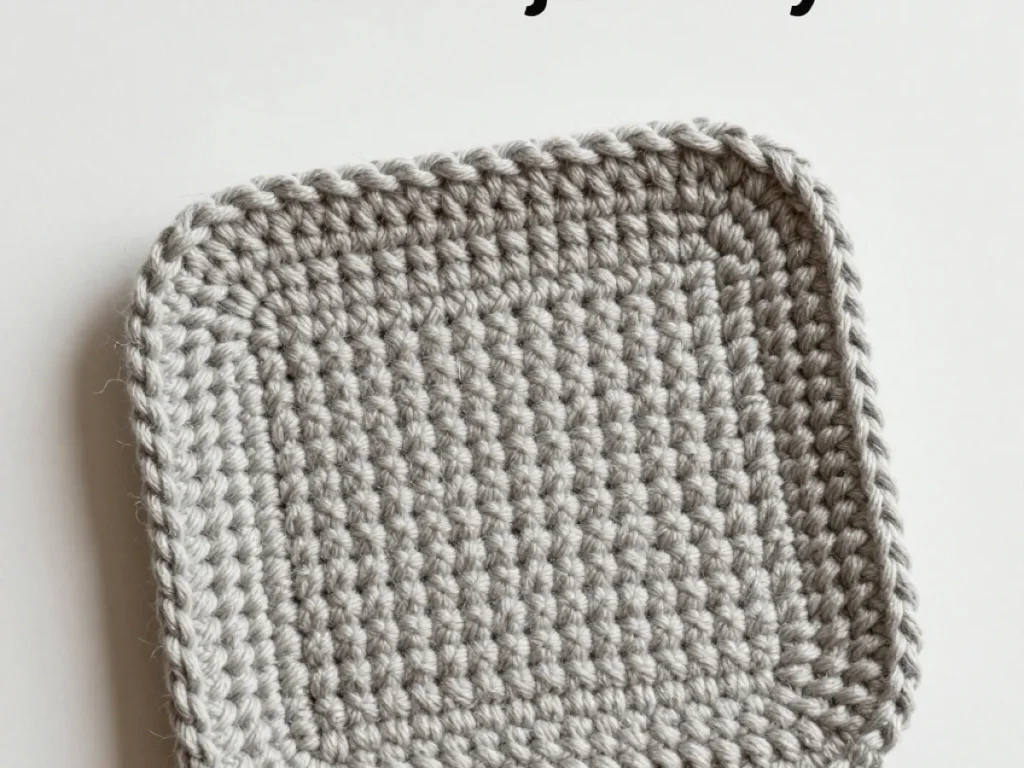
Start Your Crochet Journey: A Beginner's Guide to the Five Basic Stitches
Learn the chain, single, half double, double and treble stitches, and finish your first small swatch today.
A ball of worsted yarn and one 5.5 mm hook are enough to learn every stitch in this guide.
Crochet is one loop pulled through another, over and over. That is the whole craft. The rest is where you put the hook and how many times you wrap the yarn around it.
This guide walks you through the five stitches most beginners meet first. You will also learn what to buy, how to hold the yarn without cramping, and how to read your own work when something looks off.
You start crochet by making a slip knot, working a chain, then building rows of single crochet. Once that feels steady, the half double, double and treble stitches are just small changes to the same motion. Most people get a wobbly first row and a neat third one.
What you need
Worsted weight yarn, size 4
Choose a light color so stitches stay visible. One 100 g ball is plenty for practice and a coaster.
5.5 mm (I-9) hook
Matches worsted yarn. If your stitches feel tight, try a 6 mm hook instead.
Small scissors
Any sharp pair works. Keep them with your project so you do not hunt for them mid-row.
Blunt yarn needle
Needed for weaving in ends. A metal one slides through yarn more easily than plastic.
What you need before your first stitch
Pick a light-colored worsted weight yarn, often labeled size 4 on the band. Light colors show your stitches clearly, and worsted yarn is thick enough to see without straining your eyes. A 5.5 mm hook, labeled I-9 in the US, matches that yarn well.
Cotton is less stretchy and slightly harder on the hands. Acrylic is softer and cheaper, which makes it kinder for practice. Either works. If you already own a hook, check the size printed on the handle before buying another one.
- Worsted weight yarn, size 4, in a light color
- One 5.5 mm (I-9) crochet hook
- Small scissors
- A blunt yarn needle for weaving in ends
If the yarn splits while you work, your hook is too pointy for it. Switch to a hook with a rounder head.
Hold the hook and yarn without gripping hard
Hold the hook like a knife, resting it against your palm, or like a pencil if that feels steadier. Both are correct. There is no rule here, only what lets your wrist stay loose.
The yarn runs from the ball over your index finger and down through your hand. Your index finger sets the tension. If your stitches feel tight and hard to push through, let the yarn slide a little more freely. If they look loose and loopy, hold that finger a bit firmer.
Your first ten minutes will feel clumsy. That is normal and it passes. Stop every few minutes and shake out your hand.
Sore fingers usually mean tension, not weak hands. Loosen the yarn before you loosen your grip.
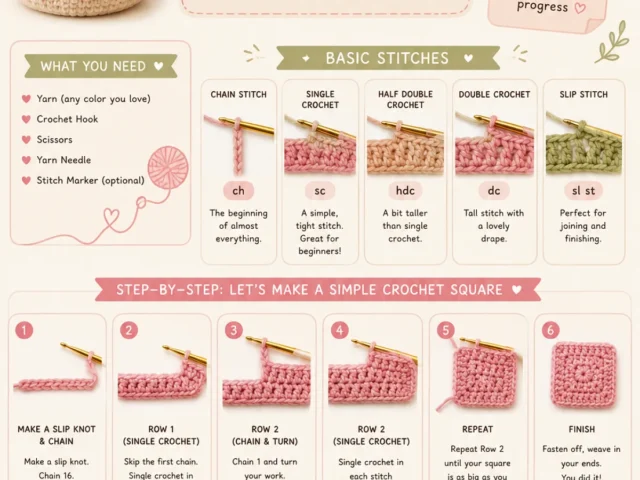
The chain stitch, where every project begins
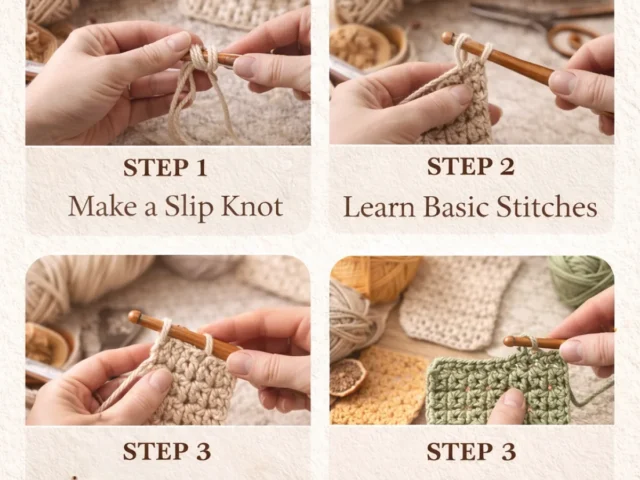
Make a slip knot and slide it onto the hook. Wrap the yarn over the hook from back to front, then pull that loop through the loop on your hook. That is one chain. Repeat it as many times as the pattern asks.
Count the V shapes on the front of the chain, not the loops on top. The loop still on your hook never counts as a stitch. This trips up almost every beginner, and it changes your stitch count for the whole first row.
Keep your chains even. If some are tight and some are loose, your first row will pull in places. Practicing twenty chains is worth the two minutes.
Single crochet: the stitch you will use most
Insert the hook into the second chain from the hook. Wrap the yarn over the hook, pull it through the chain, and you have two loops on the hook. Wrap again and pull through both loops. One single crochet is done.
Work one single crochet into each chain across the row. At the end, chain one and turn your work. That turning chain gives the next row its height.
In the second row, insert the hook under both top loops of each stitch, not just the front one. Working under both loops keeps your fabric even and your edges straight.
If your rows keep shrinking, you are likely skipping the last stitch. Count your stitches at the end of every row until it becomes automatic.
Half double, double and treble crochet
Half double crochet adds one step. Wrap the yarn over the hook before you insert it, then pull up a loop so you have three loops, wrap again and pull through all three at once. It sits a little taller than single crochet.
Double crochet wraps first, pulls up a loop for three loops on the hook, then works off two loops, then the last two. It grows fast, which is why blankets use it.
Treble crochet wraps the yarn over the hook twice before inserting it. You then work off two loops at a time, three times in total. It makes an open, lacy fabric.
The pattern is simple. Each extra wrap before you insert the hook adds one more loop to work off, and one more step of height.
Taller stitches need a taller turning chain. Double crochet usually turns with three chains, treble with four.
How to tell it worked
Lay your swatch flat and look at the top edge. A straight edge means your turning chains and stitch counts are right. A slanted or stair-stepped edge means you are adding or losing a stitch at the end of rows.
Look at the fabric from the side. Even stitches sit in neat columns. If one column leans, you probably worked into the wrong loop on that row.
Gauge matters when you make something that has to fit, like a hat or a sweater. Work a 10 cm square in the stitch your pattern uses, then measure the middle of it. If you have more stitches than the pattern says, go up one hook size. Fewer stitches, go down one.
Joining, finishing and small fixes
When you finish the last stitch, cut the yarn leaving a tail about 15 cm long. Pull the tail through the final loop and tighten it. Thread the tail onto a blunt needle and weave it back and forth through the back of your work, then trim it.
If you find a hole in your fabric, it is usually a missed stitch rather than a mistake in the yarn. Count back along the row to find the gap, then undo to that point and work it again. Crochet pulls out easily, so nothing is ruined.
Joining a new ball of yarn mid-row is fine. Leave both tails long enough to weave in, and work the next few stitches with the new yarn held double for two stitches so the join holds.
Weave ends in two directions, not one. It holds better through washing.
A first project you can finish in an evening
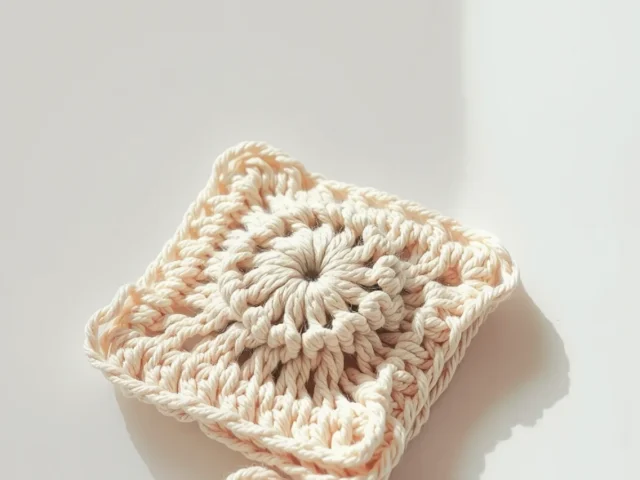
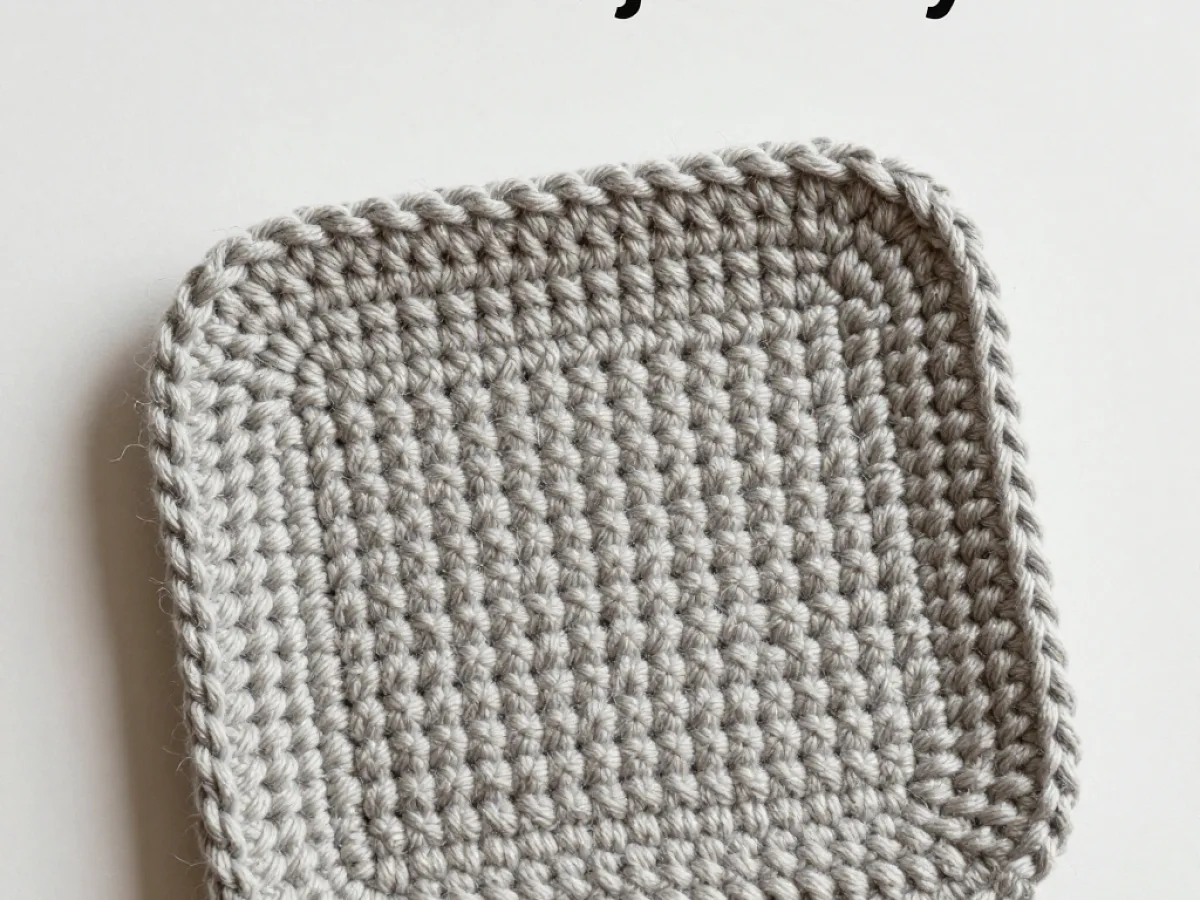
Make a coaster. Chain 15, then work single crochet rows until the piece is square, roughly 10 cm by 10 cm. Fasten off and weave in the ends.
It is small, it uses one stitch, and you will see your own progress from the first row to the last. Keep it even if it looks uneven. Comparing your first square to your third is the fastest way to learn.
Block your coaster by dampening it and pinning it square to dry. Cotton responds well to this and the edges straighten out.
Step
Make a slip knot
Loop the yarn and pull a loop through it, then slide it onto the hook and tighten gently. It should slide along the hook without being loose.
Chain 15
Wrap the yarn over the hook and pull it through the loop on the hook. Count the V shapes on the front. Stop when you have 15.
Work the first single crochet row
Insert the hook into the second chain from the hook, pull up a loop, wrap, and pull through both loops. Repeat across. You should end with 14 stitches.
Turn and work row two
Chain one, turn the work, and work one single crochet into each stitch across. Check that the count stays at 14.
Practice the taller stitches
Work a few rows each of half double, double and treble crochet on a fresh swatch. Compare the height of each row as you go.
Fasten off and weave in
Cut a 15 cm tail, pull it through the last loop, and thread it through the back of the fabric with a blunt needle.
Ways to change it
Thicker yarn and a bigger hook
Bulky yarn with an 8 mm hook shows every stitch clearly. Good if your eyes tire on fine work.
Cotton instead of acrylic
Cotton holds its shape and suits coasters and washcloths. It has less stretch, so your hands work a little harder.
A longer first project
Keep going on the same coaster pattern until it becomes a scarf. Chain 25 instead of 15 and work until it is as long as you like.
Left-handed working
Work in the opposite direction and mirror every instruction. The stitches are identical, only the direction changes.
Scrap yarn practice
Use odds and ends to practice stitches before you commit yarn to a real project. Nothing is wasted.
The short version
- The loop on your hook never counts as a stitch when you count a chain.
- Working under both top loops of a stitch keeps edges straight and fabric even.
- Each extra yarn wrap before inserting the hook adds one step of height.
- Gauge only matters for projects that must fit, like hats and garments.
- A 10 cm single crochet swatch takes most beginners about twenty minutes.
- Crochet unravels easily, so a mistake is never permanent.
Questions people ask
What is the easiest crochet stitch for a total beginner?
Single crochet. It uses one loop pull and one finish, so there is less to remember. Most people can work a full row after about fifteen minutes of practice.
How do I stop my crochet edges from going crooked?
Count your stitches at the end of every row. Crooked edges almost always mean you added or skipped a stitch at the turn. The turning chain is the usual culprit.
What size hook should a beginner use?
A 5.5 mm hook with worsted weight yarn is a good starting pair. If your stitches feel tight and hard to work, move up to 6 mm.
How long does it take to learn to crochet?
The chain and single crochet take about an hour to get comfortable with. The taller stitches come faster once the first one makes sense.
Can I crochet if I am left-handed?
Yes. You work in the mirror direction of right-handed instructions. Many beginners find video helpful here, since you can flip the view.
Pick up your hook and work one row today
Start with fifteen chains and one row of single crochet. That small square teaches you tension, counting and turning, which is most of what crochet asks of you. Everything after that is a variation on the same loop. Stitch with ease.