Ready to Start Crochet: A Beginner's Guide to Yarn, Hooks and First Stitches
Pick your yarn and hook, learn four basic stitches, and finish your first small project this week.
Most beginners quit because their first chain is too tight, not because crochet is hard.
Crochet is one loop pulling through another. That is the whole craft.
You will make mistakes. Everyone does. The trick is to keep your first stitches loose and your practice short.
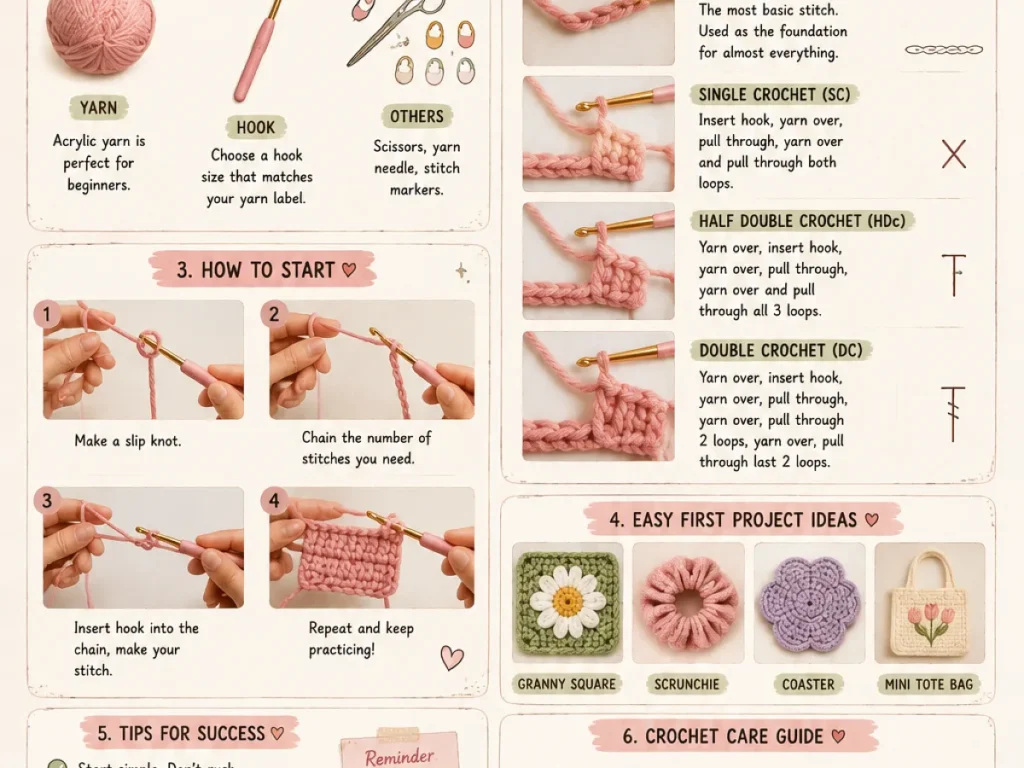
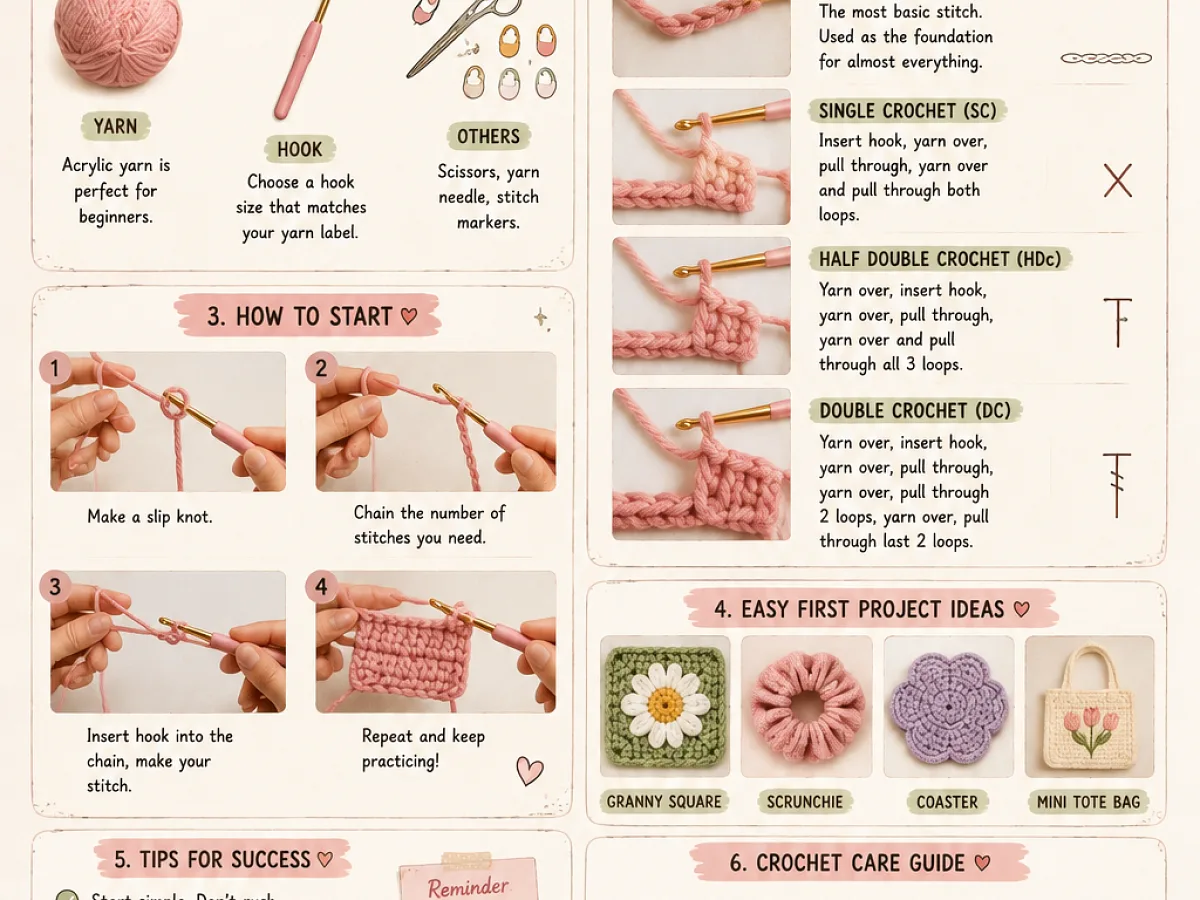
To start crochet, you need one ball of worsted weight yarn, a 5.5 mm hook, and about thirty minutes of practice. Learn the slip knot, chain, single crochet, half double crochet, and double crochet. Then make a small square to get comfortable before trying a full project.
What you need
Worsted weight yarn
One ball in a light color like cream or light blue. Light colors show stitch definition better than dark ones.
5.5 mm crochet hook
Labeled I-9 in the US. A soft grip handle helps if your hands tire quickly.
Small scissors
Nail clippers work fine. You only need to cut yarn tails.
Blunt yarn needle
For weaving in ends. A plastic one costs less than a dollar.
What you actually need before your first stitch
You do not need a full set of hooks or a bag of fancy yarn. Start with one hook and one ball.
Worsted weight yarn is the easiest to see and hold. A 5.5 mm hook, often labeled I-9 in the US, matches it well.
- One ball of worsted weight yarn in a light color so you can see your stitches
- One 5.5 mm crochet hook
- Small scissors or nail clippers
- A blunt yarn needle for weaving in ends
If your hands ache, try a hook with a soft grip. It costs a few dollars more and helps a lot.
How to hold the yarn and hook
Hold the hook like a pencil or like a knife. Either works. Pick the one that feels steady.
Wrap the yarn over your index finger and let it run through your hand. Your thumb and middle finger hold the work just below the hook.
Tension comes from your yarn hand, not your hook hand. If your stitches are tight, loosen your grip on the yarn.
The four stitches you need first
These four stitches cover most beginner patterns. Practice each one until you can make ten in a row without losing count.
Single crochet is the shortest and tightest. Double crochet is the tallest and loosest. Half double crochet sits in between.
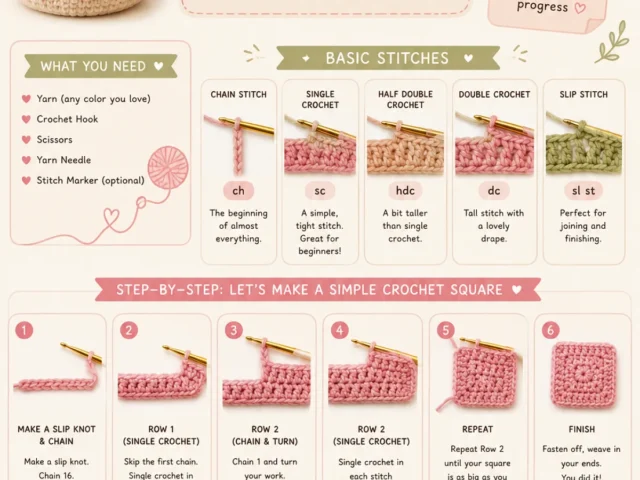
- Chain (ch): yarn over, pull through the loop on your hook
- Single crochet (sc): insert hook, yarn over, pull up a loop, yarn over, pull through both loops
- Half double crochet (hdc): yarn over, insert hook, pull up a loop, yarn over, pull through all three loops
- Double crochet (dc): yarn over, insert hook, pull up a loop, yarn over, pull through two loops, yarn over, pull through two loops
Count your stitches at the end of every row. If you have one more or one less than you started with, you added or skipped a stitch at the edge.
Your first practice square, step by step
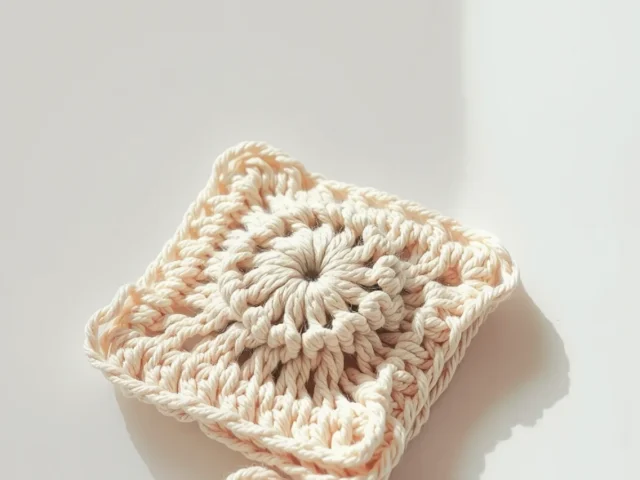
Make a square about 4 inches (10 cm) wide. It will not be perfect. That is fine.
This square teaches you turning chains, stitch height, and how to keep edges straight.
If your square turns into a triangle, you are losing a stitch at the end of each row. Count every row until it becomes habit.
How to tell if your stitches are right
Look at the top of your work. Each stitch should look like a small V. If the Vs are tight and hard to see, your tension is too tight.
If you can slide your hook under the top two loops easily, your tension is about right.
Test your work: pull the square gently in both directions. It should stretch a little and spring back. If it feels stiff as cardboard, go up one hook size.
Easy first projects to try
Pick something small that you can finish in one or two sittings. A finished small thing beats an unfinished big thing.
These projects use only the stitches you just learned.
- A dishcloth: chain 25, single crochet every row until square
- A headband: chain 60, half double crochet in rows until it wraps your head
- A simple scarf: chain 20, double crochet every row until it is as long as you want
- A coaster: chain 12, single crochet in rows until square
Write down your hook size and yarn on a small note. If you like the result, you will want to remember it.
Common mistakes and how to fix them
Adding stitches at the end of a row is the most common beginner error. You are probably working into the turning chain by mistake.
Dropping stitches makes your work narrow. Count your stitches at the end of every row to catch it early.
Twisted foundation chains happen when you turn your chain the wrong way. Keep the bumps facing you as you work the first row.
If you lose your place, pull back one row and start again. Ripping out is part of crochet, not a failure.
Caring for your finished piece
Most worsted weight acrylic yarn can be machine washed warm and dried low. Check the yarn label before you wash anything.
Cotton dishcloths shrink a little in hot water. Wash them warm and lay them flat to dry if you want them to keep their shape.
Weave in your ends with a blunt needle before washing. Loose tails can work their way out in the machine.
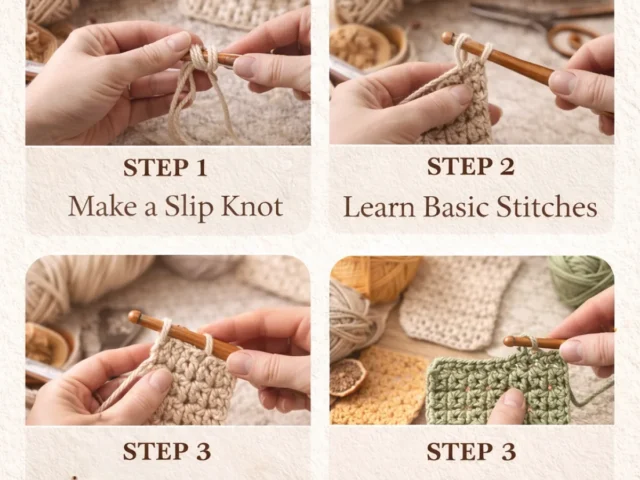
Step
Make a slip knot
Loop the yarn and pull a loop through. Slide it on your hook and tug gently. It should slide, not squeeze.
Chain 15
Yarn over and pull through the loop. Repeat until you have 15 chains. Count them. The loop on your hook does not count.
Single crochet across
Skip the first chain, insert your hook into the next chain, and work one single crochet into each chain. You should have 14 stitches.
Turn and chain 1
Turn your work like a page in a book. Chain 1. This is your turning chain.
Work row 2
Single crochet into the first stitch and each stitch across. Count as you go. You should still have 14 stitches.
Repeat until square
Keep turning and working rows until your piece is about 4 inches tall. Then cut the yarn and pull the tail through the last loop.
Ways to change it
Use cotton instead of acrylic
Cotton makes sturdy dishcloths and coasters. It has less stretch, so your hands may tire faster at first.
Go up a hook size
A 6.0 mm hook makes looser stitches that are easier to see. Good if your first square felt tight.
Try a bulky yarn
Bulky yarn and an 8.0 mm hook make a fast, thick scarf. Fewer stitches means faster progress.
Make a larger project
Once your square is even, keep going to make a scarf or a small blanket. Same stitches, more rows.
The short version
- One ball of worsted yarn and a 5.5 mm hook are enough to start.
- The slip knot, chain, single crochet, half double crochet, and double crochet cover most beginner patterns.
- Count your stitches at the end of every row to catch added or dropped stitches early.
- A 4 inch practice square teaches tension, turning chains, and straight edges.
- If your work feels stiff, go up one hook size before changing anything else.
- Weave in ends with a blunt needle before washing your finished piece.
Questions people ask
What is the easiest yarn for a total beginner?
Worsted weight acrylic in a light color is the easiest to see and work with. It does not split as much as some cotton yarns and it is cheap enough to practice with.
How long does it take to learn basic crochet stitches?
Most people can make a chain and a row of single crochet in about thirty minutes. Getting even tension takes a few practice squares, usually a couple of evenings.
Why does my crochet keep getting wider?
You are likely adding a stitch at the end of each row, often by working into the turning chain. Count your stitches after every row and skip that extra stitch.
Can I crochet with just one hook size?
Yes, for your first projects. A 5.5 mm hook works with worsted weight yarn for dishcloths, scarves, and practice squares. Add more sizes later when a pattern calls for them.
What does gauge mean and do I need to worry about it?
Gauge is how many stitches and rows fit in a certain measurement, usually 4 inches. For a scarf or dishcloth, it does not matter much. For hats or sweaters, it changes the fit, so make a small swatch first.
Pick up your hook and make one chain
Your first square will not look like the pictures. Make it anyway. Then make another one. That is how your hands learn.