Double Crochet Stitch Tutorial for Beginners
Learn the double crochet stitch step by step, from the first yarn over to a smooth, even row.
The double crochet is the stitch that makes fabric grow fast, but most beginners pull the loops too tight and end up with a stiff, curling piece.
You will use double crochet in countless patterns, from blankets to sweaters. It is one of the first stitches you learn after the chain and single crochet.
The key is to let the stitch breathe. If your tension is too tight, the fabric will curl and feel rigid. Aim for a relaxed grip and let the hook do the work.
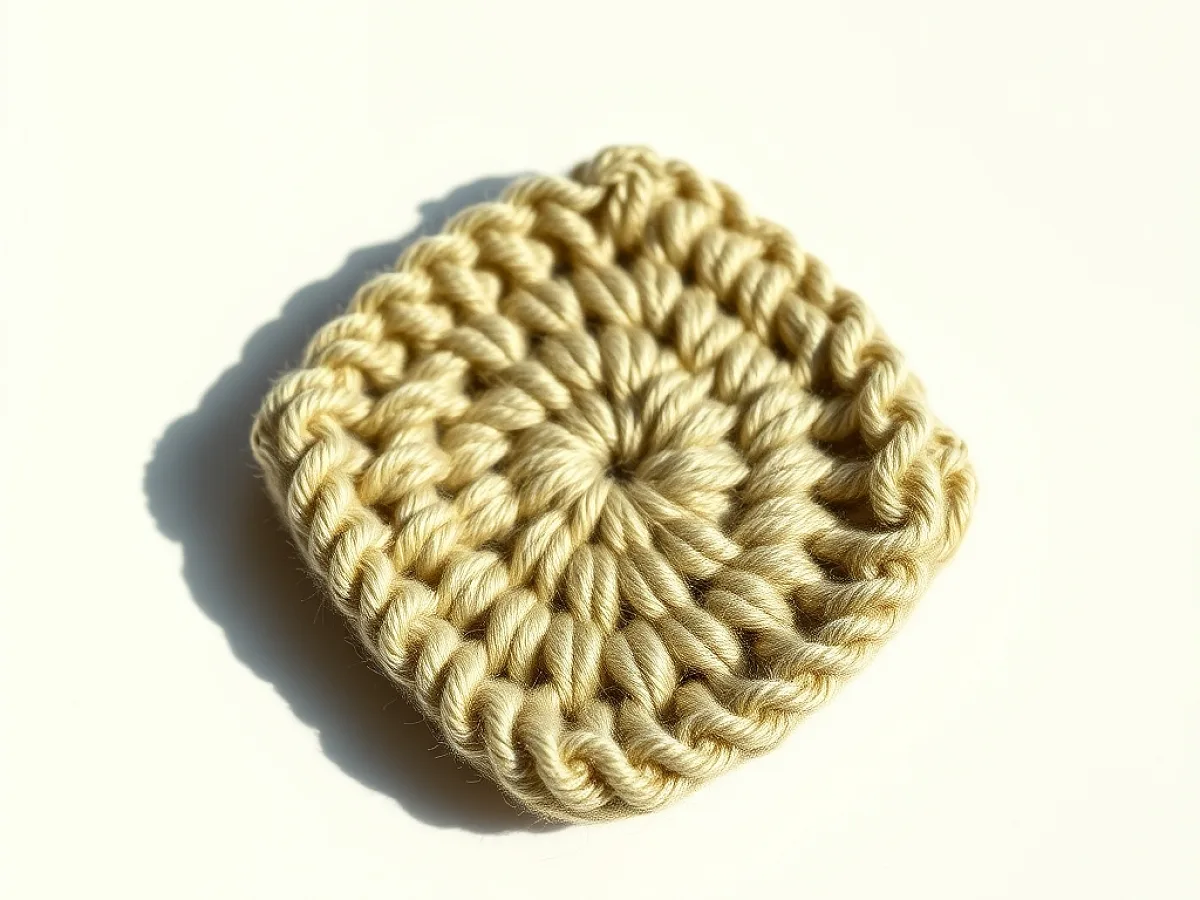
Double crochet is a tall stitch made by yarning over, inserting the hook, pulling up a loop, yarning over and pulling through two loops twice. It creates a fabric that is about twice as tall as single crochet and works up quickly.
What you need
Yarn
Worsted weight yarn in a light color is easiest for practice. You will need about 20 yards for a small swatch.
Crochet hook
Use a 5.5 mm (I-9) hook for worsted weight yarn. If your yarn is thicker, use a larger hook.
Scissors
Any sharp scissors will work for cutting yarn.
Yarn needle
A blunt-tipped needle is best for weaving in ends.
What You Need for Double Crochet
For practice, choose a smooth, light-colored worsted weight yarn and a 5.5 mm (I-9) hook. The smooth yarn lets you see each stitch clearly, and the light color makes it easier to count rows.
If you only have bulky yarn, use a 6.5 mm hook. The stitch will look chunkier, but the technique is the same. Just keep your tension even.
Avoid dark or fuzzy yarn when learning. You will thank yourself later.
How to Make a Foundation Chain
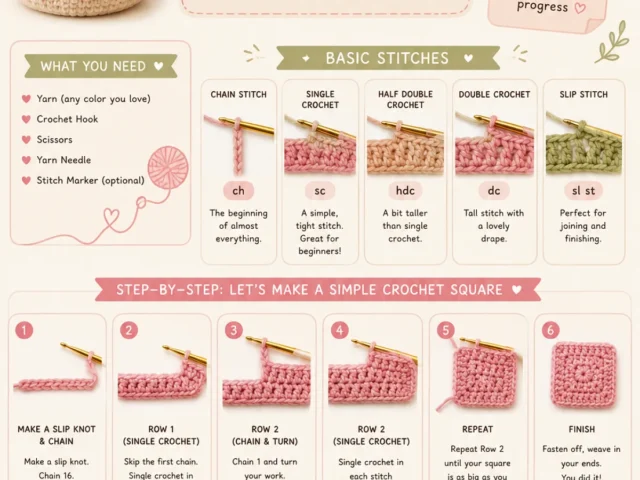
Start with a slip knot and make a foundation chain. For practice, chain 14 stitches.
Remember that the loop on the hook never counts as a stitch. When you count your chain, you count the V shapes below the hook, not the loop on the hook.
Make your chain loosely. If it is too tight, your first row will be hard to work into.
Working the First Double Crochet
Yarn over, then insert your hook into the fourth chain from the hook. That skipped chain counts as your first double crochet of the row.
Yarn over and pull up a loop. You will have three loops on your hook. Yarn over and pull through two loops. You will have two loops left. Yarn over and pull through the last two loops. That is one double crochet.
Work one double crochet into each chain across. When you finish, you should have 12 double crochet stitches, counting the starting chain as one.
If you lose count, look for the V shapes at the top of each stitch. Each V is one stitch.
Turning and Starting the Next Row
When you reach the end of the row, chain 3. This chain is your turning chain and counts as the first double crochet of the next row.
Turn your work so the back is facing you. Skip the first stitch (the one directly below the turning chain) and work a double crochet into the next stitch.
Work one double crochet into each stitch across. When you reach the last stitch, work a double crochet into the top of the turning chain from the previous row.
Place a stitch marker in the first stitch of each row. It will help you see where to put the last stitch of the next row.
Common Mistakes and How to Fix Them
If your edges are slanting or your stitch count changes, you are probably missing the first or last stitch. Count your stitches at the end of each row.
If your fabric curls, your tension is too tight. Try using a larger hook or loosening your grip.
If your fabric has holes, you might be skipping stitches. Check that you are inserting the hook under both loops of the V at the top of the stitch.
When you finish a row, count your stitches. It takes ten seconds and saves you from ripping out rows later.
How to Finish Off and Weave in Ends
When your piece is the length you want, cut the yarn leaving a 6-inch tail. Yarn over and pull through the loop on your hook. Pull the tail tight to secure the last stitch.
Thread the tail onto a yarn needle and weave it through the backs of several stitches. Trim the excess yarn.
Weave the tail in a zigzag pattern so it stays hidden and secure.
Step
Make a slip knot and chain 14
Start with a slip knot on your hook. Chain 14 stitches, keeping them loose.
Yarn over and insert hook
Yarn over, then insert your hook into the fourth chain from the hook.
Pull up a loop
Yarn over and pull through the chain. You will have three loops on your hook.
Complete the stitch
Yarn over and pull through two loops. Yarn over and pull through the remaining two loops.
Work across the row
Work one double crochet into each chain across. Count your stitches at the end.
Chain 3 and turn
Chain 3, turn your work, and work a double crochet into the second stitch of the row.
Ways to change it
Use a larger hook
Going up a hook size makes a drapey, loose fabric. Good for scarves and shawls.
Use a smaller hook
A smaller hook gives a denser, warmer fabric. Good for coasters or winter hats.
Try bulky yarn
Bulky yarn and a 6.5 mm hook work up fast. Good for a quick blanket.
Work in the back loop only
Insert your hook only under the back loop of each stitch. This creates a ribbed texture.
The short version
- Double crochet is a tall stitch that works up quickly.
- The turning chain of 3 counts as the first stitch of the row.
- Always work into the top of the turning chain at the end of a row.
- Counting stitches at the end of each row prevents slanting edges.
- Loose tension prevents curling and stiffness.
- A light-colored, smooth yarn makes it easier to see your stitches.
Questions people ask
Why does my double crochet fabric curl?
Curling usually means your tension is too tight. Try using a larger hook or loosening your grip on the yarn.
How do I count double crochet rows?
Count the rows of V shapes on the front of your work. Each V is one row of double crochet.
What does 'dc' mean in a pattern?
In crochet patterns, 'dc' stands for double crochet.
Can I use double crochet for a scarf?
Yes, double crochet makes a soft, stretchy fabric that is great for scarves. Just make it as long as you like.
Ready to practice your double crochet?
Now you have the double crochet stitch down. Grab your yarn and hook, chain a few stitches, and work a small square. The more you practice, the smoother and more even your stitches will become. Stitch with ease.