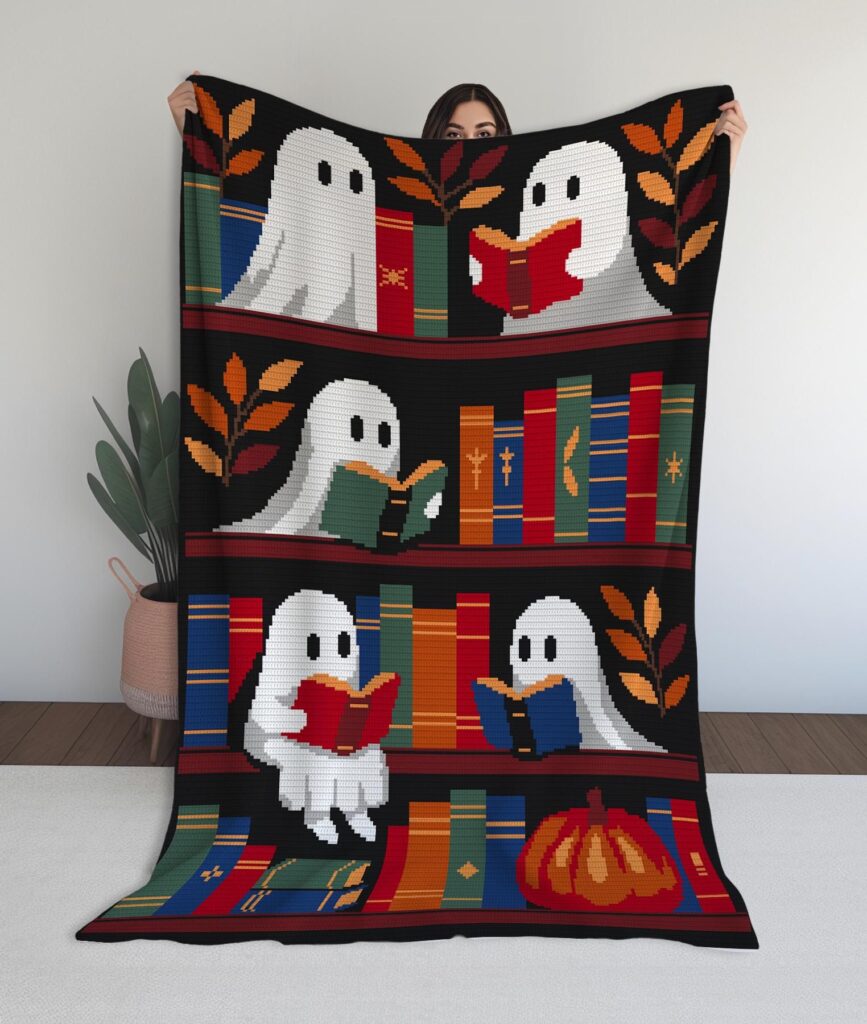
Imagine a blanket that looks like your favorite bookshelf, with little ghostly books floating between the stitches. It's whimsical, cozy, and surprisingly doable. This guide gives you concrete tips to make your own, from choosing yarn to reading the chart, so you can stitch a story you'll want to snuggle under.
- Choose a smooth worsted-weight yarn in a light base color to make the ghost design pop.
- Always make a gauge swatch to avoid sizing surprises.
- Practice colorwork on a small swatch first to master tension.
- Use bobbins for large color blocks to prevent tangles.
- Block your finished blanket to even out stitches and shape the design.
- Customize colors and size easily to make the pattern your own.
Why a Ghost Bookshelf Blanket?
This pattern is a favorite because it combines two beloved things: books and spooky charm. The design usually features a row of books with a few ghostly figures peeking between them, all worked in simple crochet stitches. It's a great project for intermediate crocheters who want to try colorwork without committing to a huge tapestry. The result is a blanket that sparks conversation—perfect for a reading nook or a Halloween-themed living room that you won't want to pack away after October.
Choosing the Right Yarn and Hook
Yarn choice matters more than you think. For a blanket that holds its shape and shows off the colorwork, go with a worsted-weight acrylic or cotton blend. Acrylic is affordable, machine-washable, and comes in endless colors. A smooth, light-colored base (like cream or pale gray) makes the ghostly white stitches pop, while dark book spines in deep purples, greens, and blues add contrast. Use a hook size that matches your yarn label—typically 5.0 mm (H-8) for worsted—but check your gauge. If your stitches are too tight, the blanket will curl; too loose, and it'll stretch out of shape.
Reading the Colorwork Chart
Most ghost bookshelf patterns use a grid chart where each square equals one stitch. You'll work in single crochet or half double crochet, carrying the unused yarn along the back. Before you start, trace the chart with your finger to see where the color changes happen. Mark the row numbers and highlight the sections where you'll switch colors. This prevents mid-row surprises. If you're new to colorwork, practice a small swatch first—like a single book—to get comfortable with carrying yarn and keeping your tension even.
Managing Yarn Tension and Tangles
Carrying two or more yarn colors across a row can get messy fast. The trick is to keep the non-working yarn loose enough to lie flat, but not so loose that it creates loops on the front. One method is to 'weave as you go': every few stitches, lay the carried yarn over the working yarn before you yarn over, so it gets caught in the back. For small sections, like a ghost's body, you can use separate bobbins or small balls to avoid long floats. Always untwist your yarn balls before you start—it saves you a headache later.
Blocking and Finishing for a Professional Look
Once you finish the last row, don't skip blocking. Wet block your blanket by soaking it in lukewarm water with a bit of wool wash, then gently squeeze out excess water (never wring). Lay it flat on a towel, shape it to the correct dimensions, and pin the edges if needed. Let it dry completely. Blocking evens out stitches, relaxes the yarn, and makes the book and ghost shapes look crisp. Weave in all ends with a tapestry needle, and consider adding a simple border—a few rounds of single crochet in your base color frames the design nicely.
Customizing Size and Colors
The pattern is easy to adapt. To make a baby blanket, use a lighter weight yarn and a smaller hook, or just repeat fewer book motifs. For a throw, add extra rows of books or a wider border. Color is where you can get creative: try a rainbow of books for a cheerful look, or stick to black and white for a classic ghostly vibe. You can also swap the ghost for a cat or a moon if you want a different theme—just adjust the chart accordingly.
How to Do It, Step by Step
- 1Gather your materials
You'll need worsted-weight yarn in your base color and several contrasting colors for the books, plus a hook that matches your yarn (usually 5.0 mm), scissors, and a tapestry needle. Read your pattern's materials list to be sure. - 2Make a gauge swatch
Crochet a 4×4 inch square in your base color using the stitch the pattern calls for. Measure how many stitches per inch. If it doesn't match the pattern, adjust your hook size—this ensures your blanket comes out the right size. - 3Start with a foundation chain
Chain the number of stitches your pattern specifies, then work the first row in single crochet (or the stitch indicated). This sets the width. Count your stitches carefully—mistakes are easier to fix at the start. - 4Follow the chart row by row
Read the chart from bottom to top, working each row left to right (or as directed). Change colors exactly where the chart shows. Carry the unused yarn loosely behind your work, catching it every few stitches to keep it tidy. - 5Weave in ends as you go
When you finish a color section, don't wait until the end. Use a tapestry needle to weave in the ends immediately, following the path of the stitches. This saves you a tedious finishing session later. - 6Finish with a border
After the last row, work a round of single crochet around the entire edge, placing 3 stitches in each corner. This neatens the edges and gives the blanket a finished look. You can add more rounds for a wider border. - 7Block and dry
Soak the blanket in lukewarm water, gently squeeze, and lay flat to dry on a towel. Shape it to the desired dimensions and let it dry completely. This is the secret to a professional-looking finish.
Frequently Asked Questions
What skill level is needed for a ghost bookshelf blanket?
It's best for intermediate crocheters, but confident beginners can try it. You need to know basic stitches and be willing to learn colorwork.
Can I use this pattern to make a smaller project like a pillow?
Yes, you can adapt the pattern to any size by adjusting the number of stitches and rows. Just keep the chart proportions in mind.
What is the best yarn for this blanket?
A worsted-weight acrylic or cotton blend is ideal because it's affordable, washable, and holds stitch definition well.
How do I prevent yarn tangles when working with multiple colors?
Keep each color in its own small ball or bobbin, and turn your work in the same direction each row. Also, periodically untwist your yarn.
Do I have to block the blanket?
Blocking is highly recommended—it smooths out the stitches and makes the design look crisp. It's a simple step that makes a big difference.