Tension Control Crochet: How to Fix Tight, Loose, and Uneven Stitches
Work out whether your tension runs tight, loose, or uneven, then fix that one habit for good.
A gauge swatch that measures three and a half inches instead of four is not a mystery.
Tension gets treated like something you are born with. It is not. It is the amount of pull you put on the yarn between your fingers, and pull is something you can change on purpose.
Guessing at a fix wastes a whole evening. Diagnose first, then correct. That order matters more than any single trick.
Tension is how hard you pull the yarn while you work, and it is a habit, not a talent. First find out which problem you have: too tight, too loose, or uneven row to row. Then change one thing at a time until your swatch measures what the pattern says.
What you need
Worsted weight yarn, light color
One 3.5 ounce ball is plenty. Light colors let you see individual stitches, which dark yarn hides.
Hooks in 4.0 mm, 4.5 mm, and 5.0 mm
These three sizes cover most adjustments. If you only buy one, buy the size your pattern lists.
A ruler or gauge measure
A clear plastic ruler works. You need to measure across the middle two inches of a swatch.
Stitch markers
Any kind works, including a scrap of contrasting yarn tied in a loop.
A notebook or note app
Write down which hook gave you gauge. Next project, you start there.
What tension control actually means
Every stitch is a loop pulled through another loop. How snug you pull that loop decides how big the stitch ends up. Pull hard and the stitch shrinks. Pull soft and it spreads.
That is the whole idea. Your hook size matters too, but two people with the same hook and the same yarn can still make two different sized squares. The difference is in the hands, not the tool.
Tension also changes as you relax. Most people start a project tight and loosen up by row five. That is why a swatch from row one tells you almost nothing.
Work at least four rows before you measure anything. The first rows lie.
Find out which tension problem you have
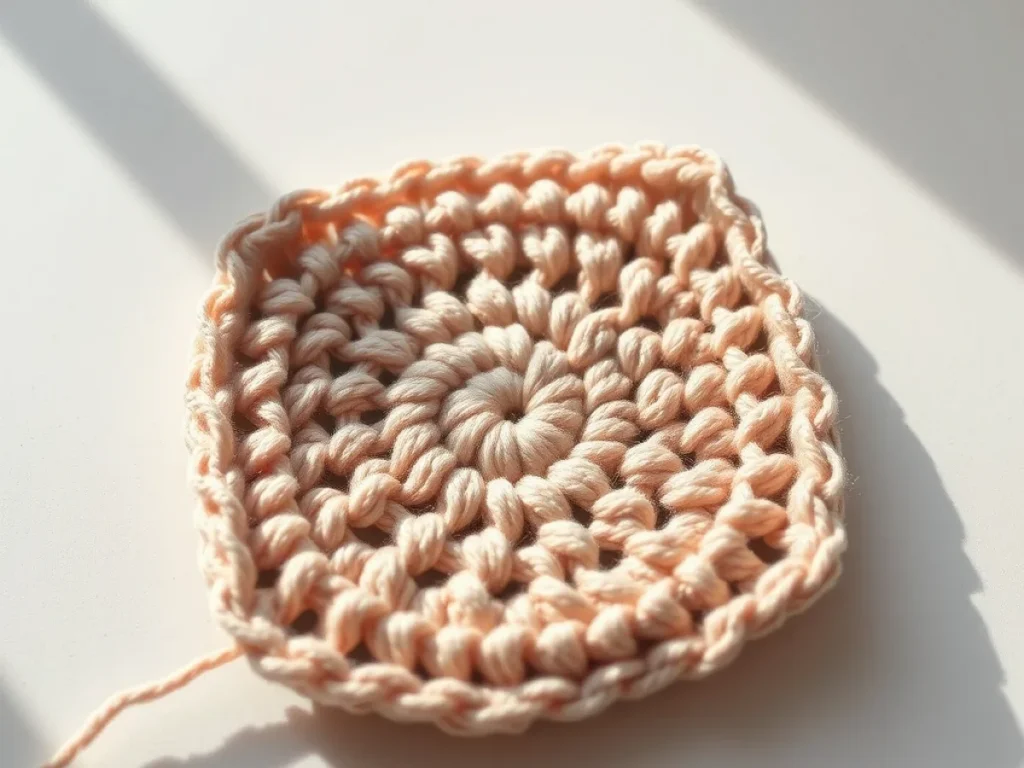
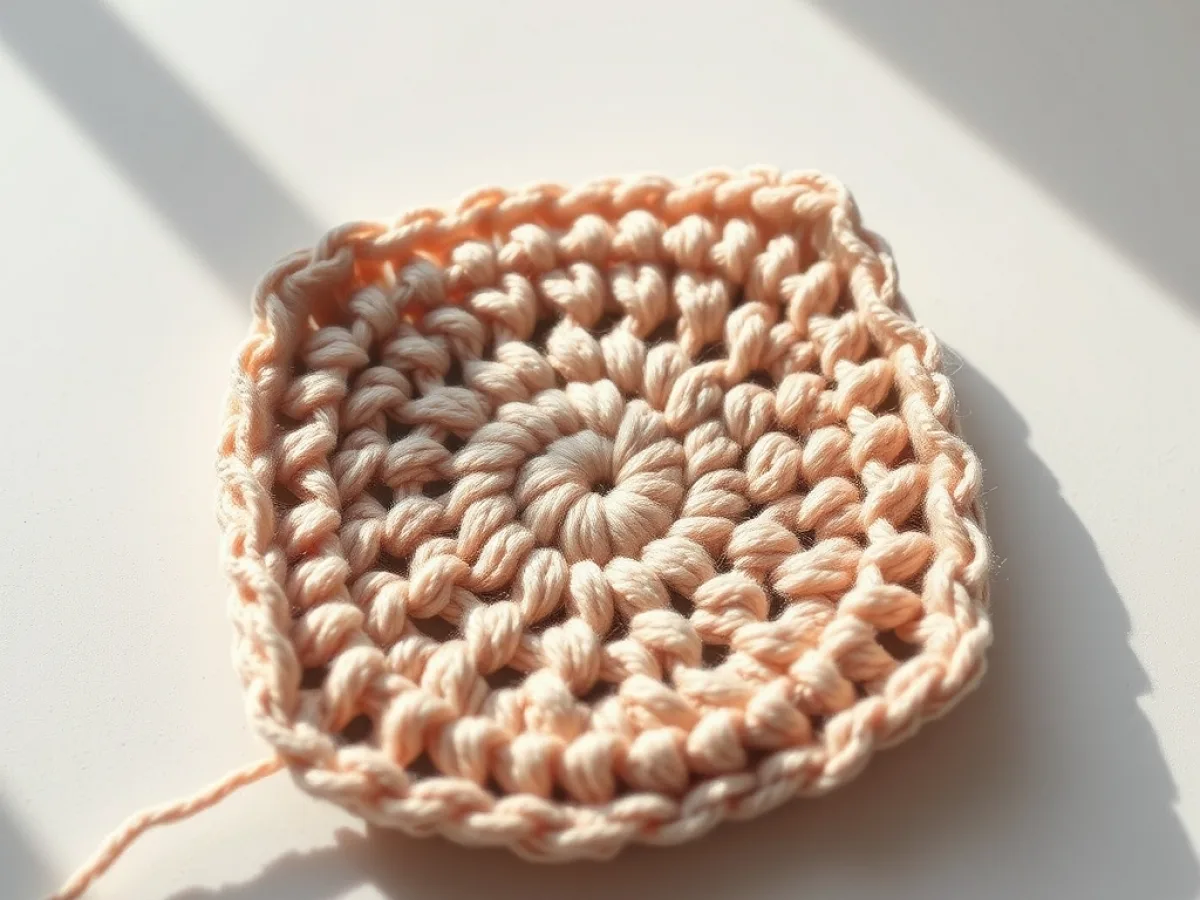
Make one practice swatch before you touch your real project. Use the yarn and hook the pattern calls for. Chain 20, then work 12 rows of single crochet.
Now measure the middle of the swatch, not the edges. Edges curl and turn, and they always measure wrong.
- Too tight: the swatch measures smaller than the pattern gauge, the fabric feels stiff, and your hook squeaks or fights you
- Too loose: the swatch measures bigger, the fabric looks holey, and you can see gaps between stitches
- Uneven: the swatch measures close to right, but rows wobble in and out and the sides look like a staircase
Write the number down. Three and a half inches across 20 stitches means something, and you will want it later.
Fixing tension that is too tight
Tight tension usually comes from gripping the yarn like it might escape. The fix is not to try harder. It is to hold the yarn with less squeeze and let the hook do the pulling.
Go up one hook size first. If the pattern says a 4.0 mm hook, try a 4.5 mm. That single change fixes most tight crocheters without any other adjustment.
Then check where the yarn runs. If it wraps around your pinky twice, unwrap it once. One wrap gives you control. Two gives you a tourniquet.
If your hand aches after ten minutes, that is tight tension talking, not weak hands.
Fixing tension that is too loose
Loose tension shows up as a floppy, see-through fabric. The stitches slide around and the whole thing looks bigger than the picture.
Drop one hook size. A 5.0 mm hook becomes a 4.5 mm. That tightens the loops without changing how you hold anything.
If that is not enough, add a wrap. Loop the yarn once more around your little finger so it feeds with a little drag. You want the yarn to slide, not fly.
Some yarns are just slippery. Cotton holds tension well. Acrylic and silk blends slide, and they need a firmer hand or a smaller hook.
Hold the working yarn against the hook shaft for a second before you pull through. That tiny pause evens out loose loops.
Fixing tension that changes row to row
Uneven tension is the most common problem and the least talked about. Your gauge can be perfect and your fabric still looks bumpy.
The usual cause is the turning chain. If you chain two one row and three the next, the edges will never line up. Count the chain every single time until it becomes automatic.
The second cause is speed. When you rush, your pull gets harder. Slow down for one row and feel the difference in your own hands.
The third cause is counting. Skipping the last stitch of a row makes the next row narrower, and then you add a stitch to catch up. That is the staircase edge.
Mark the first and last stitch of every row with a stitch marker. It costs two seconds and saves whole projects.
What you need to practice this
You do not need much, and none of it is expensive. A single ball of light-colored worsted weight yarn will do for weeks of practice.
Step
Make a practice swatch
Chain 20 with your pattern's hook and yarn. Work 12 rows of single crochet. Do not measure yet.
Measure the middle
Lay the swatch flat. Measure across 10 stitches in the center of row six. Write the number down. If it matches the pattern gauge, stop here.
Change one thing
If it measured small, go up one hook size and make a new swatch. If it measured big, go down one size. Change nothing else yet.
Re-measure and compare
Measure the new swatch the same way, in the same spot. You should see a change of roughly a quarter inch per hook size.
Adjust your hold
If hook size alone does not get you there, add or remove one wrap of yarn around your finger. Then swatch once more.
Check the edges
Look at the sides of your swatch. Straight sides mean your stitch count held. Staircase sides mean you dropped or added stitches, not that your tension is wrong.
Ways to change it
Cotton instead of acrylic
Cotton has less stretch, so tension stays steadier. Good if your tension wanders.
A bigger hook for the same yarn
Gives a drapier fabric. Useful for shawls and blankets where stiffness is the enemy.
A smaller hook for the same yarn
Gives a firmer fabric. Useful for amigurumi and bags that need to hold shape.
Chunky yarn practice
Thick yarn shows tension problems fast because every stitch is bigger. Good for learning to feel the pull.
Left-handed working
The same diagnosis applies. Mirror the hold and measure the same way.
The short version
- Tension is how hard you pull the yarn, and it changes with practice.
- Diagnose tight, loose, or uneven before you try any fix.
- One hook size up or down changes gauge by roughly a quarter inch.
- Uneven rows usually come from the turning chain or a missed last stitch.
- Measure the middle of a swatch, never the curling edges.
- The first four rows of any project are not a fair sample.
Questions people ask
Why is my crochet tension different from the pattern?
Because the pattern was written by a person with different hands. Gauge is a target, not a rule. Change your hook size until your swatch matches, then work the pattern as written.
Does hook size or yarn hold matter more?
Hook size is the bigger lever. Change that first, because it is measurable. Adjust your yarn hold only after the hook change gets you close.
Why does my tension change in the middle of a project?
Usually fatigue or rushing. Your grip tightens as your hand tires. Take a five minute break every half hour and your rows will even out.
Should I make a swatch for every project?
For anything that has to fit, yes. For scarves and dishcloths, no. A quarter inch of difference does not matter on a scarf.
Can I fix tension on a finished piece?
Blocking helps a little, especially with natural fibers. It will not fix a piece that is two sizes off. That one gets frogged.
Make one swatch today and find out which tension problem is yours
You do not have to crochet forever to get even stitches. You have to measure once, change one thing, and measure again. Do that and your next project will fit the way the pattern promised. Happy hooking!