Crochet Gauge Tips: Aesthetic Ideas That Keep Your Stitch Count Honest
Learn how to check your gauge in ten minutes, read a hook chart, and still make pretty swatches worth keeping.
A gauge swatch that comes out one stitch too wide over 10 cm can turn a 96 cm cardigan into a 104 cm one.
Most people skip the swatch because it feels like homework. Then the sweater is too big and the yarn is already cut.
Here is the short version. Gauge is just a number, and you can change that number with a hook. This guide shows you how, plus how to make the swatch pretty enough to keep.
Gauge is how many stitches and rows you get in a set measurement, usually 10 cm. Crochet a swatch bigger than that, wash and dry it the way you will wash the finished piece, then measure the middle. If your count is off, change your hook, not your tension.
What you need
Yarn in the pattern's weight
Use the same yarn you plan to use for the project. A substitute with a different fibre will block differently.
Two or three hook sizes
Start with the hook on the yarn label, then go one size up and one size down. Metal, wood or bamboo all work, but stay consistent.
Tape measure or ruler
A soft tape is easier on fabric. A rigid ruler with a 10 cm mark is faster for counting.
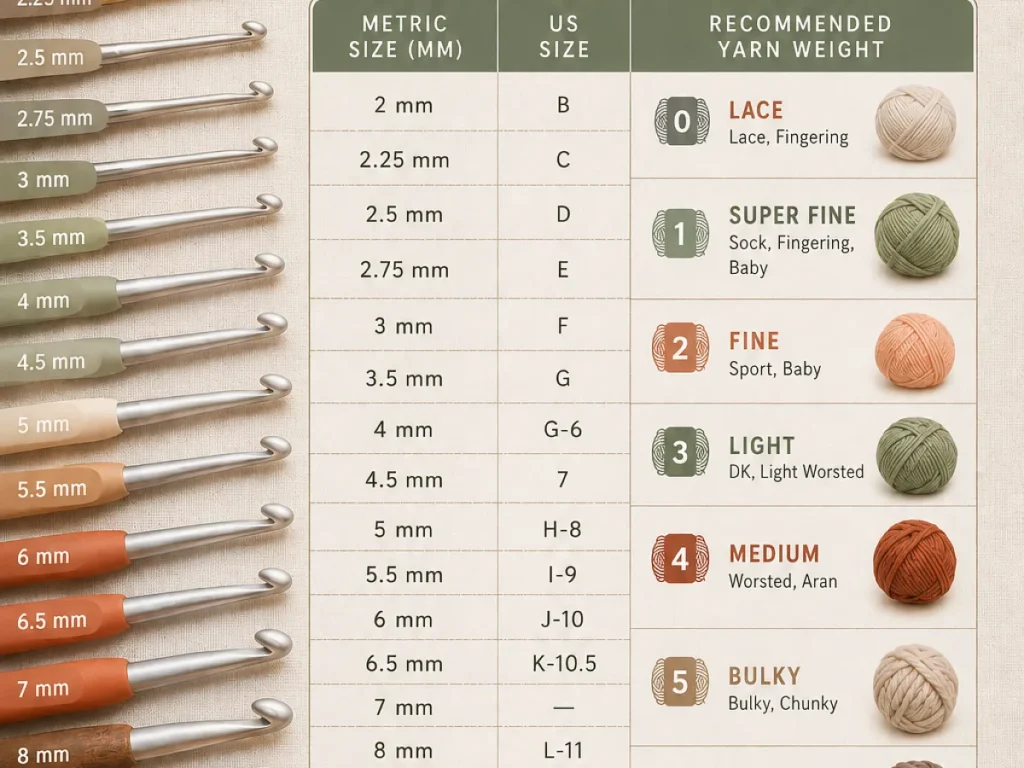
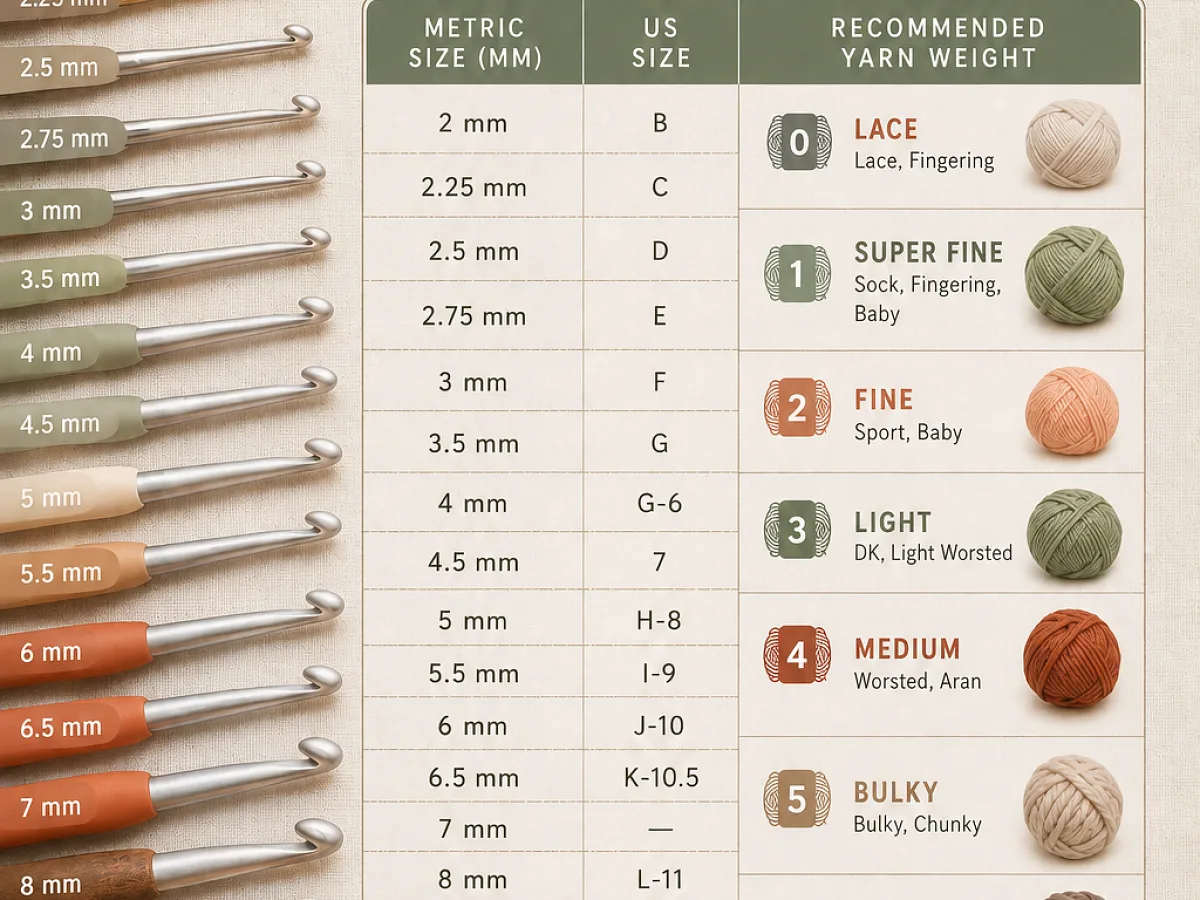
Printed hook size chart
One page showing mm, US and UK sizes side by side. Keep it in your bag.
Rustproof pins and a spray bottle
For blocking. Any flat surface works, including a towel on the floor.
What gauge actually measures
Gauge has two numbers: stitches across and rows up, both inside a set measurement. A yarn label might say 12 stitches and 15 rows in 10 cm with a 5 mm hook.
Stitches matter more than rows for anything that has to fit around a body. Rows matter for length. If your stitch count matches but your rows run short, your sleeves will end above the wrist.
The measurement is almost always 10 cm. Some patterns use 4 inches, which is the same thing. Check the pattern before you start.
Write your numbers on a scrap of paper and pin it to the swatch. You will forget by next week.
Why gauge changes from hand to hand
Two people can hold the same hook and yarn and get different fabric. One pulls the yarn tight, one lets it sit loose. Neither is wrong.
Hook size is your main control. Going up one hook size adds roughly one stitch per 10 cm for most worsted weight yarn. That is a rough guide, not a rule.
Yarn weight matters too. A bulky yarn at 9 stitches in 10 cm behaves nothing like a fine yarn at 22. Always match the weight the pattern calls for first.
What you will need
Gather these before you start. Nothing here is expensive.
How to crochet and measure a swatch
Follow these in order. Each step tells you how to know it worked.
Do not measure the first or last stitch of a row. They lean and they lie.
Reading a hook size chart without guessing
Hook sizes come in millimetres, and that number is the only one that travels. A US G hook is 4 mm. A UK 7 hook is 4.5 mm. Same words, different sizes.
When a pattern says 5 mm, use 5 mm. When it says H, look up what H means in the country the pattern came from.
Keep a printed chart in your project bag. It saves you from searching on your phone with yarn on your hands.
Making the swatch look good enough to keep
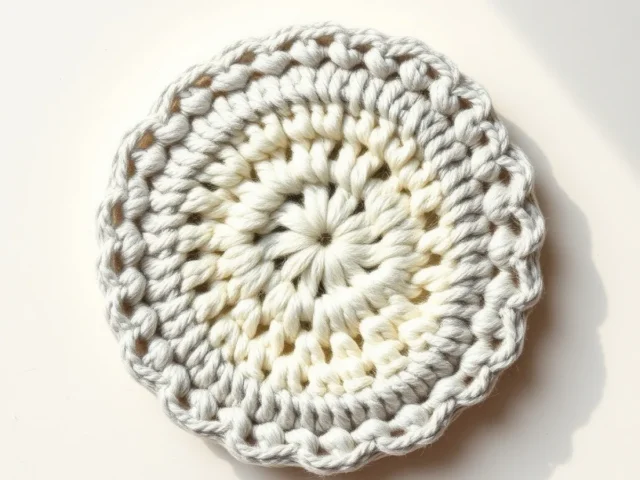
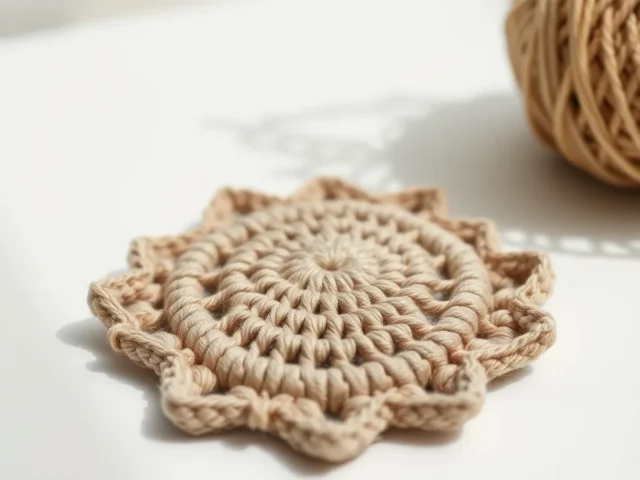
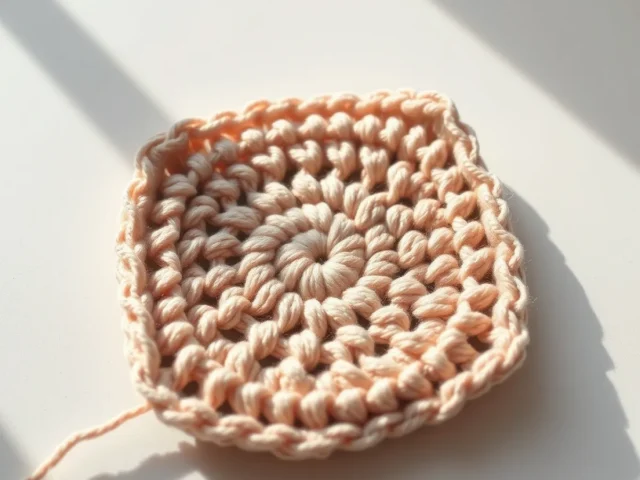
A swatch does not have to be ugly. Use a colour you like, and work it in the stitch pattern from the project. A swatch in single crochet tells you nothing about a lace shawl.
Block it. Pin it flat, spritz it with water, let it dry overnight. Blocking opens the stitches and shows the real fabric.
If you make several, stitch them together into a small blanket later. Same yarn, same hook, different colours. It looks intentional.
When your gauge will not match
Sometimes you land between two hook sizes. One gives 11 stitches, the next gives 13, and you need 12.
Try a different hook material. Metal slides faster than wood, and some hands loosen up with it.
If it still will not match, you can adjust the pattern instead. Add or remove stitches in a plain section, or work one size up or down. This works best on simple shapes like scarves, blankets and straight-sided tops.
For a fitted garment with shaping, changing the pattern is risky. Swatching until the number matches is the safer path.
Common stitch errors that ruin a swatch
Counting the turning chain as a stitch when the pattern says not to adds one stitch per row. Check the pattern note.
Working into the front loop only makes a thinner fabric and a different gauge. Look at the top of the stitch and go under both loops unless told otherwise.
Losing the last stitch of a row is the most common mistake. Count every row for the first ten rows until you trust your eye.
Step
Crochet a swatch bigger than 10 cm
Chain enough to reach about 15 cm, then work in the pattern stitch until the piece is roughly square. Extra fabric on all sides keeps the edges from skewing your count.
Lay it flat and let it rest
Do not stretch it. Let it sit for ten minutes. Freshly worked fabric springs back, and measuring too soon gives you a false number.
Wash and dry it the way you will wash the project
This is the step most people skip. Wool can bloom and fill in. Cotton can shrink. Acrylic barely moves. Whatever the finished piece will get, the swatch gets first.
Mark 10 cm in the middle
Place two pins 10 cm apart, away from the edges. Count the stitches between them. Then count the rows the same way.
Compare to the pattern
If your stitch count is higher than the pattern, your fabric is tight. Go up a hook size and swatch again. If it is lower, go down.
Ways to change it
Swatch in the round
Work a small tube instead of a flat square. Useful for hats, mittens and anything joined in a circle, because turning chains change the count.
Swatch in pattern stitch
Use the lace, cable or textured stitch from the project. Plain single crochet tells you nothing about an open stitch pattern.
Cotton for summer tops
Cotton has less stretch, so gauge matters more. Expect to swatch twice.
Superwash wool for garments
It grows in the wash. Block the swatch and let it hang for a day before measuring.
Scrap yarn swatch blanket
Save every swatch in the same weight and join them later. Free blanket, no extra work.
The short version
- Gauge is stitches and rows inside a set measurement, usually 10 cm.
- Hook size is the main tool for changing gauge, not hand tension.
- Always wash and dry the swatch the way you will wash the finished piece.
- Measure the middle of the swatch, never the edges.
- Stitch count matters more than row count for anything that has to fit.
- If two hook sizes land either side of the target, adjusting a simple pattern is safer than forcing tension.
Questions people ask
Do I really need to swatch for a blanket?
Not usually. Blankets do not have to fit a body, so a small difference in gauge just changes the size. Swatch if the pattern uses a set number of balls and you want the finished size to match.
How do I know if my gauge is too tight or too loose?
Count your stitches in 10 cm. More stitches than the pattern means your fabric is tight, so go up a hook size. Fewer stitches means it is loose, so go down.
Can I fix gauge by crocheting tighter?
You can for a few rows, then your hands tire and it drifts back. Changing the hook is repeatable. Tension is not.
Does yarn colour change gauge?
It can, slightly. Darker dyes sometimes make yarn feel thicker, and some dyers use different bases for different colours. If the colour matters, swatch in that colour.
Should I block the swatch before or after measuring?
Measure after blocking and after it is fully dry. That is the fabric you will actually wear or use.
Make one swatch today and save yourself a whole sweater
Gauge is a ten-minute habit that protects hours of work. Crochet the swatch, wash it, measure the middle, and trust the number. If it is off, change the hook and try again. Happy hooking!