Fix Crochet Mistakes
Learn how to spot and correct the most common crochet errors in minutes.
A dropped stitch can ruin a whole row in just a few seconds.
When a stitch goes wrong you don’t have to scrap the whole project. A quick check often reveals a simple fix.
The steps below work for most yarn weights and hook sizes, so you can keep crocheting with confidence.
Identify the error, unwind the affected stitches, and re‑work them using the correct stitch. With a few tools you can fix most mistakes without starting over.
What you need
Yarn
Use the same weight and fiber as the project; a spare skein prevents running out mid‑fix.
Crochet hook
Same size as used in the pattern; a larger size can help loosen tight sections.
Darning needle
A blunt‑tipped needle that matches the yarn weight; inexpensive and reusable.
Stitch marker
A small plastic or metal marker to highlight the error spot.
Scissors
Sharp enough to cut yarn cleanly without fraying.
Identify Common Mistakes
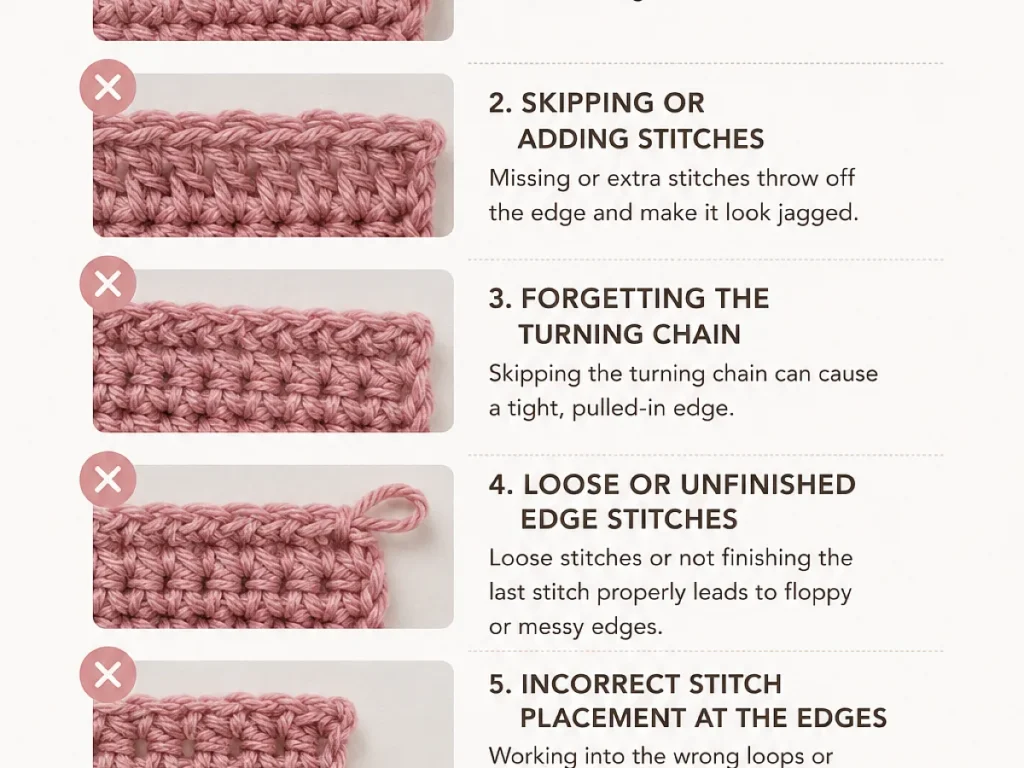
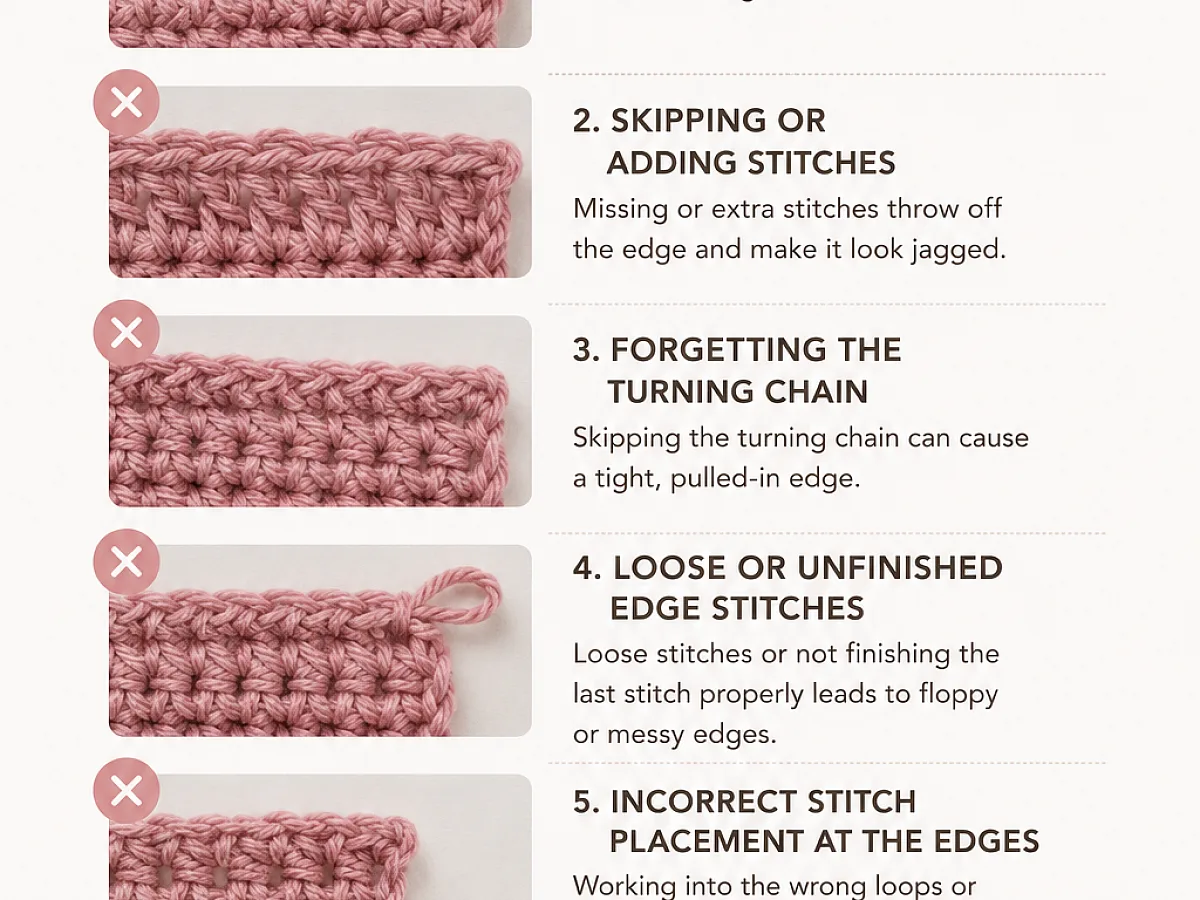
Look for gaps, uneven edges, or stitches that feel tighter than the rest. Typical problems are dropped stitches, twisted turns, extra or missing yarn overs, and mis‑counted rows.
Mark the spot with a stitch marker or a safety pin so you can return to it later.
- Dropped stitch
- Twisted turn
- Wrong stitch count
- Incorrect yarn over
A good light and a magnifying glass help you see tiny errors.
Gather the Right Tools
A sharp small scissors, a darning needle that matches your yarn weight, and a spare hook in the same size are all you need. A stitch marker keeps the error point visible while you work.
If you run out of a matching hook, a hook one size larger can loosen tight sections without harming the stitch pattern.
Fix a Dropped Stitch
Insert the darning needle into the loop above the drop, pull the yarn through, and recreate the missing stitch using the same stitch type.
Slip the new stitch into place and smooth the surrounding fabric with your fingers.
Work from the bottom up; the tension will settle naturally.
Correct Twisted Stitches and Missed Turns
Unravel the twisted stitch until the loop is open. Re‑insert the hook and complete the stitch as written in the pattern.
If a turn was missed, insert the hook into the correct space and finish the stitch before moving on.
Counting each stitch out loud reduces future twists.
Repair Wrong Stitch Counts
Count back to the row where the count went off. Undo to the last correct row, then re‑crochet the missing or extra stitches.
Check the stitch count after each row until it matches the pattern again.
Mark the correct row with a contrasting stitch to avoid re‑undoing.
Prevent Future Errors
Use a stitch marker at the start of each new pattern repeat. Keep tension even by holding the yarn with a relaxed grip.
Practice tricky stitches on a small swatch before adding them to the main piece.
A consistent hook size for the whole project keeps gauge steady.
Step
1. Examine the work
Lay the piece flat, look for gaps or uneven stitches, and note the exact spot.
2. Mark the error
Place a stitch marker or pin at the problem area to keep it visible.
3. Unravel the affected stitches
Use the darning needle or hook to carefully pull the yarn back to the last correct stitch.
4. Re‑create the correct stitch
Follow the pattern instructions and work the stitch as intended, keeping tension even.
5. Secure the yarn end
Weave the tail into nearby stitches with the needle and trim any excess.
Ways to change it
Larger hook for tight edges
A size up loosens tension and makes correction easier for dense fabrics.
Smoother yarn for snags
A smoother fiber reduces the chance of dropped stitches on slippery yarns.
Stitch marker for each row
Marking each new row helps you keep track of repeats and avoid missed turns.
Practice swatch
Crochet a small sample of the tricky stitch before adding it to the main project.
The short version
- Most crochet errors can be fixed without undoing the whole piece.
- A stitch marker saves time by keeping the mistake visible.
- Use a darning needle that matches your yarn weight for smooth repairs.
- Work from the bottom up when re‑creating dropped stitches.
- Even tension and consistent hook size prevent many common errors.
Questions people ask
What if I can’t see the dropped stitch?
Hold the work up to a bright light and use a magnifying glass; the loop will appear as a small opening in the fabric.
Can I fix a mistake without undoing the whole piece?
Yes, by unraveling only the stitches directly around the error and re‑crocheting them, you keep the rest of the project intact.
Give one of these fixes a try on your next project
With the right tools and a systematic approach you can rescue most crochet mishaps and keep your project moving forward. Happy hooking!