Blue Gradient Crochet Shawl Pattern for Beginners
Crochet a soft, drapey shawl with a blue gradient yarn in about 6 hours.
A blue gradient shawl is just a long rectangle with a clever yarn change – and you can make one this weekend.
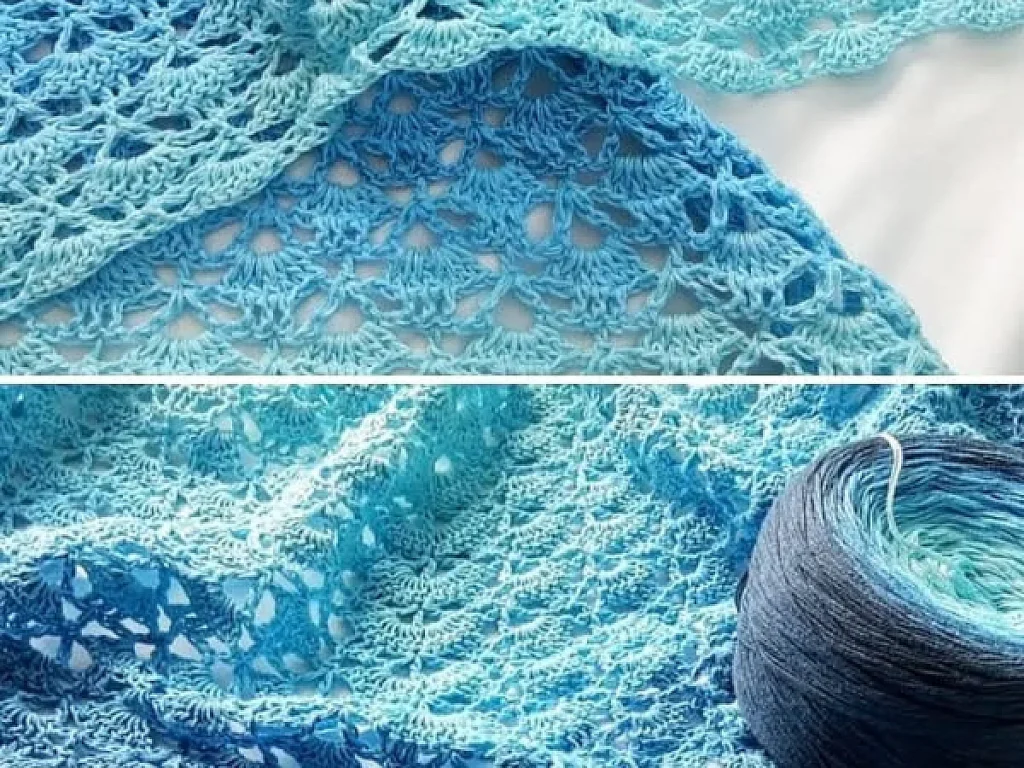
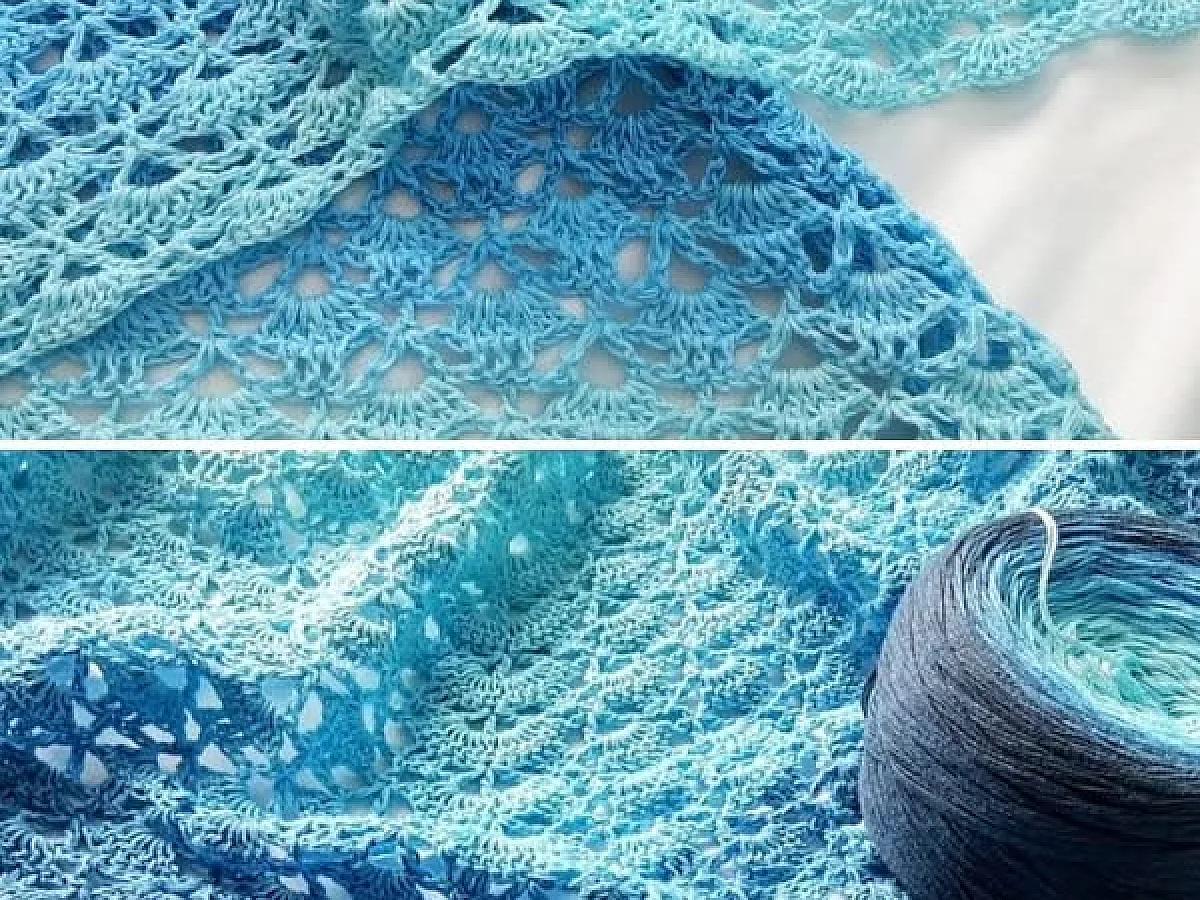
A blue gradient yarn does most of the design work for you. You just crochet a simple stitch pattern, and the color changes make it look like you planned every row. This shawl is perfect for cool evenings or as a gift.
The whole thing takes about 6 hours if you're a steady crocheter. Even if you're new to shawls, the stitch is just double crochet and chains. You'll end up with a cozy wrap that measures about 60 inches across the top and 30 inches down the middle.
This pattern shows you how to crochet a blue gradient shawl with a simple repeating stitch, using a worsted-weight yarn that shifts from deep navy to sky blue. You'll work from the top down, increasing at the edges to create a triangle shape that drapes nicely over your shoulders.
What you need
Gradient yarn
Worsted weight, about 400-500 yards. Choose a blue ombre that transitions from dark to light.
Crochet hook
Size H (5.0 mm) or whatever size matches your yarn label.
Stitch markers
Two is enough to mark the edges of each row.
Yarn needle
For weaving in ends – a blunt tip works best.
What You Need to Get Started
Before you begin, gather your materials. The most important piece is a gradient yarn – it's a single skein that changes color along its length. Look for one labeled 'ombre' or 'self-striping' in blues.
You'll also need a hook that matches your yarn weight. For worsted weight, that's usually a size H (5.0 mm). A stitch marker helps you keep track of the center, and a yarn needle is for weaving in ends.
- Yarn: 1 skein of worsted-weight gradient yarn in blues (about 400-500 yards)
- Hook: US size H (5.0 mm)
- Stitch markers: 2
- Yarn needle
- Scissors
If you can't find a gradient yarn, you can create your own by crocheting stripes with two or three solid blue shades.
Abbreviations and Stitch Guide
This pattern uses standard US crochet terms. You'll need to know a few basic stitches: chain (ch), double crochet (dc), single crochet (sc), and slip stitch (sl st).
The main stitch is the double crochet, and you'll work into the chain spaces from the previous row. That's what creates the open, lacy look.
- ch = chain
- dc = double crochet
- sc = single crochet
- sl st = slip stitch
- ch-sp = chain space
Keep your tension even. If your shawl starts to ruffle, your hook might be too big – try a size down.
How to Read the Pattern
This shawl is worked from the top down. You start with a small chain and increase at both ends of each row to form a triangle. The increases happen by adding extra double crochets at the edges.
Each row ends with a turning chain of 3, which counts as your first double crochet. Work the pattern repeat: chain 1, skip a stitch, double crochet into the next stitch. At the ends, you'll add an extra double crochet to increase.
Place a marker in the first and last stitch of each row to keep track of your increases.
Step-by-Step Instructions
Follow these steps to crochet your blue gradient shawl. Each step builds on the last, so take your time and count your stitches.
If you lose your place, count the stitches at the end of each row. You should have 2 more than the previous row.
Finishing and Blocking
When your shawl reaches the desired size, finish off and weave in the ends. To make the edges lie flat, block the shawl by pinning it to a towel and spraying it with water. Let it dry completely.
Blocking opens up the stitches and makes the gradient colors pop. It takes about an hour to dry, so plan ahead.
Don't skip blocking – it makes a big difference in how professional the finished shawl looks.
Step
Chain foundation
Chain 4. Slip stitch to form a ring. Chain 3 (counts as first dc), then work 2 dc into the ring. Chain 2, 3 dc into the ring. This makes the starting point.
Row 1
Chain 3 (turning chain). Turn your work. Work 2 dc into the first stitch (that's your increase). Then chain 1, skip a stitch, dc into the next stitch. Repeat to the center chain-2 space. In that space, work (dc, ch 2, dc). Then continue: chain 1, skip a stitch, dc into the next stitch. At the end, work 2 dc into the last stitch.
Row 2 and beyond
Repeat Row 1, always working 2 extra dc at each end and (dc, ch 2, dc) in the center space. This creates the triangle shape.
Continue to desired length
Keep going until your shawl is about 60 inches across the top. That's roughly 50 rows, depending on your gauge.
Finish off
Cut the yarn, leaving a 6-inch tail. Pull it through the last loop and weave in the ends with a yarn needle.
Ways to change it
Different yarn weights
Use a DK weight yarn and a smaller hook for a lighter, more delicate shawl. You'll need more rows.
Solid colors
If you prefer a solid color, use a single blue shade. The pattern still works, but the gradient effect comes from the yarn.
Add fringe
Attach fringe to the bottom edge for a boho look. Cut 12-inch pieces of yarn and fold them in half, pulling the loop through the edge stitches.
Make it longer
Work more rows to make a larger shawl or even a blanket. Just keep increasing at the edges.
Change the stitch
Instead of double crochet, try a shell stitch or a granny stripe for a different texture.
The short version
- A gradient yarn creates the color changes automatically, so you only need to focus on the stitch pattern.
- The shawl is worked from the top down, increasing at the edges to form a triangle.
- Use a worsted-weight yarn and a size H hook for a drapey fabric.
- Count your stitches at the end of each row to catch mistakes early.
- Blocking the finished shawl opens up the stitches and makes it lie flat.
- You can easily adjust the size by working more or fewer rows.
- This pattern is beginner-friendly, using only double crochet and chains.
Questions people ask
How long does it take to crochet a blue gradient shawl?
It takes about 6 hours for an experienced crocheter. Beginners might need a bit longer, but you can spread it over a few days.
What is the best yarn for a gradient shawl?
Look for a worsted-weight yarn that is labeled 'ombre' or 'self-striping' in blues. Cotton or a cotton-blend gives good stitch definition, while wool is warmer.
Can I make this shawl with solid color yarn?
Yes, absolutely. The pattern works the same way. You just won't get the gradient effect – but you can create your own stripes by changing colors every few rows.
How do I fix a mistake in my shawl?
If you notice a mistake within a row or two, you can carefully unravel the stitches back to that point. If it's further down, you might need to frog the whole thing – but that's a learning experience.
Ready to make your own blue gradient shawl?
Grab a skein of blue gradient yarn and your hook. The pattern is simple enough to memorize, and the result is a beautiful, wearable shawl. Keep it quick and cute!