Flower Patterns Vocabulary: A Simple Guide for Crafters
Learn the names of common flower pattern motifs so you can read any pattern with confidence.
Ever opened a pattern and seen 'puff flower' or 'spiral rose' and had no idea what it meant?
Flower patterns show up everywhere in crochet, knitting, embroidery, and paper crafts. The names can be confusing because the same flower might have different names in different patterns.
This guide covers the most common flower motifs you'll see. Each one has a clear description and a tip on how to recognize it. You'll be able to look at a pattern and know exactly what flower it means.
This guide explains the most common flower pattern terms, what they look like, and how to recognize them. You'll learn the difference between a daisy, a rose, and a sunflower motif, so you can choose the right one for your project.
What you need
Yarn or thread
Choose a medium weight yarn for practice. For finer flower motifs, use embroidery floss or crochet thread.
Hook or needle
Use the size recommended on your yarn label. For thread, use a steel hook size 7 or 8.
Scissors
Sharp scissors make clean cuts for weaving in ends.
Tapestry needle
For weaving in ends and sewing flowers together.
What is a flower motif?
A flower motif is a small, repeatable unit that looks like a flower. You can use it on its own or join it with others to make a bigger piece.
Motifs are popular because they are portable and quick to make. A single flower might take fifteen minutes, and you can make a whole blanket by joining dozens of them.
If you're new to motifs, start with a simple five-petal flower before trying a layered rose.
Common flower pattern terms
Here are the most common flower terms you'll see in patterns. Each one has a distinct shape and construction.
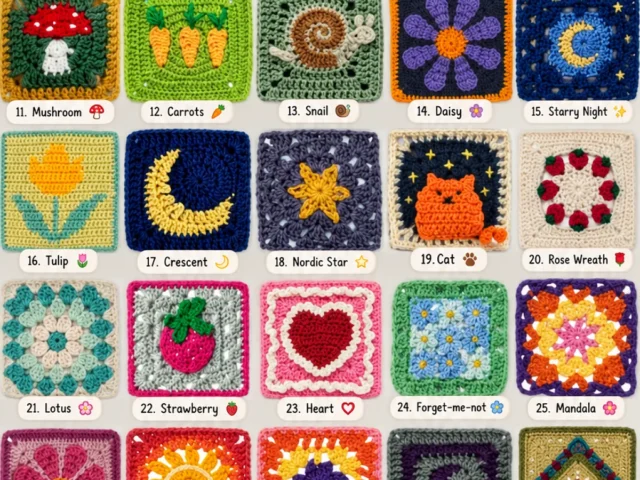
Daisy: Usually has a flat center and many thin petals radiating out. Often made in a round, with petals worked in each stitch around the center.
Rose: Layered petals that curl inward, creating a spiral or gathered effect. Often worked in a continuous spiral or as separate petals sewn together.
Sunflower: A large center with many small petals around it. The center is usually a different color, and the petals are short and stubby.
Tulip: A cup-shaped flower with three or four petals that fold upward. Often made by working in rows and then folding.
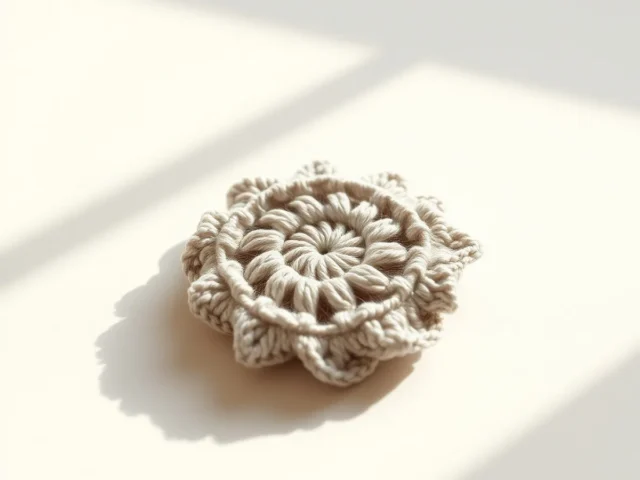
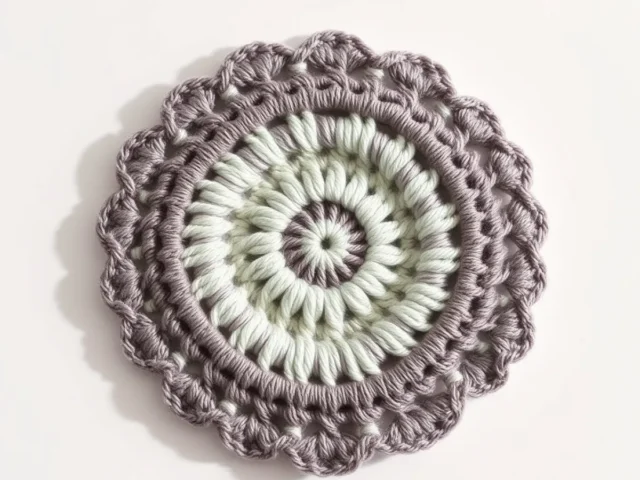
Puff flower: A small, fluffy flower made by working several stitches into the same space and then drawing them together. Looks like a little ball.
Spiral flower: Petals that twist around a center, creating a spiral effect. Often made by working in a spiral without joining rounds.
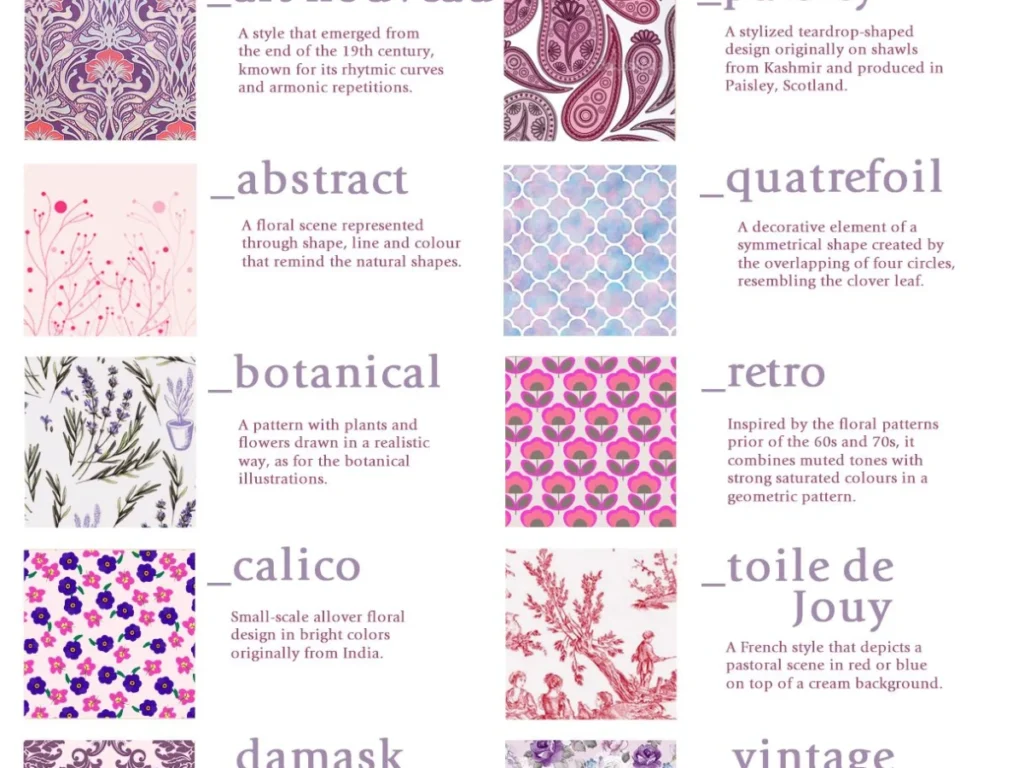
Print out a small chart of these flowers and keep it with your pattern books. It helps to see them side by side.
How to read a flower pattern
When you read a flower pattern, look for the center first. Most flowers start with a magic ring or a small chain circle.
Then check the petal instructions. They might say 'ch 2, 3 dc in ring' or 'sc, ch 2, sc' – that tells you the petal shape.
The number of petals is usually in the pattern title or the first line. For example, 'six-petal daisy' means you'll repeat the petal step six times.
If a pattern says 'work in the round', you'll usually join each round with a slip stitch. If it says 'spiral', you'll work continuously without joining.
What goes wrong and how to fix it
The most common mistake is counting stitches wrong. If your flower looks lopsided, count your stitches and make sure each petal has the same number.
Another issue is petals that curl too much. That happens when you work too many stitches into a small space. Try using a larger hook or fewer stitches per petal.
If your flower is too flat, you might be pulling your starting ring too tight. Leave a small hole in the center.
Before you start a big project, make one test flower and check its size and shape. It's much easier to adjust a single flower than to redo a whole blanket.
Ways to use flower motifs
Flower motifs are versatile. You can sew them onto bags, hats, or scarves as decorations.
You can also join them together to make blankets, shawls, or pillows. The most common way to join is to sew them with a yarn needle, but you can also crochet them together.
Try making a garland by stringing flowers on a ribbon, or use them as coasters.
If you're joining motifs, block them first to make them flat and even. That makes the seams much neater.
Step
Make a magic ring
Wrap the yarn around your finger twice, then pull a loop through and chain one. This forms a tight center for your flower.
Work the first round
Work the number of stitches the pattern says into the ring. Usually it's 6 or 8 single crochets. Pull the tail to close the ring.
Shape the petals
Follow the pattern's petal instructions. For a simple daisy, you might do 'chain 2, double crochet, chain 2, slip stitch' in each stitch around.
Finish and weave in ends
When you have the right number of petals, cut the yarn and pull it through the last loop. Weave in the ends with a tapestry needle.
Ways to change it
Size variation
Use a thicker yarn and a larger hook for a bigger flower, or a finer thread for a tiny one.
Color changes
Change colors for the center and petals, or use variegated yarn for a multicolor effect.
Different flower types
Try a rose instead of a daisy, or a tulip for a different shape.
Skill level
If you're a beginner, stick to flat flowers with basic stitches. If you're advanced, try a layered or puff flower.
Seasonal versions
Make a sunflower for summer, a poinsettia for winter, or a cherry blossom for spring.
The short version
- Flower motifs are small, repeatable units that look like flowers.
- Common flower terms include daisy, rose, sunflower, tulip, puff flower, and spiral flower.
- Most flowers start with a magic ring and then have petals worked around the center.
- Counting stitches correctly is the most important part of making a flower look even.
- If petals curl, use a larger hook or fewer stitches per petal.
- Flower motifs can be used as decorations or joined to make larger items.
- Practice with a simple daisy before trying more complex flowers.
Questions people ask
What is the difference between a daisy and a sunflower motif?
A daisy usually has a flat center and thin, long petals. A sunflower has a large, dark center and short, stubby petals arranged densely around it.
How do I keep my flower petals from curling?
Curling happens when you put too many stitches into a small space. Try using a larger hook or reducing the number of stitches in each petal.
Can I use flower motifs for a blanket?
Yes, you can join many flower motifs to make a blanket. Sew them together with a yarn needle or crochet them together, and block them first for neat seams.
Ready to start your first flower motif?
Now you know the basic flower pattern vocabulary. Pick a simple daisy pattern and give it a try. You'll be surprised how quick it is. Happy hooking!

I write about easy crochet tutorials, beginner crochet patterns, and quick crochet projects that actually work for busy people. My angle is breaking down every stitch and step so you can finish a project in an evening, even if you've never held a hook before.