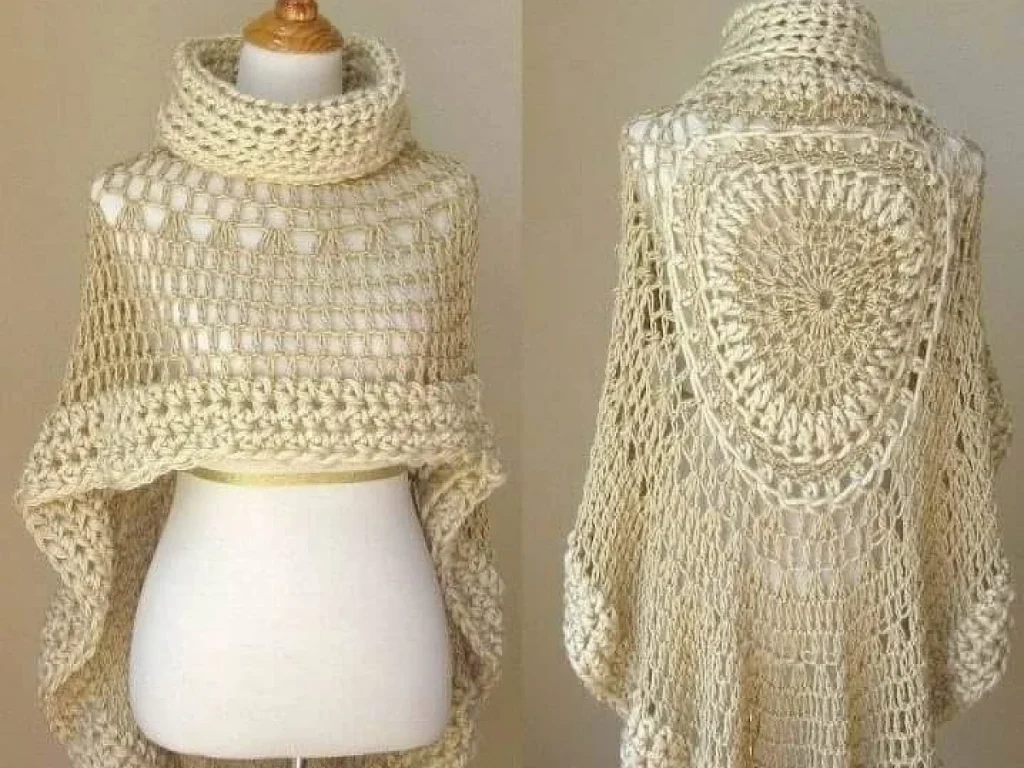
Wearable Crochet Patterns: Make Clothes That Fit You
Learn to choose patterns, measure yourself, and crochet garments that actually fit your body.
The first wearable you crochet will probably be too big in the shoulders and too short in the sleeves.
You can crochet a sweater that fits like it was made for you. It takes a little measuring and a few swatches, but the result is worth it.
This guide covers how to pick a pattern, measure yourself correctly, and adjust as you go.
Wearable crochet patterns are garments you crochet to wear, like sweaters, cardigans, tops, and shawls. The key to a good fit is choosing the right size based on your actual measurements, not your usual clothing size.
What you need
Soft measuring tape
A flexible tape, about 150 cm long. Use it to measure your body and your swatch.
Yarn in the pattern's weight
Start with a smooth, medium-weight yarn like worsted or DK. Acrylic or wool both work.
Crochet hook in the recommended size
You may need a hook one size up or down to match gauge. Check your swatch.
Stitch markers
Use them to mark increases, decreases, and the center of your work.
Scissors and yarn needle
For weaving in ends and seaming pieces together.
Why Fit Matters in Wearable Crochet
Crochet fabric has less stretch than knitting. A sweater that is too tight will not give. A sweater that is too loose will sag.
Your gauge swatch tells you how many stitches and rows per 10 cm. If your swatch does not match the pattern, your garment will not match the size.
Always wash and block your swatch before measuring. Yarn can shrink or stretch after washing.
How to Measure Yourself for a Crochet Garment
Use a soft measuring tape. Measure your bust at the fullest part, your waist at the narrowest, and your hips at the widest. Also measure your arm length from shoulder to wrist.
Compare your numbers to the pattern's size chart. Do not use your ready-to-wear size. Crochet sizes vary by designer.
- Bust: around the fullest part, tape level
- Waist: around the natural waist, not too tight
- Hip: around the widest part, tape parallel to floor
- Sleeve length: from shoulder bone to wrist bone
Ask a friend to help measure your back width. It is hard to do alone.
Choosing the Right Yarn and Hook
The pattern will list a yarn weight and hook size. Use them if you can. A different yarn can change the drape and the fit.
If you substitute, choose a yarn with the same weight and similar fiber. Cotton drapes differently than wool. A wool sweater has more stretch and warmth.
Check the recommended gauge on the yarn label. Make a swatch with your chosen hook. Adjust the hook size until your swatch matches the pattern gauge.
For a first wearable, pick a pattern with positive ease (2-4 inches of extra room). It is more forgiving.
How to Check Gauge and Adjust
Crochet a swatch at least 15 cm by 15 cm. Mark 10 cm in the middle. Count the stitches and rows.
If you have more stitches than the pattern, your work is too tight. Go up a hook size. If you have fewer, go down a hook size.
Sometimes your row gauge is off even when stitch gauge is right. You can work extra rows in the body or shorten the sleeves.
Write down your gauge on a sticky note and keep it with the pattern. You will need it again.
Common Fit Problems and Fixes
Shoulders too wide: the armhole is too deep. Work fewer rows before shaping the armhole.
Sleeves too short: add rows before the cuff. Too long: rip back a few rows.
Body too tight: go up a hook size or add stitches at the sides. Too loose: go down a hook size.
Try the garment on as you go. Pin the pieces together or use a long stitch marker to hold seams.
Care and Wearing Tips
Block your finished garment to shape it. Wet block for natural fibers, steam block for acrylic.
Wash crochet garments by hand in cool water with a gentle soap. Lay flat to dry. Never hang a wet crochet sweater. It will stretch.
Store folded, not on a hanger. Hangers can stretch the shoulders.
If your garment is wool, avoid the dryer. Heat shrinks wool fast.
Step
Measure yourself
Use a soft tape to measure bust, waist, hips, and arm length. Write them down.
Make a gauge swatch
Crochet a 15 cm square using the recommended hook. Count stitches and rows per 10 cm.
Adjust your hook
If your swatch does not match the pattern, change hook size and make another swatch.
Choose your size
Compare your measurements to the pattern chart. Pick the size that gives you the ease you want.
Crochet a piece and try it on
Work the back or front piece. Pin it to your body or hold it up to check the width.
Adjust as you go
Add or remove rows in the body or sleeves to fix length issues.
Finish and block
Weave in ends, seam the pieces, and block the garment to shape.
Ways to change it
Use a different yarn weight
A heavier yarn makes a thicker, warmer garment. A lighter yarn gives more drape.
Change sleeve length
Make short sleeves for summer or long sleeves for winter. Adjust the pattern accordingly.
Add positive ease
If you like a loose fit, choose a size with 4-6 inches of ease. If you like a snug fit, choose 0-2 inches.
Modify the neckline
A deeper V-neck or a higher crew neck changes the look. Work fewer or more rows at the neck.
Try a different stitch
Swap the stitch pattern for a similar gauge. A denser stitch makes a stiffer fabric.
The short version
- Fit starts with accurate measurements, not your usual clothing size.
- Gauge swatching is the only way to know if your garment will match the pattern size.
- Crochet fabric has little stretch, so positive ease is safer for a first wearable.
- You can adjust hook size to fix stitch gauge and row gauge.
- Try on pieces as you go to catch fit problems early.
- Blocking shapes the final garment and improves the drape.
- Hand wash and lay flat to dry to keep your wearable looking good.
Questions people ask
Why does my crochet sweater not fit?
The most common reason is a wrong gauge. Your stitches are bigger or smaller than the pattern expects, so the finished size changes. Check your gauge swatch and adjust your hook size.
Can I use a different yarn than the pattern says?
Yes, but choose a yarn with the same weight and similar fiber. Make a swatch to check gauge. Different fibers drape and stretch differently.
How do I know what size to crochet?
Measure your bust, waist, and hips. Compare to the pattern's size chart. Pick the size that matches your measurements, not your ready-to-wear size.
Start with a simple top and measure twice
Measuring your body and making a swatch takes twenty minutes. That time saves you from ripping out a whole sweater. Choose a pattern you love, check your gauge, and crochet at a relaxed pace. Stitch with ease.